Some links on this page are affiliate links. If you book or buy through them, we may earn a small commission at no extra cost to you. It never changes what we recommend — every price here is one we would pay ourselves.
Over a week, the difference between the low ends of those two ranges is $700. A $350 day that excludes park fees is not cheaper than a $450 day that includes them.
What the Numbers Actually Say
A mid-range safari in Kenya runs about $350–$600 per day in 2026. The same tier of safari in Tanzania runs $450–$800 per day. That gap is not small. Over a week, the difference between the low ends of those two ranges is $700. Over two weeks, it’s $1,400. If you are travelling as a couple and splitting costs where you can, that difference compounds fast. Kenya is the cheaper country for many mid-range safaris right now. That’s not a moral judgment about either place. It’s a price observation.
What that daily rate buys in practice is a Land Cruiser or a converted minivan with a pop-up roof, a driver-guide who has spent years learning where the cats sleep, fuel for long stretches of bad road, and a seat that will rattle loose every filling you own by the third day. The difference between the two countries is partly park fees, which are set by governments and go up on their own schedule, and partly the depth of the operator market — Kenya has more vehicles chasing the same visitors, so the price per seat falls. Tanzania’s northern circuit, the Serengeti and Ngorongoro in particular, has fewer operators and stricter park rules, and that shows up in the quote. None of this is visible on a booking page. It only becomes clear when two itineraries sit side by side and one of them quietly leaves out the crater descent fee.
The safari cost usually covers the vehicle, the guide, the park fees and sometimes the accommodation and meals. Sometimes it doesn’t. You need to ask what’s included before you compare two operators against each other. A $350 day that excludes park fees is not cheaper than a $450 day that includes them. The headline number is only useful if you know what sits inside it.
The standard way to find out is to ask for a written itinerary with a line for every fee, then check whether the concession fees — the extra charge for camping or lodging inside a park boundary — are on it. They often aren’t. A quote that looks $50 a day cheaper can flip once those are added, and the flip usually happens after a deposit has changed hands, which is when nobody feels like renegotiating. Ask before the deposit, not after.
Jeeps, Tips and Daily Grind
In some destinations, shared jeep tickets cost between $11 and $18. Hiring a private jeep runs about $70–$110. That’s a five-to-tenfold difference for the same road, the same distance, the same views. If you are solo and flexible, the shared jeep is the obvious call. If you are travelling with three other people, the private jeep starts to make sense because you split it. The math changes depending on how many people are in your group. That’s it. That’s the whole calculation.
If your plans are fixed, locking in tickets early costs nothing and saves a lot.
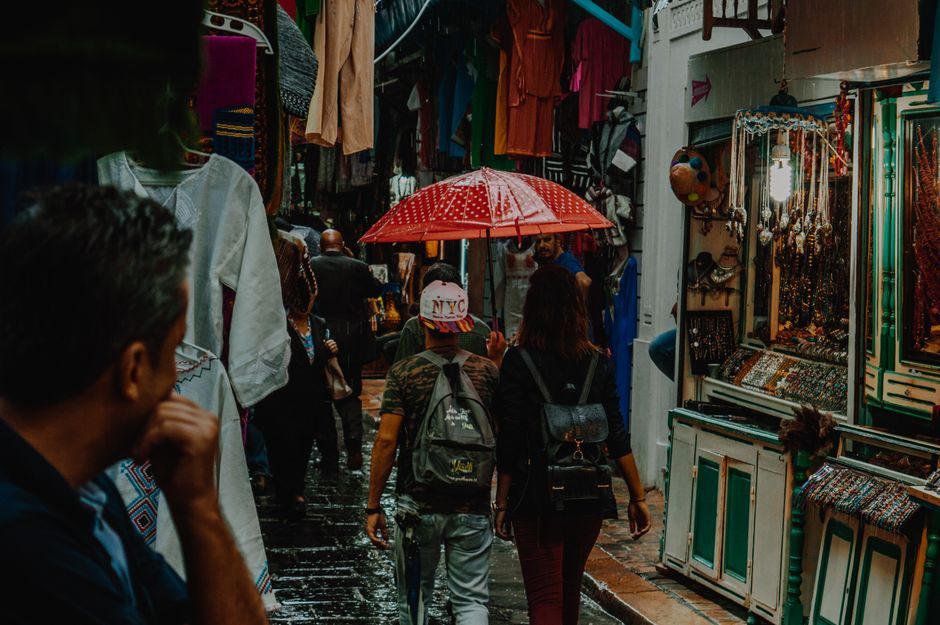
The shared jeep comes with its own arithmetic, though. They leave when full, not when scheduled, which can mean sitting on a bench for an hour watching the driver drink tea, or it can mean leaving the moment you sit down. On mountain routes the vehicles are packed past any reasonable definition of a seat, bags go on the roof, and the last row gets the worst of every pothole. The private jeep buys control of the clock as much as the space: you stop for photographs, you stop for the toilet, you leave at six in the morning instead of nine. Whether that is worth the extra is a personal call, but it is the actual thing being sold.
Tipping is a separate line item and it is not optional in practice. In Botswana, the guidance is to budget $10 per day for staff and another $10 per day for your guide. That’s $20 per day on top of whatever you already paid. Over a ten-day trip, that’s $200. Most of the people you interact with on a safari rely on tip money to get beyond life’s basics. This is not a gratuity in the American restaurant sense. It is part of how the wage system works. If you don’t budget for it, you will either shortchange people or blow your budget in the last three days.
In practice the tip is handed over at the end, usually in a envelope or folded into a handshake on the last morning, and it is split by a system the camp already has in place. Guides and trackers often share a pool; the people who clean the tents and wash the dishes usually do not appear in the farewell photo. Splitting the daily amount between the guide and the general staff, as the Botswana guidance does, is the cleanest way to handle it. Cash in the local currency or US dollars both work; torn or heavily marked notes get refused, which is a small humiliation worth avoiding.
Hotels and the Solo Advantage
Comfortable three-star hotels generally cost between $30 and $60 per night. Modern four-star hotels range from $60 to $120, depending on the destination and the season. That range is wide because the same hotel can charge $60 in low season and $120 in high season. If your dates are flexible, you can sometimes stay in a four-star for the price of a three-star. If your dates are fixed, you pay what the calendar says.
Going solo has one concrete advantage that doesn’t show up in any budget spreadsheet: you can eat at the counter or the bar instead of waiting for a table. It is generally a lot easier to get a seat anywhere when you are one person. That saves time, not money. But time is the thing you can’t buy back on a short trip. A solo traveller walks into a full restaurant and eats in ten minutes. A group of four waits forty. Over a two-week trip, that adds up to hours you could have spent doing something else.
The same logic applies at the front desk. One person asking for a room on the night is a problem the clerk can solve; four people asking is a negotiation. Hostels work the other way round — a dorm bed is priced per head, so a group of four pays four times the solo rate and gets no discount for the company. If the trip is long and the budget is tight, the solo traveller is quietly subsidised by everyone else’s inability to travel light.
Insurance and the Long Trip
Travel insurance is a cost that people forget until they need it. A five-month policy is a real expense and it belongs in the budget from day one, not as an afterthought. If you are doing a working holiday in Australia, New Zealand, Canada, Japan or South Korea, there are policies built specifically for working holiday visa holders. They include 24/7 assistance, basic and comprehensive tiers, adventure sports cover, an assistance app, telemedicine and flexible hiring. That last part matters if you don’t know how long you’ll stay. You don’t want to buy a policy for six months and then fly home in three.
What usually goes wrong is the gap. People buy a policy that covers the flight and the first month, then extend it from a hostel bed at midnight when the old one has already lapsed, and discover that the new policy excludes anything stemming from a condition they picked up in between. The other common trap is activity cover: a standard policy will pay for a broken ankle on a hiking trail but not on a scooter, and the scooter is where the ankle breaks. Read the exclusions list before the trip, not after the accident.
The Total Bill
A 17-month backpacking trip has costs down to the cent. A 6-month trip has costs. A 7-day trip to the Philippines has costs. A single trip in one country can come to $18,500 excluding flights and visa fees. That last figure is not a typo. It is what one trip actually cost, and it did not include the two biggest line items. Flights and visas are the costs people leave out when they estimate, and they are often the costs that break the estimate.
Back in 2020, some people sold everything, put the money in the stock market and left without knowing if the plan would work or what it would really cost. That is one way to do it. It is not the only way. The other way is to add up the safari days, the jeep tickets, the tips, the hotel nights, the insurance and the flights before you go. Then add ten percent. The numbers above are a starting point. They are not a prediction.
Leave a Reply