Some links on this page are affiliate links. If you book or buy through them, we may earn a small commission at no extra cost to you. It never changes what we recommend — every price here is one we would pay ourselves.
Bank of America has a $5 fee for most global withdrawals, which can be avoided by using a partner bank. On a $300 withdrawal, that is $9 in foreign transaction fees plus $5 for the withdrawal itself.
The ATM Is the Tax
A Thai ATM charges ฿220 per withdrawal. That is about $6.50. On a ฿30,000 maximum withdrawal, that fee is roughly 0.7 percent of the money you took out. On a ฿2,000 withdrawal, it is 11 percent. Same machine. Same card. The fee does not care how much you take. It only cares how many times you press the button.
What the machine also does not care about is whether the money inside it runs out. Thai ATMs, particularly the ones in tourist zones, get emptied fast on weekends and around the start of the month, and the screen will simply tell you the maximum is lower than the sticker figure or that the machine cannot dispense. The fix is boring: use machines attached to a bank branch during opening hours, because the branch can refill them and because there is a human to talk to if the card gets swallowed. Standalone machines in a 7-Eleven forecourt, a hotel lobby, or a beach road are the ones most likely to be dry or to be running a slightly different fee. The withdrawal itself takes under a minute. Queuing behind three people who are each taking out ฿2,000 does not.
This is the single fact that matters most for ATM costs abroad. Withdraw the maximum. Every time. A no-fee bank card helps, but the withdrawal amount helps more. If you take out ฿30,000 instead of ฿5,000, you pay ฿220 once instead of six times. That is $6.50 instead of $39. The math is not close.
There is a second decision hiding inside the first, and it is the one that catches people out. After the card goes in and the PIN is entered, the machine offers to convert the withdrawal into your home currency at a rate it has chosen. This is called dynamic currency conversion, and accepting it means paying the machine’s markup on top of the ฿220. Always choose to be charged in the local currency and let the card network do the conversion. The screen will make the home-currency figure look friendly. It is not. The difference is usually a few percent, which on a maximum withdrawal is real money, and it is invisible on the receipt unless the receipt happens to print both numbers.
The Bank Side
Your own bank charges you too. Bank of America has a $5 fee for most global withdrawals, which can be avoided by using a partner bank. It also adds a 3 percent charge to all withdrawals. On a $300 withdrawal, that is $9 in foreign transaction fees plus $5 for the withdrawal itself. Fourteen dollars before you have bought anything. A no-fee card changes that. A partner bank changes that. Not paying attention costs you $14 every time you need cash.
The 3 percent charge is the quiet one. It scales with the amount. A $1,000 withdrawal through a card with a 3 percent fee costs $30 in foreign transaction charges alone. That is more than most people spend on a night’s accommodation in Southeast Asia. No-fee cards exist. No-fee banks exist. The difference between having one and not having one is not small.
The partner-bank trick deserves a word of warning, because it is easy to get half right. The arrangement only applies at the partner’s own branded machines, not at every ATM that happens to sit in the same country, and the partner network differs by region. A card that waives fees at one bank’s machines across Europe may waive nothing in Thailand. It is worth checking the list before a trip rather than standing in front of a machine at midnight trying to remember which logo looked familiar. The other thing people miss is that the foreign transaction charge and the out-of-network withdrawal fee are two separate line items. A card can waive one and keep the other, and the statement will show them on different days, which makes the total harder to see than it should be. Reading the statement at the end of a trip is how most people discover they have been paying both.
Where Cash Still Wins
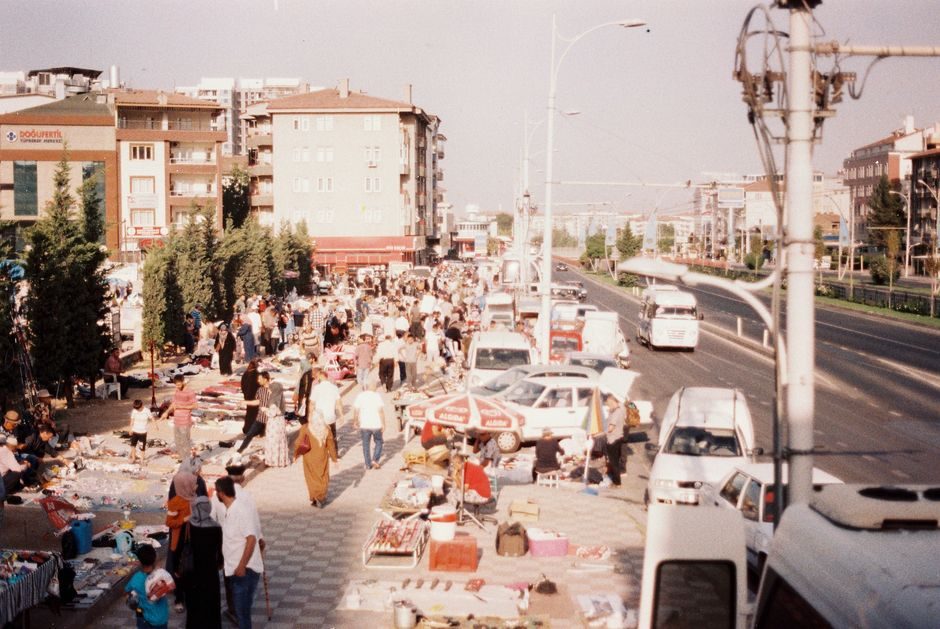
Cash is still essential for small temples, some restaurants, and market stalls. In Japan, withdraw from 7-Eleven ATMs. They accept foreign cards reliably. Keep ¥10,000–20,000 on hand. That is about $65–130. Not a huge amount. Enough to cover a day or two of small purchases without hunting for a machine.
Japan is the case that surprises people most, because it looks like a country where everything would take a card and largely does not. Small ramen shops, shrine stalls, rural bus fares, and the kind of neighbourhood restaurant with eight seats and one elderly chef are cash operations, and some of them have a card reader that has not worked in years. The 7-Eleven and Japan Post machines are the reliable ones for foreign cards; a machine inside a bank branch may keep shorter hours than the branch’s front door suggests, and the machine itself may close in the evening. Coins matter more than visitors expect. A pocket of ¥100 and ¥500 coins covers lockers, bus fares, and the little trays at temple entrances, and the habit of dumping coins into a separate pouch rather than the bottom of a bag saves a surprising amount of fumbling at a ticket gate.
In Africa, some tours collect a Local Payment in cash on arrival. That money goes to your tour leader at the start and covers camping fees, an average of two meals per day, and included excursions listed in the trip information. This is not a tip. It is a required payment. You need the cash in hand before the tour starts, not after you find an ATM in a small town.
The reason the Local Payment is cash and not a card charge is that the tour leader is buying firewood, park time, and food from people who deal in notes, often in places where a card machine has never existed. The amount is set out in the trip documents and is usually quoted in US dollars, and the leader will take it in the currency stated, so arriving with a stack of mixed local currency and hoping to negotiate is not a plan. Count it before the meeting, because the leader will count it in front of the group, and being short by a note is an awkward way to start a trip. The same logic extends to tips for guides, porters, and drivers, which are almost always settled in cash at the end and are easier to budget for if the notes are set aside at the beginning rather than scraped together on the last morning.
Permits and Entry Fees
Some destinations charge fees that have nothing to do with banks. The Khumbu Pasang Lhamu Rural Municipality fee in the Everest region runs about $20. Standard national park entry fees for popular routes like Everest and Annapurna are fixed at NPR 3,000. That is roughly $23 at current rates. In Cambodia, $20 to $30 in entry fees now sounds unrealistic. Fees have soared. Budget for more, not less.
Wherever entry is timed, an online booking is usually the smoother route.
These fees are collected at counters, not online, and the counters keep government hours. A permit office that closes at four in the afternoon means an arrival at five is an arrival the next morning, which can push a trek back a full day and move every booking after it. The paperwork is straightforward once the queue is reached: a form, a passport, a passport photo in some offices, and the cash. Photocopies of the passport page are worth carrying, because the queue often stops while someone walks to a shop to make copies. The permits themselves are checked at checkpoints along the route, sometimes more than once, and a permit left in a guesthouse in the first village is a permit that has to be retrieved.
Thailand adds a ฿300 entry fee and a ฿1,120 airport charge. Those are already baked into your ticket. You will not see them as separate line items at the airport. They are part of the fare. This matters when you compare ticket prices. A fare that looks cheaper may not include what another fare already covers.
Trekking in Nepal has its own costs. A guide runs $25 to $40 or more per day. The harder the trek, the higher the fee. A porter charges $20 to $30 per day. On a two-week trek with a guide at $30 per day, that is $420 before permits, food, or lodging. Cash is how most of this gets paid. ATMs in the Khumbu are unreliable. You carry what you need.
Carrying that much cash has its own routine. The notes get split across two or three places, a money belt and a dry bag inside the pack, so that a single loss is not the whole budget. Porters and guides are usually paid at the end of a trek rather than the start, and the amount is agreed beforehand, which means the money has to survive two weeks of guesthouse rooms and shared dorms. A guesthouse safe is a drawer behind the counter more often than a safe, and the honest answer to whether it is a good idea depends on the guesthouse. The practical version is that a small amount of walking-around cash stays accessible and the rest stays somewhere less obvious.
What the Smaller Costs Add Up To
Toiletries, over-the-counter medications, sunscreen, mosquito repellent, three trips to the dentist, clothes, local SIM cards, laundry, repairs, a new smartphone. These are not glamorous expenses. They are the ones that drain a budget without you noticing. A $5 ATM fee here, a $3 withdrawal fee there. A 3 percent foreign transaction charge on a card you forgot had one.
Laundry is the clearest example of a cost that hides in plain sight. A bag of washing at a guesthouse is cheap, a few dollars, but it happens every week or so, and the price doubles in a hotel that charges per item. SIM cards are the same. The card itself is cheap and the data package is where the money goes, and it renews automatically unless someone remembers to stop it. Dentist visits are the line item nobody plans for until a filling lets go in a country where the treatment is affordable and the next appointment is the following afternoon.
The pattern is consistent. Fees are fixed. Withdrawals are not. The more you take out per transaction, the less each dollar costs you. The fewer transactions you make, the less you pay. That is the whole strategy. Find the low-fee ATMs. Take the maximum. Use a card that does not charge you 3 percent on top. Keep enough cash for the places that do not take cards at all.
A $6.50 ATM fee is not a crisis. Paying it six times in one week is.
Leave a Reply