In Algiers, under $35 tends to buy a small room in a converted colonial-era building downtown, the kind with tall shutters, a tiled floor and a bathroom down the hall. Budget accommodation sits at around $10 to $20 a night for a hostel bed.
The room costs under $35 a night. That is the first number that matters, and it is the number most people never hear, because Algeria does not get talked about the way its neighbours do. But a bed for under $35 changes what a trip looks like. It means the money goes somewhere else. Food, transport, the things you actually came to see.
What that room actually looks like varies more than the price suggests. In Algiers, under $35 tends to buy a small room in a converted colonial-era building downtown, the kind with tall shutters, a tiled floor and a bathroom down the hall. In the M’zab valley towns, the same money gets a whitewashed cube with a mattress and a blanket, and the shower is a bucket. Neither is a hardship. Both come with a proprietor who will want to know where you are from and will then tell you, at length, where you should go next. That conversation is usually better than the room.
Getting Around
A rented motorbike runs $8 to $12 a day. That is the whole transport budget, more or less. It also decides where you sleep and when you eat, because you are not waiting for anything. You go where the road goes and you stop when you want to stop. For the price of two coffees back home, you get the day to yourself.
That range holds whether you take the bike for one day or ten. The daily rate does not drop much, so there is no reason to commit to a long rental just to save. Take it a day at a time. See how the roads treat you.
The paperwork is the part nobody photographs. Renting usually means handing over a passport as deposit, or leaving a photocopy plus a cash bond that gets returned when the bike comes back with the same amount of fuel and no new scratches. Inspect the machine before it leaves the lot and photograph every existing dent, because the argument at the return desk is always about damage that was already there. Helmets are often available but not always included in the quoted rate, so ask before agreeing on the price rather than after.
Fuel is cheap and stations are frequent on the main coastal road and thin out fast once you turn inland. Fill up whenever a station appears on the southern routes, even if the tank is half full, because the next one may be a long way past the next town. Desert stretches also mean heat, and heat means the bike overheats if it is worked hard uphill in the middle of the day. Locals ride early morning and late afternoon and find shade in between, and that habit is worth copying.
Where motorbikes are impractical, the long-distance options are the bus, the shared taxi, and the train. Shared taxis leave when the car is full, not on a schedule, which can mean ten minutes or two hours of waiting. The train network is limited but comfortable and slow in a pleasant way, and overnight services let a traveller cover ground while asleep instead of paying for a bed.
What a Day Costs
Budget accommodation sits at around $10 to $20 a night for a hostel bed. Budget hotels run $30 to $50. That is the spread, and it is wide enough that you can move up or down depending on the week.
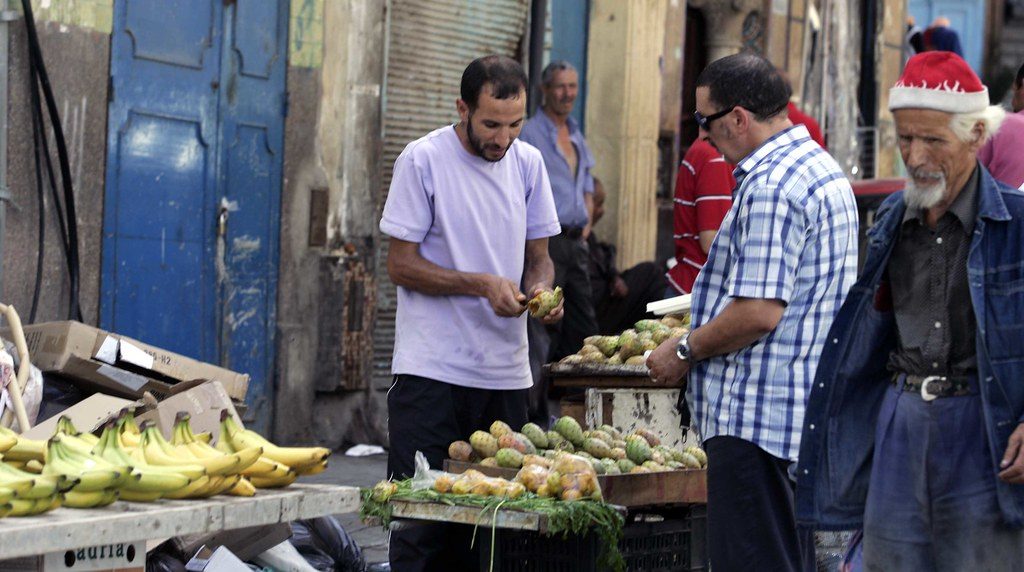
Food is where Algeria gets cheap in a way that surprises people. Local eateries and street vendors start at $3 to $5 for a meal. A mid-range restaurant runs $10 to $20. You can eat three times a day on street food for less than one restaurant dinner. The math is not complicated.
Put it together and a lean day lands somewhere around $70 to $95 all-in, if you are mixing hostels with budget hotels and using overnight trains where they exist. That figure assumes you are not flying everywhere. Travel by budget airline when you have to cover real distance, overnight trains when you can sleep through the miles.
The street food worth knowing is not complicated. Bread stalls sell fresh loaves in the evening, and a loaf plus olives plus a tin of sardines is a full meal for pocket change. Grills turn out skewers and merguez after dark, and the busiest one on any given street is busy for a reason. Bakeries open early and close when the trays are empty, which is usually before mid-morning. The practical warning is water: tap water is a gamble, bottled water is cheap and everywhere, and the traveller who skips it spends two days in a room they paid for and cannot enjoy.
Cash is the other daily friction. Many small places do not take cards, and ATMs outside the big cities are unreliable and sometimes empty. Carrying enough cash for several days is normal, and knowing where the next working machine is becomes a habit, the way knowing where the next petrol station is becomes a habit.
The Long Stay Problem
Here is the thing nobody warns you about. Six months, one year, two years. The longer the trip, the higher the budget. Not because any single day costs more, but because days add up and eventually something breaks, or you get sick, or you decide you want a real bed for a week. A two-week trip has a shape. A two-year trip does not.
So the daily number is only half the story. If you are planning something long, plan for the days you did not plan for.
There is also the visa question, and it does not have a fixed price that holds across nationalities. What matters is that the process takes time, involves paperwork that cannot be done at the border, and occasionally means a trip to a consulate in a neighbouring country to renew. Long-stay travellers build their route around that errand rather than pretending it does not exist.
What You Are Actually Paying For
Group size matters less than people think on the fixed costs. A safari truck costs what it costs whether two people are in it or six. Beyond two people, the savings from adding more are not significant, largely because accommodation in places like Tanzania charges per person anyway. The same logic applies broadly. Splitting a vehicle helps. Splitting a room often does not.
Some costs you can insure against. Some you cannot. Cancellation coverage that reimburses 80% of nonrefundable trip costs, provided you cancel at least 48 hours out, is the kind of thing that looks like waste until the week you need it.
The Point
Algeria rewards the traveller who moves slowly and eats where the locals eat. Under $35 for a room. $8 to $12 for a motorbike. $3 to $5 for a meal. Those are the numbers. Everything else is negotiation.
The mistake is staying in the room to save money. A cheap room is not the goal. It is the thing that lets you leave it.
Leave a Reply