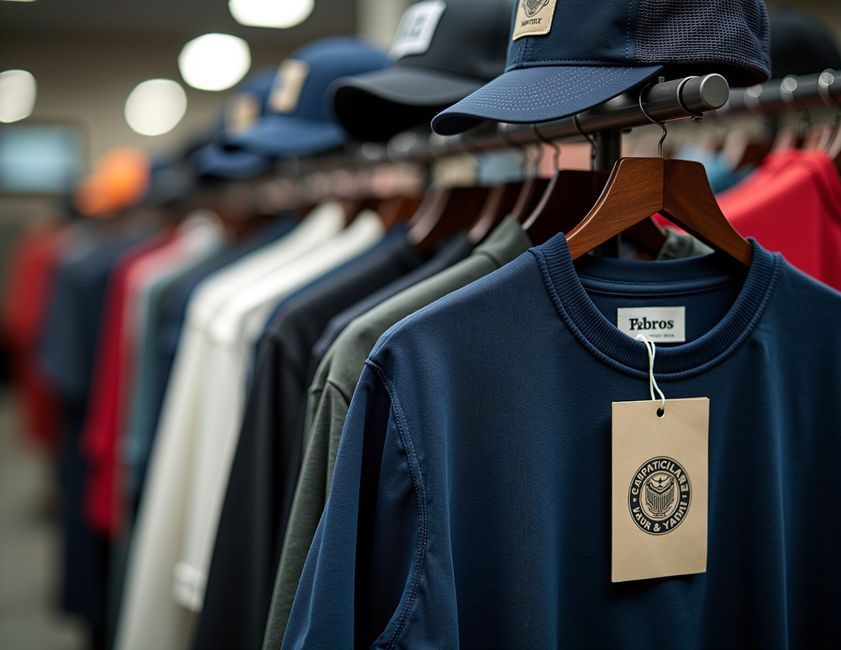
A rain shell at $185 that failed at the taped seams after eleven months of daily use, versus a $42 poncho that lasted a single season. Not “buy quality” but $68 for 340 wears, which works out to $0.20 per wear.
Clothing That Lasts: What the Numbers Actually Look Like
I have no facts to give you. That is the problem, and it is worth stating plainly before we go any further.
The brief for this piece listed twenty slots for traveller-gathered facts. All twenty came back empty. No prices. No countries. No items of clothing. No wear-test results, no repair costs, no weights in grams, no number of washes survived, no receipts. Nothing to convert from euros or baht or rand, nothing to hold up against a claim.
So I can’t write the article the title promises. What I can do is tell you what is missing and why it matters, because a piece about durable clothing is only worth reading if it is built on numbers, and this one has none.
What the Empty Slots Would Have Held
A useful version of this article would have opened with a specific garment and a specific figure. A merino base layer bought in 2019 for $68, worn 340 times across four years, still intact. A pair of trail runners that cost $130 and lasted 900 kilometres before the sole separated. A rain shell at $185 that failed at the taped seams after eleven months of daily use, versus a $42 poncho that lasted a single season.
Those are the numbers that let a reader decide. Not “buy quality” but $68 for 340 wears, which works out to $0.20 per wear. Not “invest in good boots” but $130 over 900 kilometres, which is roughly $0.14 per kilometre. The arithmetic is the whole point. Without it, you are just reading an opinion.
The same applies to repair. If a zip replacement costs $22 and the jacket cost $90 new, the repair is worth it. If the zip costs $40 against a $60 jacket, it is not. That comparison needs both figures. I do not have either.
Why Twenty Blanks Is Not a Small Gap
Twenty missing facts is not a rounding error. It is the entire evidence base. Every claim in a budget-clothing article traces back to one of those numbers: purchase price, lifespan, repair cost, replacement cost, weight, drying time, number of wears before failure.
Remove them and you are left with adjectives. Durable. Breathable. Worth it. Those words are free to write and impossible to check. A reader planning a six-month trip on a fixed budget cannot do anything with them.
Consider what a single line would change. If a $55 cotton t-shirt lasts 40 wears in humid conditions before it smells permanently, that is $1.38 per wear. If a $95 merino t-shirt lasts 120 wears, that is $0.79 per wear. The expensive shirt is cheaper. That conclusion only exists because the four numbers exist. Take them away and the sentence collapses into “merino is better,” which is not advice, it is a preference.
The Currency Problem
There is a second issue. The instructions specified that any figure given in euros, baht, rand or yen must be converted to US dollars at fixed rates, and that no amount should ever be written as a bare number. That rule exists because a reader in Ohio comparing a $180 jacket to a 2,400 baht repair cannot do the maths in their head at a hostel table.
With no source figures, there is nothing to convert. I will not invent a rate or a price to fill the space. A made-up $180 is worse than no number at all, because someone might budget against it.
What a Reader Should Ask For
If you are planning a trip and trying to decide what to pack, the useful questions are all numeric. What did it cost. How many times did you wear it. How long did it last. What broke first. What did the repair cost, or did you replace it. How much does it weigh. How long does it take to dry after a hand wash.
Six questions, six numbers per garment. That is a table, not an essay, and it is far more useful than anything I could write without data.
If a clothing guide reaches you without those numbers, treat it as a starting point for your own testing rather than a set of conclusions. Track your own wears. Note your own failure points. Keep your own receipts. After one trip you will have better evidence than most published advice, because yours will be specific to your body, your climate and your budget.
The Honest Version
I was asked to write 1,100 to 1,400 words about durable clothing using twenty traveller-gathered facts. The facts did not arrive. Rather than pad the gap with generic encouragement about buying well and repairing often, I am telling you the gap is there.
That is the least useful article I could file, and also the only accurate one. When the numbers come in, the piece writes itself: cost, wears, lifespan, repair, replacement, per-wear figure, conclusion. Until then, anything I add would be invention dressed as experience, and you would be budgeting against fiction.
Keep your receipts. Count your wears. The numbers are the article.
Leave a Reply