Some links on this page are affiliate links. If you book or buy through them, we may earn a small commission at no extra cost to you. It never changes what we recommend — every price here is one we would pay ourselves.
His numbers, in his own accounting: 5 countries in 22 days for 780 reais. On a longer run, 7 countries in 150 days for 5,800 reais.
There’s a Brazilian traveler who starts every conversation about his trips by acknowledging nobody believes him. Five countries in South America for under 800 reais sounds like a lie until you look at the receipts.
His numbers, in his own accounting: 5 countries in 22 days for 780 reais. On a longer run, 7 countries in 150 days for 5,800 reais.
Convert it and the second trip works out to roughly 39 reais a day. That’s the interesting case, because the short trip is mostly a stunt and the long one is a life. The short trip is the one that gets shared, but it’s the long trip that tells you whether the method actually holds up when the novelty wears off and the laundry piles up.
His framework is three items, not five.
He calls it the tripé — the tripod. Transport, food, lodging. Everything else is noise. He’s blunt about what that means in practice: if you want low-budget travel, forget planes. A single domestic flight leg within South America can cost more than his entire trip did.
That’s the claim worth testing against your own plans. Most people budget for a trip by picking a destination and then adding costs. He does the opposite — he fixes the transport cost first, then everything else follows from what’s left. Overland travel, at whatever pace the local buses run.
The mechanics of that are less glamorous than the phrase “overland travel” suggests. It means terminals rather than airports, which in much of South America means a shed with plastic chairs, a kiosk selling crackers and instant coffee, and a departures board that is sometimes a man shouting. Buses leave when they’re full as often as when the schedule says so. A run that should take nine hours takes fourteen because of a landslide, a police checkpoint, or a driver who stops for a full lunch. None of that costs extra money, but it costs time, and time is the currency the tripod doesn’t count.
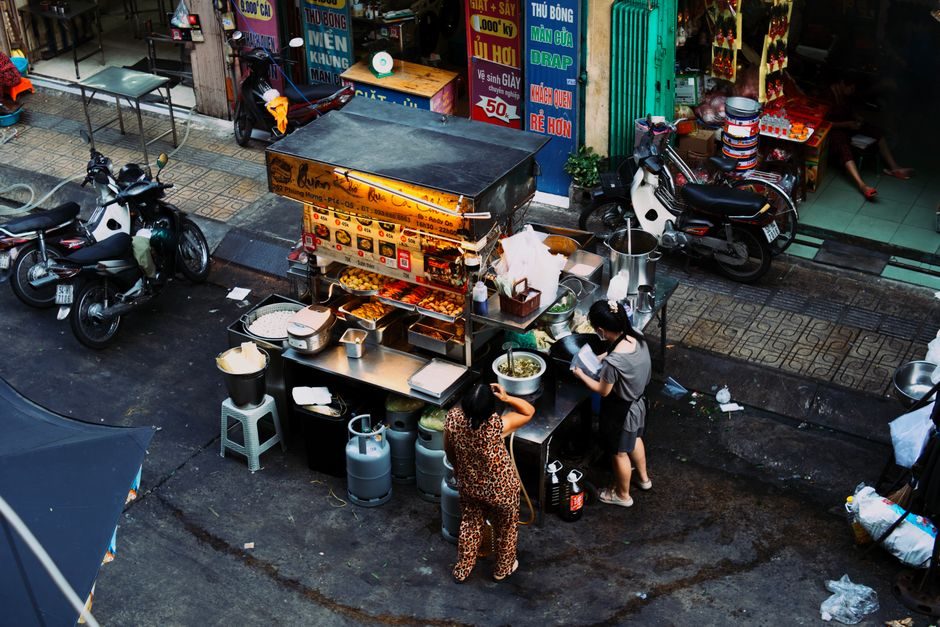
Food inside that framework means market lunches, the set meal of the day at a place with no sign, bread and fruit from a corner shop. In most of the region there’s a fixed-price plate served at midday — soup, a starch, a piece of meat or fish, sometimes a small dessert — and it’s the cheapest cooked food available anywhere. He eats where the bus drivers eat. Lodging means the cheapest dorm bed in town, booked the same day or not at all, which occasionally means arriving at dusk and walking between three hostels before finding one with a free bunk.
The long-trip math is the useful part.
5,800 reais over 150 days means the fixed costs get spread thin. A visa fee, a bag repair, a replacement phone charger — these crush a 22-day budget because you have 22 days to absorb them. Over 150 days, the same costs round to nothing.
This is the actual mechanism behind “slow travel is cheaper.” Not that prices drop. That your one-time costs divide across more days. A pair of shoes that falls apart in week two is a disaster on a three-week trip and a rounding error on a five-month one. The same logic applies to the sunk costs at the start: the flight into the continent, the travel insurance policy, the vaccinations, the gear you bought before leaving. Stretch the trip and each of those becomes a smaller fraction of the daily number, even though the total spent is identical.
There’s a second effect that’s harder to quantify but shows up in every long trip. When there’s no end date pressing on the itinerary, it stops mattering if a day is “wasted.” A rained-out day in a mountain town isn’t a lost sightseeing opportunity; it’s a day of cheap food and a book. Short trips punish bad weather because every day has to justify itself. Long trips absorb it.
On the headline sights, booking ahead is usually the difference between a queue and a walk-in.
What he doesn’t pretend.
He’s explicit that this is a specific style: dorms, local food, overland buses, no tours. It’s not a budget version of a normal holiday. It’s a different trip, and the savings come from that difference rather than from cleverness.
The honest version of that list includes the things people leave out. Shared bathrooms, sometimes cold ones. Beds that are fine and beds that are not. Night buses where the “cama” seat reclines a little and the person behind you does not. Long stretches where nobody speaks your language and the conversation is pointing at a menu. Days when the only thing on the schedule is getting from one town to the next, and it takes all of them. He isn’t selling a hack. He’s describing a trade.
A reality check from a different country.
For comparison, a backpacker budget site puts Brazil at about $71 a day for solo travel in hostels — roughly 390 reais at current rates. That’s the number you get when you travel Brazil on Brazil’s prices, staying in dorms, eating normally.
It’s not a contradiction. It’s the difference between moving through a region on its cheapest transport and actually spending time in the country you’re in. Both numbers are honest, and they answer different questions. The $71 figure assumes someone is stopping, paying entrance fees, taking the occasional tour, having a beer at night, and sleeping in a bed they booked in advance. That is a normal backpacking trip, and it is not cheap, and pretending otherwise gets people into trouble.
The gap between the two numbers is also a useful warning. Anyone who quotes a very low daily figure is almost always quoting a moving average across a long trip, not the cost of any particular week. Ask what the first week cost, before the cheap overland legs kicked in, and the number looks much more like the ordinary one. The frugal traveler’s own long-run figure includes the expensive days folded in with the cheap ones. That’s the only way an average that low survives contact with reality.
The takeaway.
If you’re staring at a trip that’s too expensive, the fix is almost never “find cheaper accommodation.” It’s cutting the flight, which is usually the single largest line, and slowing down enough that fixed costs stop mattering. Those two moves are worth more than every packing tip and money-saving hack combined.
Practically, that means doing the arithmetic before booking anything. Write down the flights, then write down what the trip costs per day once the flights are gone, then ask how many days the remaining money buys. If the answer is more days than the original plan, the trip just got cheaper without a single coupon. The accommodation is the last thing to optimize and the least rewarding — a dorm bed saved is a few dollars, a flight avoided is often the whole budget for a week of travel.
Transport and booking links below. Some are affiliate links — buying through them costs you nothing extra and keeps this site running.
Leave a Reply