Some links on this page are affiliate links. If you book or buy through them, we may earn a small commission at no extra cost to you. It never changes what we recommend — every price here is one we would pay ourselves.
A bia hoi, the fresh draft beer poured from a keg on the pavement, costs $0.30. An overnight train between cities, sleeper berth, runs $15 to $25.
\n\n
What a Dorm Costs
\n\n
A dorm bed in Hanoi runs $5 to $8. That is not a typo, and it is not a hostel with a leaking roof and one shared squat toilet. Vietnam is where budget travelers go to feel rich. Pho for breakfast costs $1.50. A bia hoi, the fresh draft beer poured from a keg on the pavement, costs $0.30. An overnight train between cities, sleeper berth, runs $15 to $25. The dorms at that price tend to sit in the Old Quarter, up narrow staircases behind shopfronts, with pod-style bunks, a curtain, a reading light and a locker that takes a padlock you should have brought from home. The bathrooms are usually shared but clean, and the free breakfast is often a fried egg, a baguette and instant coffee. What goes wrong is noise: the same street that makes the location perfect at 8am makes it unbearable at midnight, and light sleepers should ask for a bed at the back of the building rather than the front. Booking a day ahead is usually enough; the Tet holiday is the exception, when prices double and beds vanish.
\n\n
Compare that to the general benchmark for budget accommodations worldwide. Hostels sit around $15 to $25 per night. Budget hotels run $30 to $60. That gap between $6 in Hanoi and $25 elsewhere is the whole game.
\n\n
Japan and the Ceiling
\n\n
Japan gets filed as a high-budget destination, and it is, if you stay in 5-star hotels and take private transfers. Those travelers should budget $550 or more per day. Backpackers in hostels eating street food can cut daily costs by 50 to 60 percent against that benchmark.
\n\n
One traveler reported a cost per day on accommodation of just $7, the cheapest country they had stayed in, and they picked mostly hostels. One of those was a 12-bed dorm. They stayed five nights. That kind of number usually comes from a hostel in a smaller city or a suburb a couple of train stops from the center, not from a bunk in Shinjuku. The trade-off is a longer commute and a quieter street, which for a solo traveler often turns out to be the better deal anyway.
\n\n
\n\n
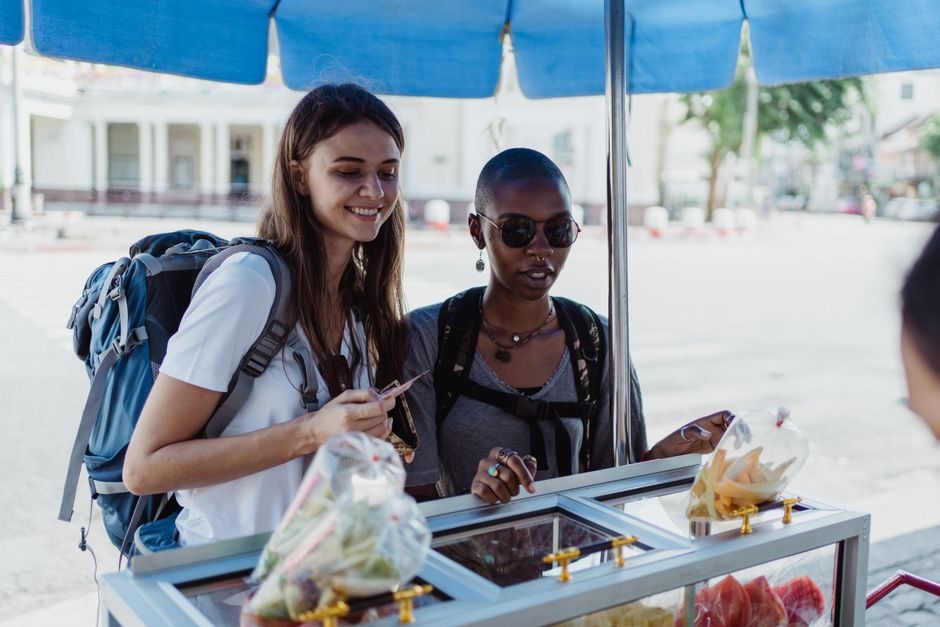
Meals in that range run $2 to $6. Some hostels throw in a basic breakfast, which quietly removes one meal from the day’s math. Convenience store food is where the low end lives: rice balls, egg sandwiches and cold noodles, eaten on a bench or back in the dorm kitchen. Standing noodle counters do a bowl for a few dollars, and the ticket machine at the door takes cash and gives change. What typically catches people out is the train, not the bed. A single cross-city ride can cost more than the night’s accommodation, so a reloadable transit card and a willingness to walk the last two stops matter more than the room rate.
\n\n
The Daily Number
\n\n
The standard split holds up. Budget travelers get by on $30 to $50 a day covering food, hostels and local transport. Mid-range travelers average $60 to $100 and get nicer hotels and tours for it. Luxury trips exceed $150 a day depending on activities and dining.
\n\n
Mexico sits neatly inside those brackets. $30 a day works on a shoestring if you don’t mind dormitories. $40 is a comfortable backpacker’s budget. $50 puts you in flashpacker shoes. Backpacking Mexico City on that budget gets you a hostel dorm, street food and self-cooked meals, public transport, and a few paid attractions. Eat out more or drink and you add 100 to 300 pesos a day, which is roughly $5 to $16. The city rewards early starts: markets open with the tamale vendors, museums are cheapest and emptiest before noon, and the metro costs a handful of pesos a ride as long as you avoid rush hour, when the carriages fill to a density that makes a backpack feel like a liability. Hostels cluster in Roma and Condesa, leafy and walkable, or in the Centro, cheaper and louder.
\n
The major sights all sell out in high season — buying in advance is the simple fix.
\n\n\n
\n\n\n
Brazil lands moderate for solo hostel travel, around $71 a day in total purchasing power, including one night in a dorm and normal day-to-day spending. That figure covers more than the bed. It is the whole day. That number is higher than Mexico’s mostly because of distance and safety logistics: taxis after dark, cards instead of cash in some places, and the fact that the cheap eats are often a bus ride from the hostel rather than around the corner.
\n\n
The Price Ladder
\n\n
The spread across accommodation types is where budgets actually break. A hostel dorm is $18 to $25. A private room is $40 to $60. A hotel is $80 to $130. Same city, same week, three very different trips. The jump from dorm to private room is the one that hurts, because it usually comes with a private bathroom and a door that locks, and once a traveler has had those for two nights it is hard to go back to a top bunk.
\n
Dining splits the same way. Local eateries and street vendors start at $4 to $6 for a meal. A mid-range restaurant runs $15 to $30. Two mid-range dinners can cost more than three nights in a Vietnamese dorm.
\n\n
The math is not complicated. A $7 bed and $4 meals leave room for trains, entry fees and the occasional beer. A $130 hotel room eats the entire daily budget of a shoestring traveler before they have eaten anything. The quiet trick is to spend up on the things that are hard to replace, a bed in a safe, central location, and down on everything that is easy to replace, coffee, lunch, the taxi you could have walked.
\n\n
What $30 Buys
\n\n
$30 a day is the floor for most destinations, and it buys a dorm bed, street food, self-cooked meals, public transport and a few paid attractions. It does not buy comfort, privacy or late nights at the bar. $40 is the comfortable version. $50 and up starts buying private rooms and restaurant meals. In practice the floor only works in countries with cheap street food and a dorm under $10, so it is a Vietnam, Thailand, Mexico or Guatemala number rather than a Western Europe one, where the same $30 barely covers a bed.
\n\n
Japan at $7 a night for accommodation is the outlier worth remembering. It is possible to spend less on a bed than on lunch. That is the number to hold onto when someone tells you a country is expensive.
\n\n\n\n
If you liked this
\n
\n\n
Numbers and sources
\n
- \n
- Rome2Rio routes and timetables
- Hostelworld listings
- US State Dept travel advisories
- Numbeo cost of living data
- Weatherspark climate averages
\n
\n
\n\n
\n
\n\n
Leave a Reply