Cross-border overnight routes typically run €5 to $25 when converted, which is $5.40 to $27. At $100 and up per overnight leg, the arithmetic stops working in the traveller’s favour.
What the Ticket Actually Costs
Overnight buses are sold as a saving. Sometimes they are. Often they are just a different way of spending the same money, moved from a bed to a seat.
The clearest way to see this is to look at one country’s fare ladder, where the same route is sold at three prices depending on how much privacy you give up. On one set of routes, AC First Class Sleeper runs $20, AC 2-Tier Sleeper is $15, and AC 3-Tier Sleeper is $10. Elsewhere the same three tiers cost $60, $40 and $30. A third set prices them at $30, $25 and $20. Same product names, wildly different money. The gap between top and bottom tier is $10 in the first case, $30 in the second, $10 in the third.
That spread matters more than any single fare, because it tells you the tier names are not a reliable guide to what you will pay. The route and the country set the price. The class only sets the difference within it.
What the tier names also hide is how much of the journey you actually spend horizontal. On the cheapest tier the berth is a shelf, often with a thin mattress, a pillow that has been through several owners and a curtain that does not quite close. The middle tier usually means two bunks to a bay instead of three or four, and a bit more headroom to sit up in. The top tier buys a door you can shut, a reading light that works, and — on some operators — a blanket that is not shared. On a six-hour hop the difference is cosmetic. On a fourteen-hour haul it is the difference between arriving able to function and arriving wrecked.
The other figure the fare board never shows is the taxi at each end. Terminals are usually on the edge of town, because that is where the land is cheap. Getting from the terminal to a bed at 6am can cost more than the upgrade between tiers, and it is the cost nobody budgets for. If the bus is supposed to arrive at 5:30am, assume the station café is the only thing open until at least seven, and price the taxi in before deciding the ticket was a bargain.
Crossing Borders
Cross-border overnight routes typically run €5 to $25 when converted, which is $5.40 to $27. That is the range where a night bus genuinely beats a night in a room, assuming the room would have cost more than the ticket. Book one to two days ahead. That is the whole of the booking advice the numbers support.
Cheap does not mean the same thing everywhere. One traveller avoided a $99 shuttle into Nicaragua by using local bus and coach services instead. That is a $99 decision made on the ground, not online, and it required piecing together services that were never sold as a single product.
The mechanics of that kind of substitution are worth spelling out, because the saving is real but the work is not trivial. It usually means taking a local bus to a border town, walking across on foot with the passport stamped at a window that may or may not be staffed when you arrive, then finding the onward coach from a stop that has no English signage and no timetable you can photograph. Border posts tend to be busiest in the early morning, when the overnight coaches all disgorge at once, and quietest in the early afternoon. If the crossing involves a river or a change of vehicle, expect touts offering to “help” for a fee that starts high and drops fast once you start walking away.
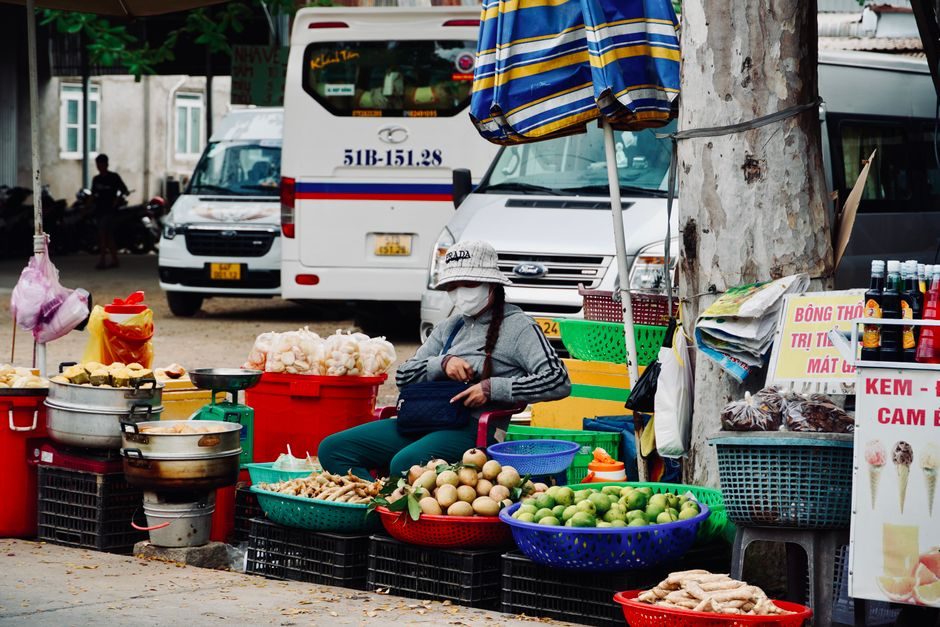
The failure mode is timing. A connection that looks fine on paper can collapse because the last local bus left at four and the onward coach does not go until six the next morning, which turns a cheap day into an unplanned night in a border town. Locals avoid this by travelling in the morning and treating the crossing as a full day’s job, not a leg of a longer journey. Anyone trying to save the shuttle fare should build in a spare half-day and not book anything tight on the far side.
Where It Gets Expensive
Argentina was the most expensive place to do this. Each overnight bus there was at least $100. Overlanding from Ushuaia, the southernmost city in the world, all the way to Cusco in Peru, buses were the main form of transport, with jeeps filling the gaps. At $100 and up per overnight leg, the arithmetic stops working in the traveller’s favour. You are no longer saving on accommodation. You are paying hotel prices to sleep sitting up.
There is a European comparison worth holding next to it. One overnight route charges £50, which is $68 at $1.36 to the pound, and for an extra £5 — about $6.80 — you can take a larger VIP seat instead. That is a $6.80 upgrade on a $68 ticket, roughly ten percent, for a materially better night. On a route priced like that, the upgrade is the better buy.
The Monthly Number
The figure that pulls all of this together is £858, which converts to $1,167. That was one traveller’s total spend on everything: local buses, overnight coaches and tourist shuttles, across a long overland trip. It works out at roughly £114 a month, or $155 a month.
Read that against the individual fares and the shape of the thing appears. A $10 sleeper and a $60 sleeper both exist. A $99 shuttle and its local-bus replacement both exist. The monthly average lands at $155 because the cheap legs outnumber the expensive ones, not because any single leg was cheap. Argentina alone, at $100 or more per overnight, would have blown that average apart if it had been the whole trip.
It is also worth noticing what the monthly figure does not include: the meals eaten at terminals, the SIM top-ups bought to check timetables, the occasional night in a real bed when two consecutive overnight legs became unbearable. Those are the costs that make the difference between a budget and a fantasy of one. A month of overnight buses is survivable, but it is survivable in the way that a month of anything uncomfortable is — the body keeps a running tab, and it collects on the days when the seat in front reclines into your knees and the air conditioning is set to a temperature that suits nobody.
What the Numbers Imply
Three tiers, three prices, and a difference that ranges from $10 to $30 depending on where you are. Cross-border routes from $5.40 to $27. Book one to two days out. Upgrades that cost about $6.80 on a $68 ticket. A $99 shuttle you can sometimes avoid entirely. And a long overland run that averaged $155 a month.
The saving is real when the ticket is $10 and the alternative bed is $20. It is imaginary when the ticket is $100. Nothing about the word “sleeper” tells you which of those two you are buying. The price does.
Leave a Reply