Some links on this page are affiliate links. If you book or buy through them, we may earn a small commission at no extra cost to you. It never changes what we recommend — every price here is one we would pay ourselves.
One set of numbers shows $7,146 spent on transport across a long trip, including trains, motorbikes, boats, rental cars, buses, and a camel.
What A Boat Actually Costs
A fast boat to the Gili Islands runs about $50 each way. That is the number most people miss when they budget for Indonesia. The flight to Bali can be had for around $100, but the water crossing to the Gilis eats into that saving fast, and once you are on the islands, prices stay high because almost everything arrives by the same boat you did. Expect $35 to $50 a day there in high season. Not a disaster. Just more than the mainland.
What the $50 buys is a seat on a crowded fast boat out of Padang Bai or Serangan, a life jacket that may or may not be fastened properly, and a ride of roughly two hours to two and a half hours depending on the sea. The boats leave in the morning, mostly between 8am and 11am, and the last reliable departures back to Bali run before midday. Miss the last one and the fallback is an overnight slow ferry or a night in a guesthouse near the port, which quietly adds a day and a room to the trip. The crossing itself can be rough between December and February, when swells build and a fair number of passengers spend the ride staring at the horizon. Seasickness tablets are sold at the port kiosks for small change; taking one before boarding is the local habit, not after.
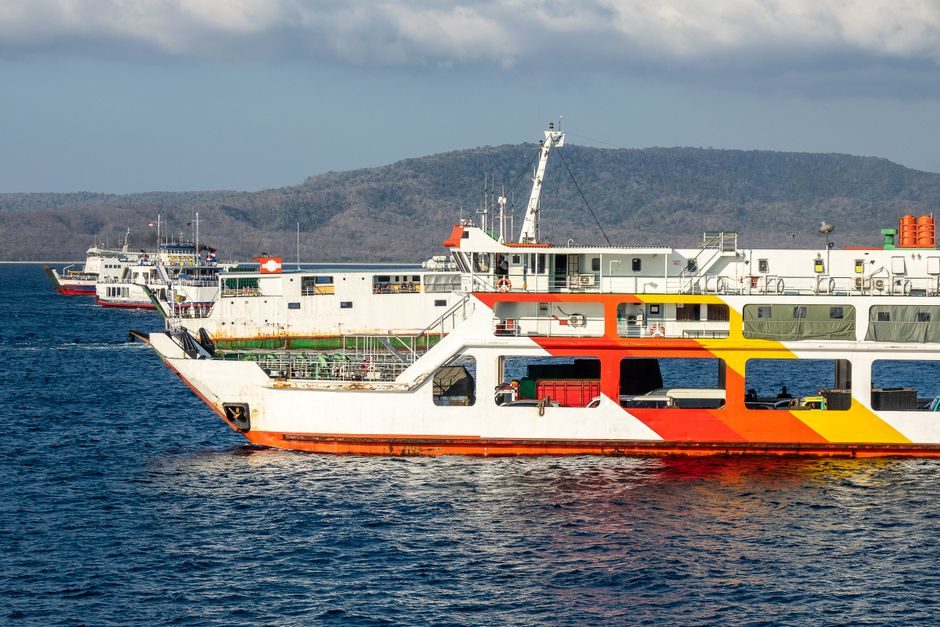
The same pattern shows up everywhere water is involved. A ferry ride in the Philippines costs PHP210, which is about $4.70. A domestic flight there costs PHP1,780, or roughly $40. The ferry is cheaper by a wide margin, but it is slower, and on some routes the difference in time is the whole point of the trip.
The Filipino ferry experience is its own thing. Terminals are hot, the queues for tickets and the queues for boarding are separate, and the terminal fee is often collected at a different window from the fare itself, which is why a first-timer sometimes stands in the wrong line twice. Arriving an hour before departure is normal, two hours on a holiday week. The boats themselves range from air-conditioned catamarans on the main routes to open-deck bancas where the luggage goes under the bench and the spray comes over the rail. On the short island hops, the banca is often the only option, and the fare is settled in cash on the pier.
For the headline stops on a route, reserving tickets keeps the pace.
The Whitsundays Math
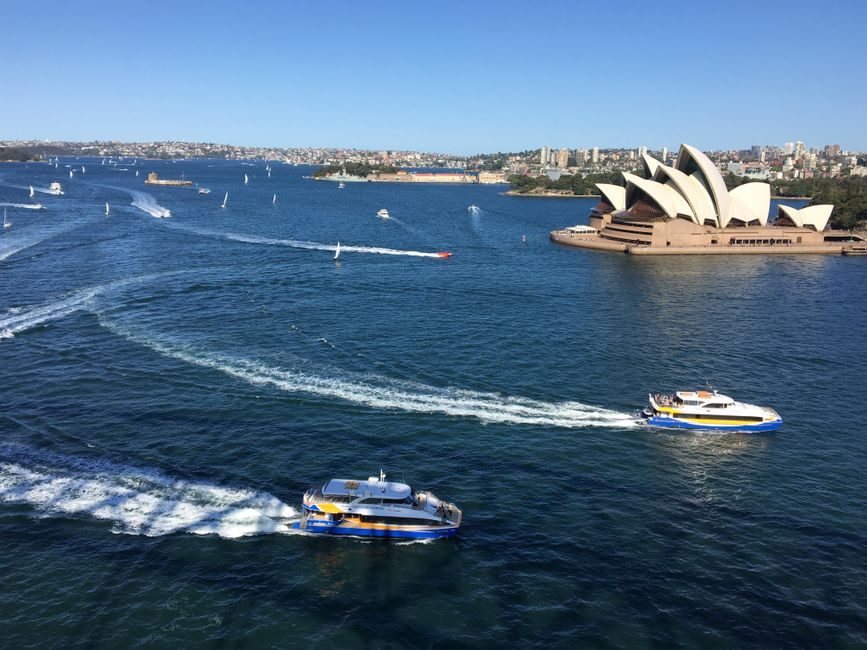
A three-day, two-night sailing trip in the Whitsundays with ProSail cost AUD$869. That is about $570 in US dollars at recent rates, and it covers everything once you are on the boat. Food, gear, the lot. It sounds like a lot for a backpacker, and it is. But the alternative is paying for three nights of accommodation, three days of meals, and some kind of day trip to see the same water. The sailing trip bundles those costs into one number.
What that number hides is the extras that sit outside it. Getting to Airlie Beach from the nearest airport is a bus ride of its own, the marina levy and any national park fees are sometimes collected separately at check-in, and the boat’s alcohol policy varies, with some operators running a cash bar and others letting passengers bring their own. The trip usually leaves mid-morning and returns mid-afternoon, so the first and last nights ashore are on the traveller’s own account. The weather window matters too: trips run year-round, but the winter months bring steadier winds and cooler nights, and a sailing trip in the wet season can mean more time at anchor than under sail.
That kind of bundling matters more than people admit. A daily spend of £86 drops to £67 without a San Blas sailing trip. Convert that and you are looking at roughly $116 a day versus $90. The sailing trip is not cheap, but it is also not the thing blowing up the budget. It is a known, fixed cost that replaces a lot of smaller, less predictable ones.
The San Blas trip works the same way in practice: the boat leaves from a small port on the Caribbean side of Panama or Colombia, the ride out to the islands is a few hours, and the days are spent moving between cays with meals cooked on board. The unpredictability it replaces is real. Island accommodation in that region is limited, the ferries between the mainland and the archipelago run on their own timetable, and a traveller trying to assemble the same route piece by piece often ends up paying more per night for less comfort. Booking the whole passage as one leg turns a scattered set of costs into a single line item.
Lakes, Ferries, and Short Hops
The ferry across Lake Koman in Albania costs 6 to 7 euros. That is about $6.50 to $7.60. The scenery is the point, and the price is low enough that it barely registers against a daily budget. Compare that to the ferry from Corfu to Saranda, which takes 35 minutes and costs 19 to 22 euros, or roughly $20.50 to $23.80. Short crossing, higher price. Island routes usually are.
The Lake Koman crossing takes a few hours and leaves early, so most travellers stay the night before in Shkodra or near the dam and catch a minibus or shared car to the jetty. The boat is a working ferry as much as a tourist one, with locals loading supplies and small vehicles alongside the passengers, and the seats along the open sides fill first. The water is a deep green, the hills come down steeply on both sides, and the whole trip is the kind of thing people describe badly because the photos do not carry the scale. The Corfu to Saranda route is the opposite: a fast, businesslike crossing on a modern boat, timed to connect with onward buses, with passport control at both ends and a departure hall that fills up in the half hour before boarding.
A hostel in Saranda, a day trip to Butrint, and a beach day at Ksamil round out that kind of stop. None of those are boat costs, but they are the reason the boat exists. You pay the ferry to get to the place where you then spend more money.
Where Boats Fit In A Bigger Budget
Some travellers track this stuff closely. One set of numbers shows $7,146 spent on transport across a long trip, including trains, motorbikes, boats, rental cars, buses, and a camel. Accommodation over the same period came to $6,882, covering apartments, a campervan, hotels, hostels, house sitting, a tent, a car, a bus, a boat, and a couple of nights in an airport. Boats are one line in a much longer list. They are rarely the biggest line, but they are almost never zero.
What those two totals show is that transport and accommodation land in the same territory over a long trip, and that water crossings sit somewhere in the middle of the transport column rather than at the top. Flights and long-distance trains do the heavy lifting; boats fill the gaps between them. The reason to track them anyway is that they cluster. A week of island hopping can stack four or five crossings back to back, and each one looks small on its own until the week is added up.
The smaller boat costs add up too. A mangrove boat tour in Malaysia runs about $13. A cable car on Langkawi is $14. Going up Penang Hill is $8. Half a scooter rental is $4. None of these are ferries, but they are the same category of expense: a small, specific, pay-once cost that gets you somewhere or shows you something. Museums tend to run $2 to $5. Most hiking is free. Boat tours sit in the $10 to $20 range in a lot of places.
The mangrove tour in Malaysia is a good example of what the money buys. It is usually a small boat with a local guide, an hour or two in the channels, and a stop where the guide points out monitor lizards, kingfishers and the occasional macaque. Tickets are bought at the jetty, sometimes through a hotel desk that adds a commission, and the tours run on the tide rather than the clock, so the departure time shifts from day to day. The Langkawi cable car and Penang Hill funicular are the same shape of purchase: a fixed ticket, a queue that builds through the morning, and a view at the top that justifies the fare once. Buying online in advance often means a small discount and a shorter wait, though the queues still form on weekends.
The Peak Season Problem
Guided tours, boat trips, and day excursions typically cost 10 to 20 percent more in peak season than off-season. That is the quiet tax on travelling when everyone else does. A $50 fast boat in high season might be $55 or $60 at the top end. A $13 mangrove tour might be $14 or $15. It is not dramatic on any single booking. Across a two-week trip with several water-based activities, it is real money.
The mechanics behind the rise are simple. Departures sell out, operators add a premium because they can, and the walk-up price at the pier is often higher than what was available online a few days earlier. In high season the early boats go first, so late risers pay more or take the next departure. Booking a day or two ahead, outside the school holidays if possible, and travelling mid-week all shave something off. The exception is the genuinely fixed route, like a scheduled public ferry, where the timetable and the fare hold steady no matter who is on board.
The Gili Islands are the clearest example. Everything comes by boat, so everything costs more. The islands charge $35 to $50 a day in high season, and that is before you factor in the crossing to get there. Budget accordingly. Not because it is unfair, but because the numbers are the numbers, and the water does not care what you hoped to spend.
Leave a Reply