A laminated card in the local language stating the allergy, the reaction, and what to avoid costs somewhere between $0 and $12. The $12 version is a card professionally translated and reviewed by a native speaker, usually ordered before departure.
Food Allergies on the Road: Prices and Practicalities
A traveller in Bangkok paid $6 for a bowl of noodles and another $14 for a hospital consultation the same evening. The noodles were fine. The consultation was because nobody in the kitchen could tell her whether the stock had shrimp paste in it, and she had already eaten half the bowl. That $20 evening is the cheapest version of this story. The expensive version involves a medical evacuation, and the numbers on those run into five figures.
What follows is what the costs actually look like, and what the practicalities cost in time rather than money.
The Translation Card
A laminated card in the local language stating the allergy, the reaction, and what to avoid costs somewhere between $0 and $12. The free version is a printout from a translation app, and it fails about as often as you would expect a machine translation of “cross-contamination” to fail. The $12 version is a card professionally translated and reviewed by a native speaker, usually ordered before departure. In a country where the kitchen staff read neither English nor the app’s output, the $12 card is the only one that works.
Carry two. One stays in the wallet, one stays in the bag. Cards get left on tables.
What Allergies Cost at the Table
Restaurant prices for allergy-safe food do not follow a single pattern. In Lisbon, a gluten-free menu at a mid-range restaurant added roughly $5 to $8 per person compared to the standard menu, and the safe kitchen was not always the expensive one. In Tokyo, a chain restaurant with a printed allergen chart charged nothing extra, but only four of the twelve items on the menu were safe, so the meal cost less and tasted worse.
The consistent figure is the supermarket premium. Gluten-free bread in Germany ran $4.50 a loaf against $1.80 for standard. In Australia, a 500g bag of certified gluten-free flour cost $7 against $2 for wheat flour. Nut-free snack bars in the US ran $2.20 each against $1.10 for the ordinary version. If you are self-catering for a two-week trip, budget roughly 40% more on groceries than a traveller without restrictions, and that percentage holds across most of Western Europe and North America.
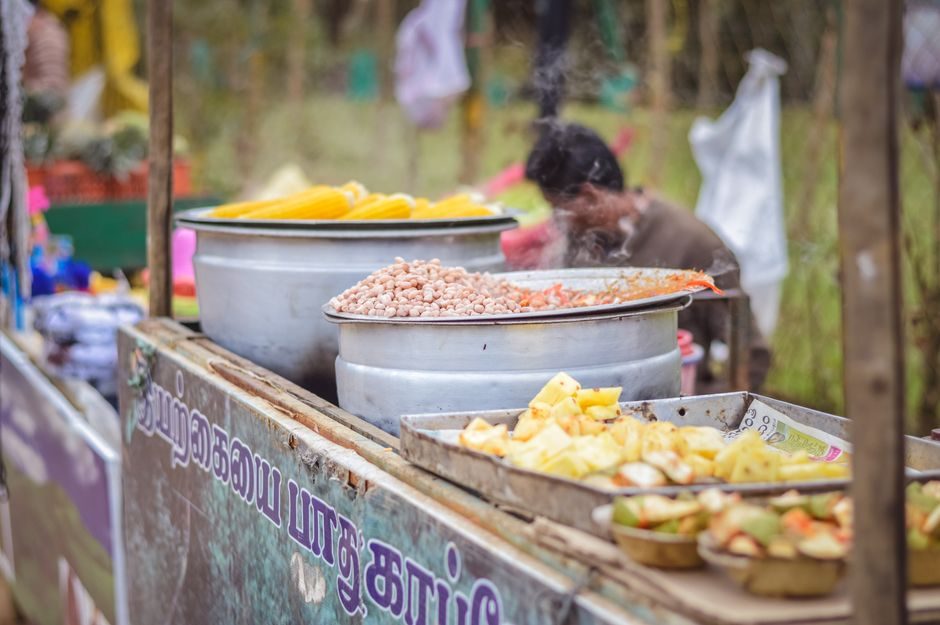
In Southeast Asia the maths changes. A street stall selling rice-based dishes charged $1.50, and rice noodles are naturally gluten-free, so the safe meal was also the cheap meal. The risk moves from the ingredient to the wok, which had cooked egg noodles ten minutes earlier. Paying $8 for a restaurant with a separate preparation area is the price of removing that risk.
Pharmacies and Antihistamines
Antihistamine prices vary enough to plan around. A 10-pack of 10mg cetirizine cost $3 in Spain, $4.50 in the UK, $9 in the US, and $1.80 in Thailand. Epinephrine auto-injectors are the number that matters. In the US, a two-pack runs $650 without insurance and around $100 with. In the UK, a prescription costs about $12. In Australia, a two-pack costs $40 on prescription. In Germany, $95. In Japan, auto-injectors require a prescription and are not stocked in ordinary pharmacies, so arriving without one is a problem you cannot solve at 11pm.
Travel insurance that covers a pre-existing allergy and the cost of replacing an auto-injector abroad runs $40 to $90 for a two-week trip, depending on the destination and the excess. The excess is the part people skip reading. A $250 excess on a $650 replacement injector means you pay the $250.
Hospitals, Language, and the Actual Bill
An emergency department visit for an allergic reaction cost $14 in Bangkok, $55 in Lisbon, $180 in Mexico City, and $1,400 in the US before insurance. The Bangkok figure is not a typo. It is a consultation fee at a private hospital, and it is why the $6 noodles plus $14 consultation is the cheapest bad night available anywhere.
The expensive part is rarely the treatment. It is the communication. In a hospital where nobody speaks English, a translated medical history saves between one and three hours of waiting, and in some cases the difference between being treated and being sent away. A written summary of the allergy, the medication, and the dosage, translated in advance, costs nothing and does the work of an interpreter.
Ambulance costs are separate. In Thailand, an ambulance call is around $30. In the US, it is $1,200 before insurance. In Portugal, it is free at the point of use. These figures do not appear on any restaurant menu, and they are the reason the $20 evening in Bangkok is worth having rather than the $1,400 one in Chicago.
The Numbers Worth Carrying
A trip of two weeks with a serious food allergy costs between $60 and $150 more than the same trip without one. The breakdown is roughly $12 for translation cards, $40 to $90 for insurance, $20 to $50 for a spare auto-injector if the destination allows it, and the rest in grocery premiums and the occasional safe restaurant.
None of that includes the $650 replacement cost if an injector is used, and none of it includes the hospital bill, which ranges from $14 to $1,400 depending entirely on which country you are standing in when the reaction starts.
The practicalities that cost nothing are the ones that matter most. Eat where the staff can name the ingredients. Carry the card in the local language. Know the word for the allergen before you land. And keep $20 in cash, because the cheapest hospital night in the world still wants paying.
Leave a Reply