Some links on this page are affiliate links. If you book or buy through them, we may earn a small commission at no extra cost to you. It never changes what we recommend — every price here is one we would pay ourselves.
For the typical backpacker, a hostel night eats up 27 percent of the daily budget, which works out to about $18 a day. Multiply it by thirty and you have $540 gone before you have eaten anything, paid for a bus, or bought a SIM card.
What A Bed Costs
Accommodation is the line item that decides everything else. For the typical backpacker, a hostel night eats up 27 percent of the daily budget, which works out to about $18 a day. That figure is not dramatic on its own. Multiply it by thirty and you have $540 gone before you have eaten anything, paid for a bus, or bought a SIM card.
For anyone arriving after midnight, an eSIM is already running.
The spread between regions is wide. In parts of India you can travel on as little as $8 a day including a hostel bed and food. In Guatemala, a local SIM card cost 150 quetzals, roughly $15, for 15GB of data covering four weeks, with reliable signal across the country. That is one of the few costs that stays flat no matter where you sleep.
Elsewhere the floor rises. One traveller averaged $14 a night across hostels and budget guesthouses, mostly comfortable, good enough for exploring. Another paid $50 for a resort room after discovering bedbugs in a guesthouse and finding everywhere else full. Fifty dollars to escape bedbugs is not a splurge. It is a repair bill.
Private rooms change the arithmetic fast. A triple room with a private bathroom in London, chosen for its location, came to 254 Brazilian reais per person for a single night. That converts to roughly $47 per person. One night. It buys a lot of dorm beds.
What that $18 actually buys varies more than the number suggests. In a good hostel it means a bunk in a shared dormitory, usually four to eight beds to a room, a locker that fits a daypack but not a full 65-litre pack, and a bathroom down the hall. The cheap end of the range tends to mean a mattress with a plastic cover, a fan instead of air conditioning, and a room that faces a street where the bars close at two in the morning. The top of the range gets air conditioning, an ensuite, curtains around the bunk and a reading light that works. It pays to read recent reviews rather than the star rating, because hostels age fast and a place that was spotless three years ago may now be the one with the mattress stains.
Check-in time is the other hidden cost. Most hostels will not let you into a dorm before early afternoon, and a night bus that dumps you in a city at six in the morning leaves you sitting in a cafe with your bags until then. Some places hold luggage for free, some charge a small fee, and some simply shrug. Booking the night before arrival so the bed is ready is often worth the extra night’s rate, especially after an overnight journey.
The Housesitting Alternative
Housesitting removes the nightly rate entirely. That is the whole appeal. Instead of $18 a day, or $47 for one London night, or $500 a day on a private budget safari as a solo traveller, you pay nothing for the roof. The same safari costs $300 per adult per day for two people sharing, so solo travellers already absorb a penalty. A housesit does not erase that, but it does remove one large recurring cost.
The trade is time and flexibility. A housesit ties you to a location for its duration. You cannot move on when the town disappoints you. What you save in dollars you may spend in freedom, and only you can price that.
TrustedHousesitters is the main platform for this, and it is the best house sitting site overall as of 2026. Membership is not free, though the nightly savings can outrun the fee quickly at $18 a night.
The mechanics are worth understanding before signing up. Homeowners post a listing with dates, photos of the house, and a description of the animals and the chores. Sitters apply with a short message, and the owner usually picks from several applicants. Most sits involve pets, and the work is real: feeding, walking, cleaning litter trays, and staying in the house overnight rather than treating it as a free hotel. Typical sits run from a long weekend to several weeks, and the longer ones are the ones that move the budget needle, since the travel costs of getting there get spread over more free nights.
New sitters without reviews find it hard to win the popular sits in cities, because owners favour applicants with a track record. The usual route in is to start with a local sit or a less glamorous location, collect a couple of reviews, and then apply for the places everyone wants. Owners also tend to prefer sitters who can arrive the day before and stay the night before departure, so the handover happens in person rather than by video call. Applications are usually free to send, but the membership fee applies whether or not a sit is ever confirmed, and there is no refund if a planned trip falls through.
Food And The Kitchen Question
Hostels come with kitchens, and kitchens change what you spend on food. Cooking three meals a day came to around £7 daily for one traveller, which is about $9.50. Eating out runs £10 to £20 per meal depending on where you are, roughly $13.50 to $27. That gap compounds over a week.
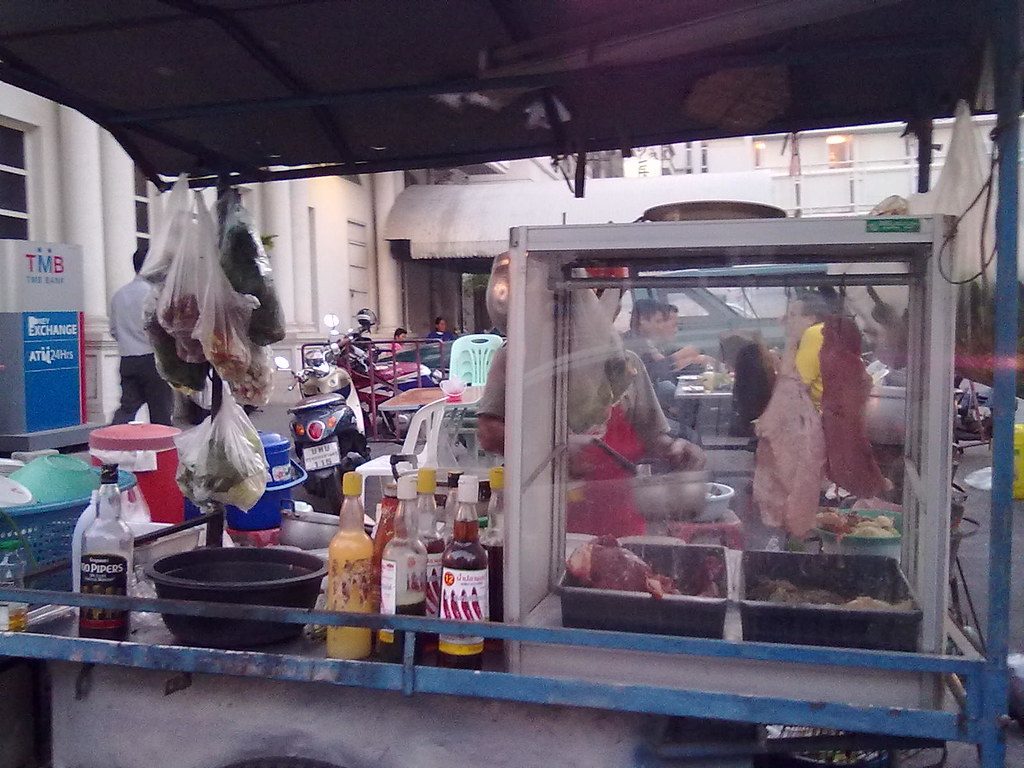
Hostel breakfasts help. Some provide it, which trims the morning cost to nothing. Meals generally run $5 to $10 per day if you are careful and cooking.
Alcohol is where budgets quietly collapse, particularly in Australia, where it is very expensive. The same is true in much of Western Europe. A housesit usually means a full kitchen and no bar downstairs, which is its own kind of savings.
Kitchens are only as good as their equipment. A hostel kitchen with two working rings, one blunt knife and a queue at seven in the evening is not the same proposition as a housesit kitchen with an oven and a full set of pans. Shopping matters too: markets and small greengrocers usually beat the supermarket on produce, and buying staples like rice, pasta and oil at the start of a stay pays off if you are staying more than a few days. Eating out at lunch rather than dinner is the standard trick, since many restaurants run a cheaper set menu at midday and the same kitchen charges more after dark. In much of Southeast Asia and Latin America, street food is both cheaper and better than the tourist-facing restaurants, and it rarely costs more than a couple of dollars a meal.
Moving Between Places
Transport is the cost people underestimate. Europe alone gives you trains, budget flights, buses, ferries, and rental cars, and each carries different cost and time tradeoffs. For accurate budgeting in 2026, compare current ticket prices, include ancillary fees, and factor in travel time between places when planning your route.
The fees are the trap. A headline fare rarely matches the final charge.
Insurance deserves its own line. The same $5,000 trip costs anywhere from $167 to $594 depending on the company. That is a $427 difference for identical coverage. Comparing at least three quotes before buying is the cheapest hour you will spend on the whole trip.
The ancillary fees are where the cheap fare stops being cheap. Budget airlines charge separately for a checked bag, for choosing a seat, for printing a boarding pass at the airport rather than at home, and for paying with anything other than the specific card the airline prefers. A fare that looked like the cheapest option on the comparison site can end up costing more than the train once those are added. Trains and buses rarely surprise in the same way, and they drop you in the centre of town rather than at an airport an hour outside it, which saves the transfer cost at both ends.
Overnight transport is the quiet budget hack, since it merges a travel day and a bed into one payment. It only works if you can actually sleep sitting up, and it only saves money if you are not then paying for a hostel the next afternoon to recover. Booking buses and trains a day or two ahead rather than on the day usually keeps the price down, and in many countries the ticket desk closes mid-afternoon, so arriving at the station in the evening to buy a ticket for the next morning can leave you stranded. If you are relying on a housesit start date, build in a spare day, because a missed connection that costs a night in a hostel eats into the savings the sit was meant to deliver.
The Honest Comparison
Hostels are simple. You pay, you sleep, you leave. Prices range from $6 to $10 for a dorm, $15 to $30 for a guesthouse, and $40 to $80 for a hotel, with the $18 daily average sitting comfortably inside that.
Housesitting is cheaper on paper and slower in practice. It suits people who can stay put, who can cook, and who do not mind trading a little freedom for a free bed. Hostels suit people who want to move every few days and do not want to plan months ahead.
Neither is wrong. Do the multiplication before you decide. At $18 a night, a month of hostels is $540. That is the number a housesit has to beat, and it usually does.
Leave a Reply