In the Bahamas, $100 a day is tight but not fantasy, provided you are sharing accommodation and not drinking. In the Bahamas, $36 a day is a camping trip with rice.
What the Bahamas Actually Costs
The Bahamas has a reputation problem among backpackers. It gets filed next to Maldives and Bora Bora, places where the daily budget starts at a number most of us spend on a week. That reputation is not entirely wrong, but it is not the whole picture either. What follows is what the numbers actually say, with a few comparisons that make the picture clearer.
Part of the problem is that the Bahamas is not one place. Nassau and Freeport run on resort logic, where a room, a meal and a rum punch are priced as a single experience and nobody expects you to unbundle them. The Out Islands — Eleuthera, Cat Island, Long Island, the Exumas beyond the day-trip circuit — run on a different logic entirely, closer to a small town that happens to be surrounded by water. The same country can swing from $300 a night to something far humbler depending on which island the plane touches down on, and the gap between them is bigger than most people expect. Knowing which Bahamas is being priced is half the battle.
The Comparison Problem
Start with Bolivia, because it explains why so many budget travellers skip the Bahamas without thinking twice. Bolivia is the cheapest country in South America. A three-day Uyuni Salt Flats tour costs about $125, and meals are just a few dollars. The trade-off is basic infrastructure and slow travel. Still, Bolivia offers the best bang for your buck if you don’t mind roughing it.
Bulgaria averages $60 per day. That is a full day — bed, food, transport, the lot. Morocco is cheaper still if you eat where locals eat. A tagine or a bowl of harira at a busy spot runs around $4–8. A glass of mint tea is barely more than a dollar. Stick to street food and neighborhood cafés and $5–15 a day covers you comfortably.
Then there is the Caribbean, where the arithmetic changes. The Bahamas does not compete with Bolivia on price. Nothing does. The question is whether it competes with what you assumed it costs.
What the comparison misses is that the Bahamas is a small island nation with almost no domestic agriculture and no cheap overland supply chain. Nearly everything edible arrives by ship, and the freight is baked into the shelf price before anyone adds a margin. That is why a humble grocery run in Nassau can feel like a Whole Foods run in a city, and why the cheap-eating playbook that works in Morocco or Bulgaria — eat where the locals eat, buy from the market, cook your own — only partly transfers. The locals are paying the freight too.
Where the Money Goes
Accommodation is the first wall. Food is the second. Transport is where the surprises live, in both directions. A tuk-tuk from town to town can run $6. A luxury bus from the coast to the airport, air conditioning included, can run $5. Those are real numbers from real trips, and they show that getting around does not have to drain a budget.
Alcohol is the quiet budget-killer in a lot of places, and the comparison is useful. Beer in a Muslim country will rack up your budget quickly, at $4–5 per beer, comparable to North American prices. Unless you are on duty-free Langkawi Island, where a can of beer drops below a dollar. The Bahamas sits in the expensive column for drinking. If you want to keep to a daily number, keep your hands off the alcohol.
On the accommodation side, the distinction that matters is between a hotel and a guesthouse. Bahamian guesthouses — often family-run, often a converted home with a handful of rooms — exist on most inhabited islands, and they are the single biggest lever on the daily number. They rarely appear on the big booking sites, or appear badly, so the practical move is to ask around once you land, or to find them through the smaller island-specific listings. The trade-off is real: no pool, no beach bar, sometimes a shared bathroom down the hall, and a host who will tell you exactly which bus to take and which fish fry is worth the walk. In Nassau the budget beds cluster in the streets behind the cruise port and around Junkanoo Beach, a short walk from the water and a world away from Paradise Island pricing. On the Out Islands, a guesthouse might be the only roof in town, so arriving without a plan in high season is how people end up paying resort rates for a motel room.
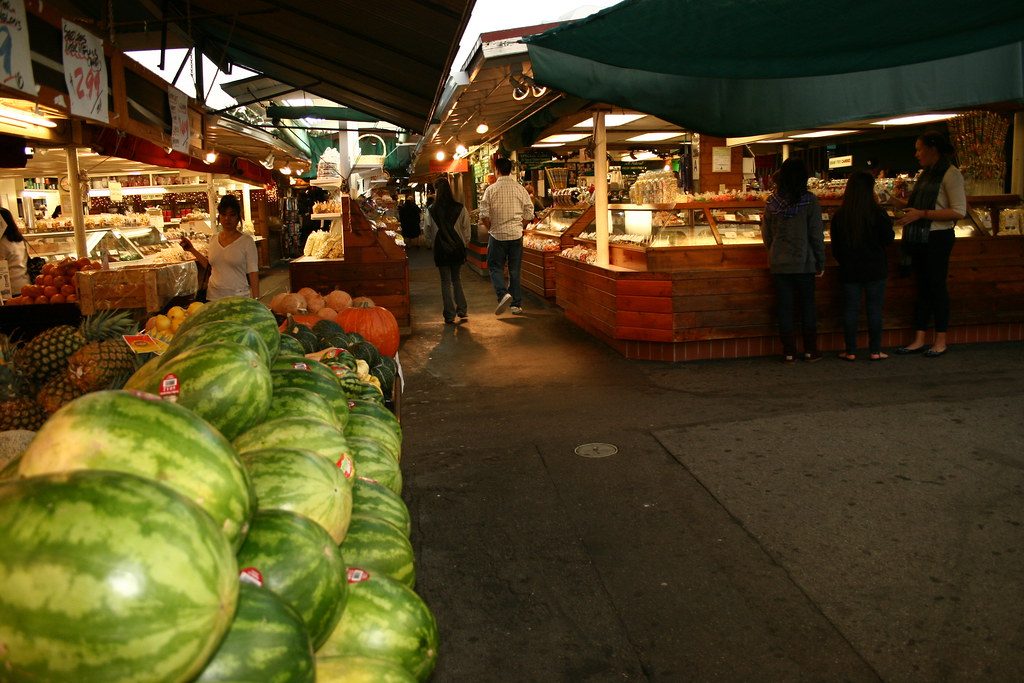
Food splits cleanly into two worlds. Restaurant food on the tourist strip is priced for people who are not looking at the bill. The alternative is the local economy: conch shacks, fish fry stands, bakeries selling warm johnnycake, and grocery stores where you assemble your own breakfast. A plate of cracked conch from a roadside stand, eaten at a picnic table with a stray dog watching, costs a fraction of the same dish under a hotel awning. The catch is that local spots keep local hours — many close by mid-afternoon, some don’t open on Sundays at all, and on the smaller islands a cook might simply decide the fishing was too good to bother today. Build slack into your eating plans.
What a Day Costs
One traveller’s rule of thumb: $100 per day will do. That figure appears again and again in budget conversations, and it is not arbitrary. One hundred euros per day or $100 a day covers a reasonable trip in most mid-range destinations. In the Bahamas, $100 a day is tight but not fantasy, provided you are sharing accommodation and not drinking.
For a 70-day trip through Thailand, Myanmar, Laos and Vietnam, one traveller asked whether $2,500 for everything, including transportation, was possible or whether there would be struggle. That works out to roughly $36 a day. In Southeast Asia, that is a real budget. In the Bahamas, $36 a day is a camping trip with rice.
The gap between those two numbers — $36 and $100 — is the gap between two entirely different trips. The Bahamas is not a $36-a-day country. It can be a $100-a-day country if you accept what that buys: shared rooms, local food, public transport, no bar tab.
Where the $100 figure usually breaks is transport between islands, which is a category most budget advice quietly ignores. Flights on the small inter-island carriers are not cheap, and ferries serve only some routes on some days. A single hop can eat two or three days of budget in one go, and the schedule is at the mercy of weather. The people who do the Bahamas on a real budget tend to pick one island, or two at most, and stay put. Island-hopping sounds romantic until the third airport taxi and the fourth one-way fare are added up. Booking the fast ferry where it runs, and treating every flight as a splurge to be justified, keeps the arithmetic honest.
Currency and the Cash Question
Exchange rates matter more than people admit. The lari trades at approximately 2.7 GEL to the US dollar, and a guide priced in 2026 figures will read very differently a year later. Prices get checked and updated; the dollar does not sit still.
In Venezuela, the exchange rate means tourists holding US dollars have a lot of money. Those 50B notes are worth almost $10 each. That is an extreme case, but the principle is general: carrying the right currency, in cash, changes what your money does. New Zealand dollars, euros, US dollars — the conversion is not a detail. It is the budget.
The Bahamas is one of the easier cases, because the Bahamian dollar is pegged one-to-one with the US dollar and both are accepted nearly everywhere. That sounds like it removes the currency question, and mostly it does — but it creates a different one. Change often comes back in Bahamian currency, which is fine while you are there and useless the moment you leave, so it pays to spend it down before departure rather than carry a pocketful of coins home. On the Out Islands, card readers fail and ATMs are scarce or nonexistent, so cash stops being a preference and becomes a requirement. Withdrawing on Nassau before heading out is the standard move. The other thing nobody mentions is that a surprising number of small vendors quote in US dollars and hand back change at whatever rate suits them, which is another quiet reason to carry small bills.
The Honest Summary
The Bahamas is expensive. That part is true. It is not Bolivia, where $125 buys a three-day tour and meals cost a few dollars. It is not Bulgaria at $60 a day. It is not Morocco at $5–15 a day if you eat like a local.
But it is also not the impossible number people imagine. A $100 daily budget, shared accommodation, no alcohol, local transport — that is a workable shape for a trip. The people who get burned are the ones who bring mainland assumptions and island expectations at the same time. Pick one. The numbers will follow.
Leave a Reply