Some links on this page are affiliate links. If you book or buy through them, we may earn a small commission at no extra cost to you. It never changes what we recommend — every price here is one we would pay ourselves.
A bed for the night in Nicaragua can run as little as $4.30. For Nicaragua, a $30 daily rate over 14 days is $420.
What Things Cost
A bed for the night in Nicaragua can run as little as $4.30. That figure comes from a guesthouse rate quoted at ₹400, converted at current rates, and it sits at the very bottom of what’s available. Meals can be found for around $2.15, based on a ₹200 plate at a local spot. Those two numbers together — roughly $6.50 a day for sleep and one meal — represent the floor, not the ceiling.
What that floor actually looks like matters more than the number. The $4.30 room is typically a dorm bed or a bare private room in a family-run hospedaje, often with a shared bathroom down the hall, a fan rather than air conditioning, and a bucket-flush toilet. It is not a hardship, but it is not a hotel either. The walls are thin, the roosters start before dawn, and the family’s television is usually audible through the courtyard. The $2.15 meal is the day’s set lunch, the almuerzo corriente, served at a comedor with plastic chairs and a hand-painted sign: rice, beans, a piece of chicken or pork, fried plantain, and a glass of juice or a cup of coffee. It is filling and it is nearly always the same. Eating this way for a week costs less than one dinner at a tourist restaurant, and after a few days the routine becomes its own kind of comfort.
The ceiling is where most people actually land. Accommodation, local meals, transport and a few attractions on a comfortable budget trip to Bali runs about $30 to $55 per day, excluding flights. Nicaragua isn’t Bali, but the structure of a daily budget looks similar: you’re paying for a room, three meals, some movement between places, and maybe one paid attraction. The Bali figure is useful as a reference point because it’s specific. It tells you what “comfortable” costs, not what “surviving” costs.
When a museum is the whole reason for the trip, a timed entry slot is the only way in on the day.
Comfortable in Nicaragua generally means a private room with air conditioning and hot water, meals split between comedores and proper restaurants, and a shuttle or a taxi when the chicken bus looks too crowded. That lands in the same band, though usually toward the lower end of it. The single biggest swing factor is how often the day involves a paid tour — a volcano board, a boat, a coffee farm — because those are the line items that turn a $25 day into a $60 one without any obvious change in lifestyle.
Getting Around
Local city bus fares start at about $1. Intercity buses run $5 to $30 depending on distance. That spread matters. A short hop between two nearby towns costs less than a meal; a long haul across the country costs more than a night’s lodging in the cheapest places. Entrance fees for popular tourist attractions are generally reasonable, and many sights — beaches, public parks — cost nothing at all. That last part is easy to overlook when you’re building a budget. Free beaches and free parks mean your daily spend can drop well below the $30 mark if you’re willing to skip the paid attractions.
The cheap intercity option is the chicken bus — a retired North American school bus, repainted in bright colors, fitted with chrome and sometimes a portrait of a saint on the windshield. They leave when full, which can mean waiting twenty minutes or an hour, and they stop constantly to pick up and drop off. The upside is that a two-hour ride can cost a couple of dollars. The faster, pricier option is the express shuttle, which runs door to door between hostel towns, leaves on a schedule, and costs several times more. Both are legitimate; the choice is time versus money, and the difference in a single day can be the price of a night’s bed.
Two practical warnings. First, bags go on the roof or in a rack at the front, and you should keep anything valuable with you rather than stowed. Second, the last buses of the day often leave mid-afternoon, not at dusk, so arriving in a town after dark with no bus out is a common and avoidable mistake. Terminals are usually a short walk or a cheap taxi from the center, and taxi fares within a town are low enough that splitting one rarely breaks a budget.
The Restaurant Problem
Restaurants add up fast. This is true everywhere, but it’s especially true when you’re eating three meals a day at sit-down places. Many family-friendly chains and local spots run kids-eat-free promotions. Saving $10 to $15 per meal, multiplied across a week, frees up hundreds. Apps like KidsMealDeals help you find these offers. That’s not a rounding error. Three meals a day at $12 each is $36 daily; knock $10 off two of them and you’ve cut your food budget by more than half.
The trap is that restaurant meals in Nicaragua are not cheap in the way the comedor is. A tourist-facing plate in a colonial town can cost more than a night in a hospedaje, and the gap between the two widens the closer you sit to the main square. Breakfast is the easiest meal to eat cheaply — fruit from a market stall, a bag of coffee, a pastry — and dinner is the easiest one to overspend on, because that is when the menus with English translations come out. Cooking one meal a day in a hostel kitchen, even a bad one, resets the whole week’s arithmetic. Markets sell produce by the pound for a fraction of restaurant prices, and the fruit in Nicaragua is genuinely good enough that this is not a sacrifice.
Building a Number
Start with a daily rate. Pick your destination, multiply by trip length, add flights and insurance, then add a 20% buffer. That gets you within 10 to 15% of actual costs — better than guessing. For Nicaragua, a $30 daily rate over 14 days is $420. Add $600 for flights and $60 for insurance, and you’re at $1,080 before the buffer. With 20% on top, $1,296. That’s the working number.
For comparison, 17 days in Germany runs $1,886, or $111 per day. Nicaragua at $30 per day is roughly a quarter of that. The gap isn’t just about cheaper rooms; it’s about cheaper everything — buses, meals, entrance fees. A $1 city bus fare versus a $3 metro ticket doesn’t sound like much until you’re taking four buses a day for two weeks.
The buffer is the part people skip and then regret. It covers the things that always happen: a missed connection and an unplanned hotel night, a cash machine that eats a card, a bag that needs repairing, a fever that needs a pharmacy. None of these are disasters, and none of them are rare. A 20% cushion is not pessimism; it is the realistic cost of traveling in a country where plans change and the bus you wanted left an hour ago. Flights are the wild card, since they swing by season and by how far in advance the ticket is bought, so it pays to price them before committing to a daily rate rather than after.
Timing and Trade-offs
Late April to early May, and September through early October, are cheaper in most of the country. Facility fees at state parks drop 20 to 40 percent below peak summer, and popular federal sites stop requiring reservations. The trade-off is cooler nights and some closed restrooms. If you can live with that, the savings are real. A $20 facility fee becomes $12 to $16. Over a week of park visits, that’s $30 to $50 back in your pocket.
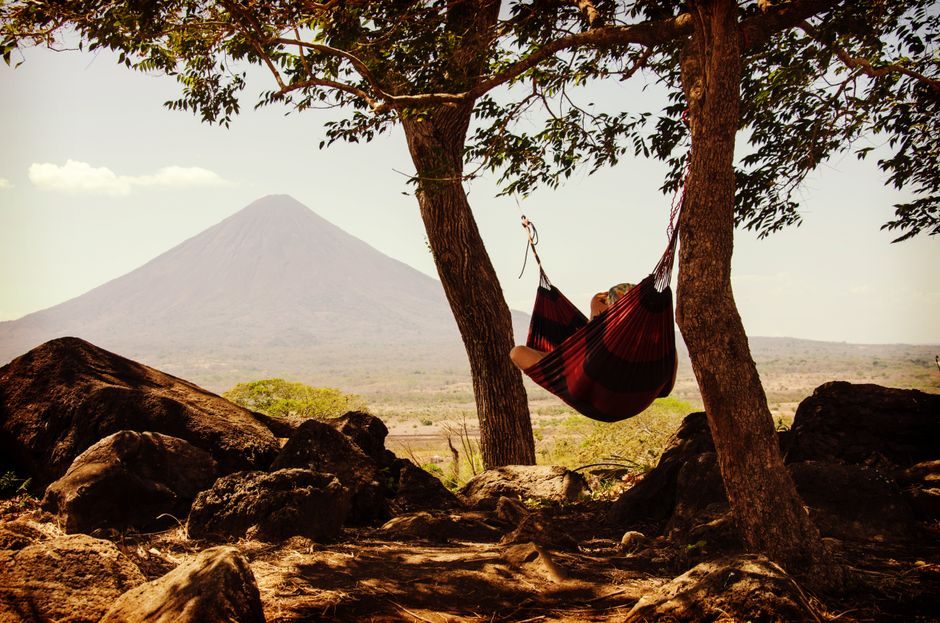
Those two windows fall in the shoulder and wet seasons, and the wet season in Nicaragua is not subtle. Afternoon downpours arrive fast, roads in the north and on the Caribbean side can turn to mud, and some rural routes become slow or impassable. The upside is that everything empties out: hostels drop their rates, tours run with fewer people, and the volcano viewpoints are often clearer in the morning before the clouds build. Locals largely travel during the holidays rather than in these windows, so the towns belong to whoever is there. The cooler nights are a genuine pleasure in the highlands around Estelí and Matagalpa, where the altitude makes the wet-season evenings almost cold.
There’s also a $220 standard rate mentioned for something — the context isn’t clear, but it’s worth noting as an outlier. Most of what you’ll pay in Nicaragua sits far below that figure. The $4.30 room, the $2.15 meal, the $1 bus — those are the numbers that define a budget trip here. The $220 figure is the exception, not the rule.
Leave a Reply