Some links on this page are affiliate links. If you book or buy through them, we may earn a small commission at no extra cost to you. It never changes what we recommend — every price here is one we would pay ourselves.
Suriname does not have a $10-a-night room in the sense that Bali does. Budget for it as a real line item, not an afterthought, because in a country where a decent room runs $10 a night, a visa fee can equal several nights of accommodation.
Suriname does not have a $10-a-night room in the sense that Bali does. That is the first thing to get straight. If you have been reading about Indonesia, where private guesthouses run between $15 and $30 a night with air conditioning, a private shower room and breakfast, or where street food costs $1 and fine dining costs $100 or more, you are reading about a different country with a different cost base. Suriname sits in South America, shares borders with the Guyanas, and its prices are their own thing. It helps to picture where the money actually goes. Paramaribo is the capital and where nearly every trip begins, a low, white-painted city of wooden colonial buildings strung along the Suriname River, most of them within walking distance of the waterfront. The guesthouses cluster around the old centre and the streets behind the palm garden, and the cheap rooms are genuinely cheap because they are small, fan-cooled and often share a bathroom down the hall. Nobody is running a backpacker conveyor belt here. The trade is thin, which cuts both ways: fewer places compete for a budget traveller, but the ones that exist have not yet learned to inflate their prices for foreigners.
What A Visa Costs
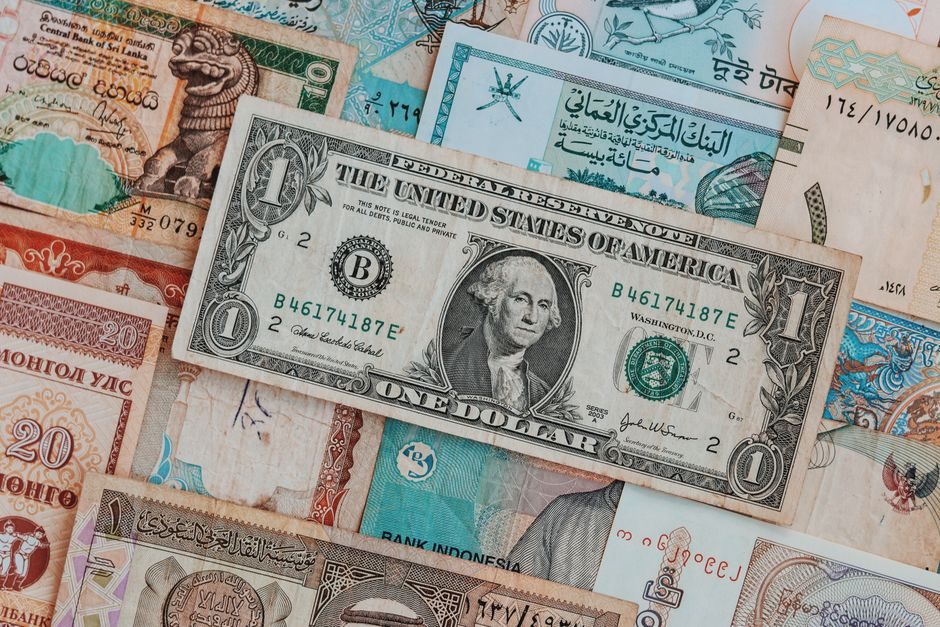
A visa is required for Suriname. The price tends to be reciprocal — that is, they charge what we charge them to enter the United States. Procedures vary. That is the honest answer, and anyone who tells you a flat figure without checking the current rate is guessing. Budget for it as a real line item, not an afterthought, because in a country where a decent room runs $10 a night, a visa fee can equal several nights of accommodation. The mechanics are worth knowing before the trip rather than at the airport. Applications are usually handled through the embassy or, for many nationalities, through an online pre-approval that is then stamped on arrival, and the two routes do not always cost the same or take the same time. Processing can run from a few days to a couple of weeks depending on the season and how busy the consular desk is, so it is not something to leave until the week before departure. The fee is typically paid by card or bank transfer at the time of application rather than in cash at the border, and the receipt is the thing that gets checked. Travellers who assume they can sort it out on landing are the ones who end up paying for an extra night near the airport while a desk that closes in the early afternoon reopens the next morning. Carry a printed copy of the approval as well as the digital one.
Rooms And Food
Adopting a local lifestyle is what actually lowers costs, and that holds true here as much as anywhere. Family-run guesthouses and simple beach bungalows commonly range from $20 to $40 per night. Meals at carinderias — local eateries — or street stalls cost a few dollars. Try adobo or grilled seafood. That is the authentic, cheap meal, and it is the one you will remember anyway.
The spread is enormous. Street food for $1. Fine dining for $100 or more. You can stay for $10 per night in a decent room, or spend a few thousand dollars in one of the ultra-luxury resorts, or spend even more in a villa estate. Both ends exist in the same country. The middle is where most backpackers land, and the middle is roughly $20 to $40 for a bed and a few dollars per meal.
Snorkeling tours run between $10 and $30. That figure comes from the Gili Islands and Nusa Penida, which are Indonesian, not Surinamese, but it gives you a benchmark for what a half-day on the water should cost in this part of the world. If you are quoted far above $30 for a basic snorkeling trip, ask what is included.
The everyday rhythm of eating cheaply here is a breakfast of bread, cheese and strong coffee taken standing at a counter, a midday plate of rice with chicken or salted fish from a stall that opens around eleven and sells out by two, and an evening meal that stretches late because the heat does not break until dark. Portions are large and the spice is closer to West African and Javanese cooking than to anything in the Spanish-speaking neighbours, which is one of the quiet pleasures of the place. A warung-style counter with a few plastic stools out front is almost always cheaper and better than a restaurant with a printed menu in English. Bringing a refillable bottle matters too, since bottled water adds up over a week, and the tap water is not something to drink without treating it first.
The Comparison That Matters
Average daily cost in Latvia is around $70 per day. That is a useful anchor. Latvia is Europe, and Europe is not cheap, and $70 a day is what a careful traveller spends there. Suriname, done the local way, should come in under that. Rooms at $20 to $40, meals at a few dollars, snorkeling at $10 to $30 — add it up and a day can land well below the Latvian figure. Not always. Transport and visas eat into it. But the floor is lower.
One traveller reported saving for two years to fund a round-the-world backpacking trip on $20 a day. That number is achievable in Suriname in a way it is not in most of Europe. It requires the guesthouse, not the resort. It requires the carinderia, not the fine dining. It requires accepting that $1 street food and $100 plates exist side by side and choosing accordingly.
What tends to break the daily budget is not the room or the plate of rice but the movement between places. Distances look short on a map and are not. The road along the coast is slow, buses leave when they are full rather than on a timetable, and a shared taxi to a river crossing can quietly cost more than three nights of lodging. The interior, reached by boat or small plane, is where a cheap trip stops being cheap, because there is no budget tier once the road ends and the only way in is a chartered crossing or a seat on a scheduled flight that fills weeks ahead. Most travellers who keep costs down do it by staying put longer in one place rather than racing between towns.
Flexibility And What It Saves
Flexibility is the minor detail that can swing a trip by $1,000 to $1,500 per person. That is not a small sum. It is the difference between one trip and two. In Suriname, flexibility means being willing to move to a cheaper guesthouse, eat where locals eat, and skip the tour that costs more than $30. It means treating the $10 room as a real option, not a fallback.
A retired couple in their seventies planning a month driving around New Zealand found that eating in helped their travel dollars stretch. Same principle. The set that cost under $30 saved them thousands. Cooking, or eating where cooking is cheap, is the single biggest lever most travellers have.
If your itinerary leaves the main towns, renting a car is worth pricing.
There is a real skill to it, and it is mostly about timing. Rooms are cheapest booked a day or two out, in person, when a guesthouse would rather fill a bed than hold it empty; the same room reserved weeks ahead often costs more. Shoulder season, when the rain is heavier but the crowds thin out, brings prices down without closing anything. Paying in local currency rather than dollars usually gets a better rate than the one quoted at a hotel desk, and the small shops and stalls that make up most of a cheap trip take cash, not cards, so it pays to carry enough for a few days at a time. None of this is exotic. It is the ordinary arithmetic of travelling slowly in a place that has not been priced for tourists yet.
There is no trick to Suriname. There is a range. Rooms from $10 to several thousand. Meals from $1 to $100 and up. Tours from $10 to $30. Pick your end of the range, add the visa, and you have your number. That is the honest cost.
Leave a Reply