Some links on this page are affiliate links. If you book or buy through them, we may earn a small commission at no extra cost to you. It never changes what we recommend — every price here is one we would pay ourselves.
Local restaurant meals sit between $3 and $8. A mid-range restaurant dinner costs $6 to $15. Fine dining starts around $25 and goes up from there.
What a Day Actually Costs
Start with food, because food is where budgets get made or broken.
Street food meals run $1.20 to $2.45. Local restaurant meals sit between $3 and $8. A mid-range restaurant dinner costs $6 to $15. Fine dining starts around $25 and goes up from there. Eat mostly street food and local places and you can eat well for under $15 a day.
That last figure matters. It means three meals, not one, with room for a snack. It also means the ceiling is low if you stay away from the tourist-facing restaurants.
What that looks like on the ground in Apia or Nuku’alofa is a cluster of stalls near the market, a few plastic tables, and a hand-written board listing whatever came in that morning. In Samoa the staple lunch is a plate of taro, palusami and some kind of stewed meat, wrapped in foil and handed over still hot. In Tonga it is more likely to be lu pulu, corned beef and taro leaves baked in coconut cream, sold by the slice rather than the plate. Neither is delicate. Both fill a person up for the price of a coffee back home. The stalls tend to open early and shut when the food runs out, often by mid-afternoon, so a late arrival gets whatever is left rather than whatever is best. Cash is expected; card readers are rare outside the hotels, and the nearest ATM may be a walk away.
Two beds at $50 each for one night is $100. One room at $100 for one night is $100. When the numbers tie, the choice comes down to comfort, not cost. That is worth remembering when you are comparing dorm beds against private rooms in places where the difference is smaller than you expect.
Imported alcohol is generally quite expensive because of import taxes. A decent glass of French or Italian wine might cost $6 to $10. Local drinks are cheaper. That is the whole story right there.
The local option in this part of the Pacific is usually a cold lager brewed locally, sold in stubby bottles from a cooler behind the counter, and it costs a fraction of anything with a European label on it. In Tonga the local spirit is a heavy, syrupy rum sold in plain bottles, and it is not something to take on casually. In Samoa the bars along the waterfront in Apia fill up on Friday nights and empty out by Sunday, because Sunday is a day of rest and almost everything closes, including many of the restaurants. Arriving on a Saturday afternoon without having planned for that is a common mistake, and it means two days of eating whatever the guesthouse kitchen can put together.
Getting Around
Narita to central Tokyo is $17 on the Skyliner express, or $8.50 on the budget Keisei line. Haneda is cheaper and closer. Monorail or Keikyu line from Haneda runs $3 to $4.
Those are the kind of differences that add up over a trip. A $13 gap on one airport transfer is nothing. Do it twice a week for a month and it is rent money somewhere else.
If you would rather not negotiate tired, a booked transfer is the easy option.
Domestic flights on low-cost carriers often start at $30 one-way. That is real. It is also where baggage fees eat you alive. On one 74-day trip through India, four domestic flights were taken: Kolkata to Kerala, Kerala to Hyderabad, Hyderabad to Goa, and Goa to Hyderabad. Slightly extra was paid because bags ran a few kilograms over the 15-kilogram limit. Travelling with only 15 kilograms of checked luggage is the best way to keep those costs down. The flights were cheap. The excess baggage was not.
The mechanics of that are worth spelling out, because they are the same everywhere. The cheap fare is quoted for the seat and nothing else. The allowance is small, the scale at the counter is final, and the fee is charged per kilogram at a rate set by the airline rather than negotiated. Weighing the bag at the guesthouse before leaving for the airport is the only reliable defence. A collapsible luggage scale costs less than one excess-baggage charge and takes up no room. The alternative is repacking on the terminal floor, which is what usually happens, and which is watched by everyone in the queue.
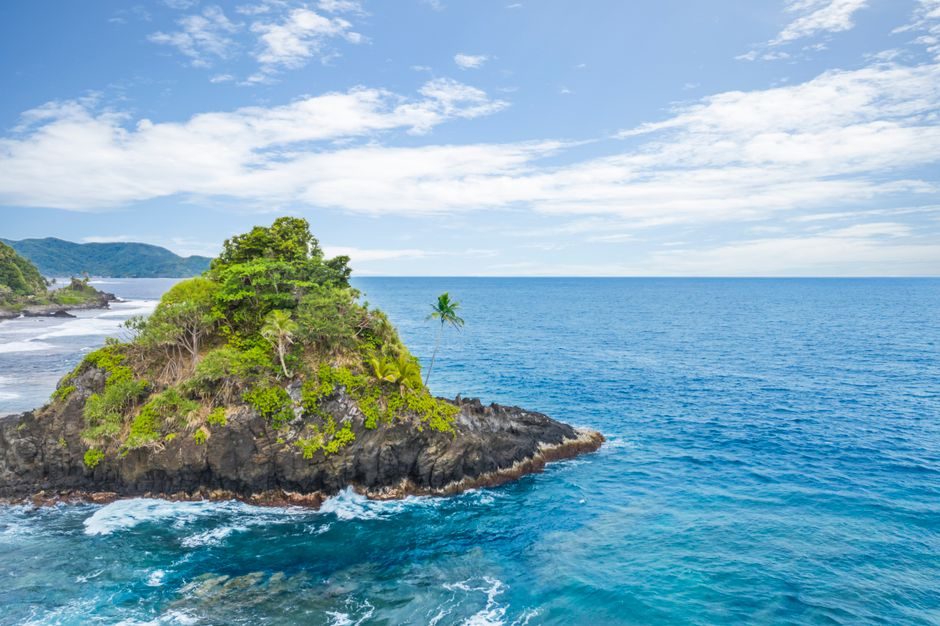
On the ground, the picture is different again. In Samoa and Tonga the standard way to move between towns is the local bus, which is cheap, frequent enough during the day, and stops running in the late afternoon. The buses themselves are open-sided, wooden-benched, and often decorated with hand-painted slogans. Fares are paid in cash to the driver and there is no timetable worth trusting. Hiring a car is possible but the roads are rough once you leave the main coastal route, and the speed limits are low for good reason. On Sundays there is almost no public transport at all.
The Monthly Picture
For one person, the total monthly cost comes to $1,725. For that price you are not just buying a comfortable lifestyle. You are buying stability, and some tax incentives on top of it.
That number is not a backpacker number. It is a live-here number. There is a difference, and it is worth being honest about which one you are shopping for.
A one-month backpacking trip to Australia’s east coast runs £2,500 to £3,000. In dollars, that is $2,700 to $3,240. Australia is not a budget destination and the numbers do not pretend otherwise.
Thailand breaks down differently. A low-budget backpacking trip including accommodation and food costs 23.70 euros a day. That converts to $25.60. Luxury backpacking, including massages, excursions, accommodation and more demanding food, costs 37.20 euros per person per day. That is $40.20.
Look at those two figures side by side. The gap between roughing it and not roughing it in Thailand is about $15 a day. Over a month, that is roughly $440. Whether that is worth it depends entirely on what you want the month to feel like.
Small Things That Wreck Budgets
Odeng is a bite-sized fish cake served skewered on wooden sticks. They usually cost around Tk 40 per stick, which is about $0.35, but are sometimes served in bundles ranging from Tk 160 to Tk 420, or roughly $1.30 to $3.45. Dakkochi is similar, chicken and scallions covered in thick, spicy sauce. These are cheap. They stay cheap. That is the point of them.
One traveller’s trip incident drove the around-the-world cost up by $2,639. Read that again. One incident. Not a month of overspending, not a bad exchange rate, not a series of small leaks. One thing went wrong and it cost more than a month in Thailand.
Aman Tokyo charges $2,209 per room per night for a Tokyo Suite King. That is included here not as a recommendation but as a scale. The same city where a $3 train ride gets you downtown also contains a room that costs more than a full month in Samoa or Tonga at the $1,725 figure. Both are real. Both are available. You will only ever see one of them.
The pattern across all of this is that the big numbers are not where budgets die. Food is manageable. Transport is manageable. Accommodation is manageable if you are willing to make the obvious choices. The $2,639 incident is where budgets die. Build the buffer before you need it.
Leave a Reply