The daily budget that keeps coming up from people who have actually travelled there is $10 to $15 per person per day. The dishes that define the region’s cooking are also the cheapest things on offer, and a simple breakfast of pastries, jam and honey runs about $2.
What Things Cost
Kyrgyzstan and Tajikistan are not expensive. The daily budget that keeps coming up from people who have actually travelled there is $10 to $15 per person per day. That covers snacks, drinks, souvenirs, internet cafes, the small stuff. Some days you spend more. Some days you spend less. The estimate is from summer 2019, so treat it as a starting point rather than a fixed rule.
That figure does not include your bed or your transport between towns. It is the walking-around money, the sort of spending that decides whether you eat a proper lunch or a bag of apricots.
What the number hides is how unevenly a day gets spent. Money goes in bursts. A morning can pass on tea and a handful of dried fruit bought the day before, then a shared taxi eats a chunk of the afternoon, then a bazaar swallows the rest without much to show for it. The trick that experienced travellers use is to keep a running mental total rather than a daily one, because the cheap days and the expensive days average out over a week and chasing a fixed number every twenty-four hours just makes the trip feel like a spreadsheet. Cash is the other thing to plan around. Outside the big cities, card machines are rare and unreliable, so most of that daily spending comes straight out of a wallet. ATMs in Bishkek and Dushanbe work; ATMs in a village of four hundred people generally do not exist. Carry more local currency than feels necessary, keep small notes for transport and tea houses, and treat the last few days before a border crossing as a good time to spend down what is left rather than convert it.
Food, Cheap And Otherwise
Street food is where the money goes furthest. The dishes that define the region’s cooking are also the cheapest things on offer, and a simple breakfast of pastries, jam and honey runs about $2. That is not a typo. That is breakfast.
You can also spend real money if you want to. One traveller ate pretty cheaply overall but still had two dim sum meals at roughly $15 each, some excellent ramen at $13, and a farewell dinner at about $28. So there is a ceiling, and it is low by Western standards. A $28 last meal is a splurge here, not a normal Tuesday.
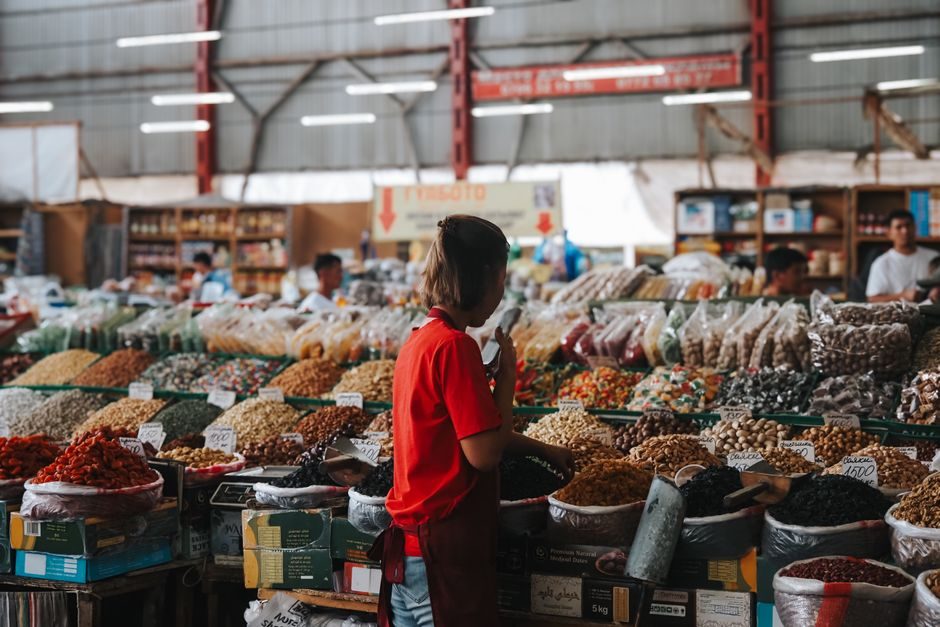
The everyday eating happens in places with no menu in English and no particular name. A chaikhana, the tea house found in almost every town, will pour you a pot of green tea for the price of a coin and let you sit for an hour without anyone suggesting you leave. Plov, the rice-and-meat dish cooked in a huge kazan, is usually made in the morning and sold until it runs out, which means lunch is a better bet than dinner if that is what is on the agenda. Samsas come out of a tandoor oven in batches, and the ones sold from a window near a bus station are often better than anything a sit-down restaurant will produce, mostly because they have not been sitting under a heat lamp. Bread, called non, is sold everywhere and costs almost nothing; buying a round of it plus some fruit and a couple of tomatoes is a full meal for spare change. The trap is the imported stuff. A coffee culture has grown up in the bigger cities, and a flat white in a Bishkek cafe can cost more than a plate of plov and a pot of tea combined. That is not a complaint, just a warning that the budget assumes local food, and the moment a trip drifts toward international menus the daily figure stops meaning much.
Getting Around And Paying For It
In Tashkent, if you want to explore the city or just get your bearings, there is a metro stop called Sobir Rakhimov directly across the street from the bus station. A ticket costs 1,200 som, which is about $0.15. Cab drivers around the bus station will try to charge exorbitant prices. The metro is simpler and it costs fifteen cents.
Guides and drivers are a separate calculation. The going rate for tipping a driver guide is around $20 per day for a party of two, which works out to $10 per person. If the guide has been exceptional, people go slightly higher. Some safari companies publish their own recommended tipping rates, which is partly how they attract the most experienced guides in the first place. The logic is straightforward: better tips pull better people.
Between towns, the shared taxi is the workhorse. Drivers wait at a stand until the car fills, which can take twenty minutes or two hours, and the price is agreed before anyone gets in. There is no schedule and no ticket; the car leaves when the last seat sells. Marshrutkas, the minibuses, are cheaper and slower and stop more often, and on mountain roads the difference between the two is mostly a question of how much patience is in supply that day. For longer hauls, a seat in a shared car is often the only option, and the going rate is set by whoever is shouting destinations at the stand rather than by any published fare. The practical warning is to confirm whether the quoted price is per person or for the whole car, because that misunderstanding is the single most common argument at a taxi stand. Border crossings add their own wrinkle: a driver may hand off passengers to another car on the far side, and the second leg sometimes costs extra.
Hostels, Laundry And Gear
Not every hostel gives you a towel. Some provide one. Some charge extra. Some do not have the option at all. A small travel towel solves this. The lightweight ones dry quickly and do the job even if they feel strange against the skin.
Laundry pricing varies, but the average sits somewhere between 1 and 1.50 euros per kilo, which is roughly $1.08 to $1.62. Look around before committing. Ask when the clothes will be ready, because some services quote two days, and that may not fit your itinerary. A two-day turnaround is fine if you are staying put. It is useless if you are leaving in the morning.
If you are hiking once a year, do not buy gear. Rent it. In the Thamel area, rental runs between $2 and $3. Buying boots and a pack for a single trek is money you will not get back.
Hostel dorms in the region tend to be small, often four to six beds in a converted apartment, and the bathroom is shared with everyone including the family who runs the place. That is normal and it is part of why the beds are cheap. Wifi is usually fine in the cities and unreliable in the mountains, so downloading offline maps before a trek is not paranoia. Power cuts happen, sockets are often the two-pin European sort, and a plug adapter is worth carrying. Gear rental works best when arranged a day ahead, since the shop needs time to check the boots have not walked off with the last customer, and the fit matters more than the brand. Rental shops will also rent sleeping bags, mats and trekking poles, which means a whole hiking setup can be assembled for a few dollars a day instead of a few hundred dollars up front. The one thing worth owning rather than renting is a headlamp, because it costs little and the shops in a trailhead town may not have one when it is needed.
The Arithmetic
Add it up. Fifteen dollars a day for snacks and incidentals. Two dollars for breakfast. A metro ticket for fifteen cents. Ten dollars a day per person for a guide tip if you have hired one. Laundry at a dollar or so per kilo. Gear rental at two or three dollars if you need it.
None of this is a promise that you will spend exactly these amounts. Spending depends on your habits, and some days will run higher than others. But the numbers are the numbers, and they are the reason this part of Central Asia keeps showing up on cheap travel lists. The region is not a secret. It is just affordable in a way that is increasingly hard to find elsewhere.
Leave a Reply