Some links on this page are affiliate links. If you book or buy through them, we may earn a small commission at no extra cost to you. It never changes what we recommend — every price here is one we would pay ourselves.
Flights between European cities on low-cost carriers usually run $30 to $120 per segment. Round-trip flights from the US typically run $600 to $1,400 per person depending on season and route, and they sit as a separate line in any trip budget.
What Things Actually Cost
Iceland is not a cheap place. That much is well established. What is less useful is the vague warning that it will ruin you. Specific numbers are better.
Flights between European cities on low-cost carriers usually run $30 to $120 per segment. Round-trip flights from the US typically run $600 to $1,400 per person depending on season and route, and they sit as a separate line in any trip budget. Every figure beyond that covers costs once you are in Europe.
Compare this with other regions and the gap becomes concrete. In Vietnam and Cambodia, $20 a day is doable if you stay in dorm beds, eat exclusively at street stalls, and stick to free activities. You will need to skip alcohol, paid tours, and most domestic flights. Realistically, budget at least $25 to $30 a day for a more comfortable experience. In northern Thailand, the most budget-friendly region, hostel dorms run $6 to $12 a night and basic private rooms $15 to $30. Daily expenses there, including street food, local markets, and temple visits, can be as low as $20 to $35. In Romania, a backpacker budget of about $30 to $40 a day is easy. If you want more of a holiday, cute B&Bs start at $30 a night.
None of those numbers apply to Iceland. They are useful only as a baseline for what your money does elsewhere. In Iceland it does less.
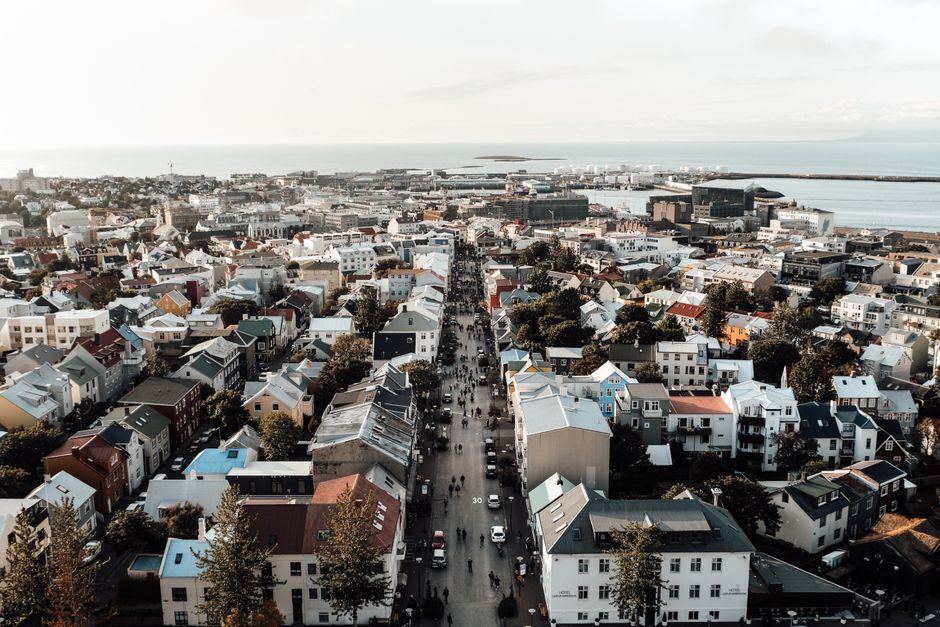
What that looks like on the ground is worth spelling out, because the sticker shock arrives in small increments rather than one big hit. A basic dorm bed in a Reykjavík hostel in high season is not a rounding error, and the same bed in a guesthouse along the south coast costs more again. Groceries from Bónus, the discount chain with the pink pig logo, are the single biggest lever a backpacker has. The stores are plain, often in industrial buildings on the edge of town, and they close earlier than you expect on Sundays. A loaf of bread, a bag of pasta, a jar of sauce and some skyr will feed a person for a couple of days for roughly the price of one casual restaurant main course. Tap water is free, cold, and better than anything bottled, so there is no reason to buy water at all. Alcohol is only sold in state-run Vínbúðin shops, which keep short hours and close early, so the duty-free on arrival is where most travellers stock up.
The other thing nobody mentions is the wind. It is not a metaphor. It will take a car door out of your hand, and it will make a cheap tent miserable. Weather that cancels a hiking day is common, which means budget plans need slack in them.
Getting Around
Transport costs are either for the bus or the fuel, depending on how you travel. That distinction matters more than any single fare. Buses cover the ring road and the main routes, but schedules thin out considerably once you leave the south coast. If you are over 21 and can rent a car, fuel becomes your line item instead. Petrol is expensive, and a full tank on a small vehicle is not a small number. Split between three or four people, it can work. Alone, it rarely does.
If the good parts are far apart, renting for a few days is the sensible spend.
The bus network deserves a closer look, because it is more limited than the map suggests. The long-distance coaches run by Strætó connect the main towns, but many of the routes that tourists actually want — the ones that stop at waterfalls, black sand beaches and glacier lagoons — are seasonal and run once a day in each direction, sometimes only on weekdays. Miss the return and there is no second one. The ticket desk at the main bus terminal closes mid-afternoon, and drivers generally do not sell the discounted multi-day passes, so those need buying in advance online or at the terminal during opening hours. Hitchhiking happens, particularly on the ring road in summer, but standing at the edge of a road in horizontal rain for two hours is a real possibility, and it is not a plan to build an itinerary on.
Motorbike taxis in orange vests are available all over Thailand with short trips costing about 35 to 80 baht, but you need to negotiate the price. Iceland has no equivalent. There is no cheap informal transport network to fall back on. You pay the posted fare or you drive.
Driving brings its own traps. Most rental cars are manual, automatic costs noticeably more, and the insurance waivers that sound optional are close to essential given the gravel thrown up by passing vehicles and the sandstorms that strip paint off a bonnet on the south coast. Fuel stations outside the towns are often unmanned and require a chip-and-PIN card; a foreign card without a PIN will simply be refused, sometimes after the pump has already authorised and the money is held. Filling up before leaving a town is the habit locals keep, because the next station can be a long way on.
The Monthly Picture
One useful figure to hold in your head: $880 a month for one person. That price buys functional infrastructure and the ability to plan for the future. It is a number from elsewhere, but it sets the scale. Iceland is not that.
The arithmetic for a week is straightforward once you accept the flights as fixed. The $600 to $1,400 round trip from the US is not negotiable in most cases. Neither is the $30 to $120 per segment if you are hopping between European cities first. What you control is everything after arrival, and the margin there is thin.
The way the month breaks down is worth thinking through, because a week in Iceland behaves less like a holiday budget and more like a month’s living costs compressed. Rent-equivalent accommodation, food, transport and the odd paid activity all land in the same seven days, and none of them scale down the way they do in cheaper countries. Cooking every meal and sleeping in the cheapest dorm still leaves a floor under the total that cannot be argued away. The locals manage it by owning a car, buying in bulk, and treating the swimming pools — which are cheap, heated, and open year-round — as the main social outing rather than restaurants or bars. Adopting that rhythm is the closest a visitor gets to a genuinely low-cost week.
What This Means for a Budget
If $20 a day works in Vietnam and Cambodia, and $30 to $40 works in Romania, then Iceland requires a different category of planning. The same discipline applies. Dorm beds, supermarket food, free activities. But the dollar figures are higher across the board, and the option to skip alcohol and paid tours saves less than it does in Southeast Asia because the base costs are already elevated.
The practical version of that discipline looks like this. Book accommodation well ahead, because the cheap beds vanish first and the walk-up price is the expensive one. Base in one place for several nights rather than moving every day, since every move costs a bus fare or a tank of fuel. Eat the big meal at lunch, when many places run a cheaper version of the same menu, and cook dinner. Use the public pools and the free hiking trails instead of the paid tours. And carry a card that works at unmanned pumps, because the alternative is standing at a closed station at night with no way to pay.
The honest position is this. Iceland is not a destination where a $30 daily budget gets you a comfortable experience. It might get you a roof and groceries. It will not get you the things people come for. Budget accordingly, or choose a different country and keep the $880 a month in mind as a reminder of what is possible elsewhere.
Leave a Reply