Some links on this page are affiliate links. If you book or buy through them, we may earn a small commission at no extra cost to you. It never changes what we recommend — every price here is one we would pay ourselves.
Angkor is the most expensive of that set at $62 for three days, but it is also the largest, and three days is the smallest pass most people buy. Divide it out and you are paying roughly $20.67 a day to walk through one of the biggest religious complexes on earth.
The Three-Day Pass Math
Angkor Wat costs $62 for a three-day pass. That figure stops people cold, and it should, because it is real money in a country where a bed and two meals can cost less than that. But the temples are not the only thing in Cambodia worth paying for, and the fee is not the whole story of a trip here.
What the ticket desk does not advertise is how the pass works in practice. The three-day pass is valid over any three days within a one-week window, not three consecutive days, which means a rest day in Siem Reap between temple runs costs nothing extra. The ticket office on Apsara Road is where the photo is taken and the pass is printed on the spot; the pass itself is a laminated card with a face on it, checked at each gate by staff who look at the photo far more carefully than at the date. Buy it the afternoon before the first day, because the same ticket covers sunset entry on the evening of purchase and that evening does not count against the three days. Almost nobody at the counter volunteers this. Tuk-tuk drivers do, usually on the ride over, and they are right.
The same region has other monuments with similar price tags. Borobudur and Prambanan in Indonesia run somewhere between $30 and $40 for entrance. The Petronas Twin Towers sky bridge in Malaysia is $20. Gardens by the Bay in Singapore sits in the same bracket. Angkor is the most expensive of that set at $62 for three days, but it is also the largest, and three days is the smallest pass most people buy. Divide it out and you are paying roughly $20.67 a day to walk through one of the biggest religious complexes on earth.
Size is the thing that catches people out. The complex sprawls across roughly 400 square kilometres, and the temples are not clustered within walking distance of each other. Bayon, Ta Prohm, and the main Angkor Wat temple sit on different loops, and a tuk-tuk is the standard way to string them together. A common mistake is to plan the first morning around sunrise at Angkor Wat and then try to walk to the next temple. It is several kilometres. The heat by mid-morning is punishing, and the shade between sites is thin. Most visitors settle into a rhythm of early start, long midday break back in town, and a late-afternoon temple before the gates close. Guides and drivers know which sites empty out at which hour, and the difference between a crowded temple and a quiet one is often just the order in which they are visited.
The Train, and What It Costs
Cambodia has a train from Phnom Penh to Battambang, and a separate one from Phnom Penh to Sihanoukville. Tickets run $5 to $7. Six hours on the rails for the price of a coffee and a sandwich in most Western cities. That is the good part.
For day trips built around one big site, sorting the ticket early keeps the day flexible.
The catch is that departures are not common. You plan around the train, not the other way around. And the Phnom Penh to Battambang service is not comfortable. This is not a scenic railway with reclining seats and a dining car. It is a way to move your body and your bag from one town to another for $5 to $7, and it does that job.
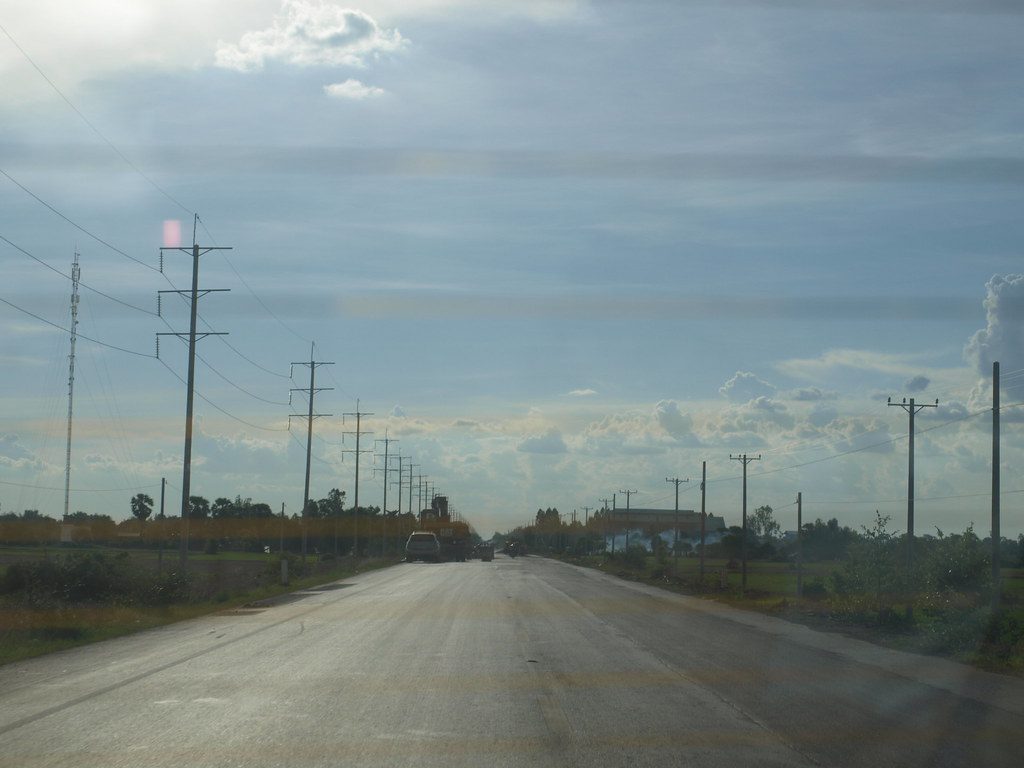
Practically, that means showing up at the station well before departure and buying at the window rather than trusting an agent’s markup. Seats are wooden benches in the cheaper carriages, windows stay open, and the dust comes in with the breeze. Vendors walk the aisle at the longer stops selling grilled corn, boiled eggs, and cold drinks through the window, so there is no need to carry a full day’s food. The ride is slow not because the track is bad but because it is single-line in places and the train yields to whatever else is moving. Locals treat the journey as a social event, spreading out snacks and sleeping across the benches. Arriving after dark is common, so it pays to have a guesthouse booked before boarding rather than hunting for one from the station forecourt.
Laos, and the $20 Day
Laos sits in the same cheap corner of the world as Cambodia, and it may be one of the most affordable countries anywhere. Budget travelers could realistically get by on under $20 per day. That is not a theoretical floor. That is a working number for someone sleeping in guesthouses, eating local food, and moving slowly.
One traveler backpacked Laos for $30 per day. That is a more comfortable figure, and it buys a bit more room, a few more bus tickets, a few more meals that are not rice and egg. The gap between $20 and $30 is the difference between watching your spending and not thinking about it much. Both are possible. Laos earns a 10 out of 10 for value, and that rating is not about one cheap item. It is about the whole trip staying cheap without the trip feeling cheap.
The daily number holds because the fixed costs are small and the variable ones are smaller. A guesthouse room with a fan and a shared bathroom is the standard budget bed, and the difference between that and a room with air conditioning and a private bath is usually a few dollars, not a few tens. Street food and market stalls do most of the eating: sticky rice, grilled river fish, and a bowl of noodle soup are the everyday staples, and the same dishes in a restaurant with a printed menu cost noticeably more for the same food. Transport between towns is by bus or minivan, both cheap, both slow, and both prone to leaving late and arriving later. The pace is the point. Laos rewards staying put, and a traveler who spends four nights in one town usually spends less than one who moves every day.
Islands, Stingrays and the Long Haul
Koh Rong Samloem has a place called Sunset Beach. Someone spent over two weeks in Cambodia and swam with stingrays there. That is the kind of thing that does not show up on a ticket price list. It is just what happens when you stay somewhere long enough.
Sunset Beach is on the quieter side of the island, reached by a boat from the mainland pier, and the electricity runs on generators that tend to shut off overnight. That is not a complaint so much as a fact worth knowing before booking. The stingrays are the small, shy kind that sit in the shallows and glide off when approached, not the dramatic kind, and the encounter is a matter of being in the water often enough to catch one. Two weeks gives a person that chance. A three-day island stop usually does not.
Two weeks is a real length of time in Cambodia. It is enough to see the temples, take a slow train, sit on an island, and still not feel rushed. The costs stack up in a way that favors staying longer, because the daily rate in Cambodia and Laos is low. A $62 temple pass spread over a two-week trip looks different than the same pass on a four-day dash through the region.
What the Numbers Actually Say
Tours and attractions can run to $1,385 if you load up on everything. A safari in Yala National Park, scuba diving, the Angkor entrance fee, all of it together. That number is not a warning. It is a ceiling for someone doing a lot of paid activities across several countries.
The floor is much lower. Under $20 a day in Laos. $5 to $7 for a six-hour train in Cambodia. $30 a day for a comfortable version of the same trip. The Angkor pass is the single biggest line item most people will face, and it is worth every dollar if you give it three days instead of one rushed morning.
The math is simple. Cheap countries, cheap transport, one expensive ticket that pays you back in hours spent inside the walls. You do not need a strategy beyond knowing what things cost before you land.
What usually goes wrong is not the money. It is the timing. Budget travelers who run out of days before they run out of money end up skipping the thing they came for, and doing the temples in one hurried morning is the most common version of that mistake. The other thing that goes wrong is the small stuff: an unbooked bus seat in high season, a guesthouse that has no room on the night of arrival, a bank machine that swallows a card in a town with one machine. None of it is expensive to fix, but all of it is easier to avoid by knowing the shape of the trip before the plane lands. Cash still does most of the work in both countries, and carrying a mix of small notes makes the everyday transactions smoother than any card.
Leave a Reply