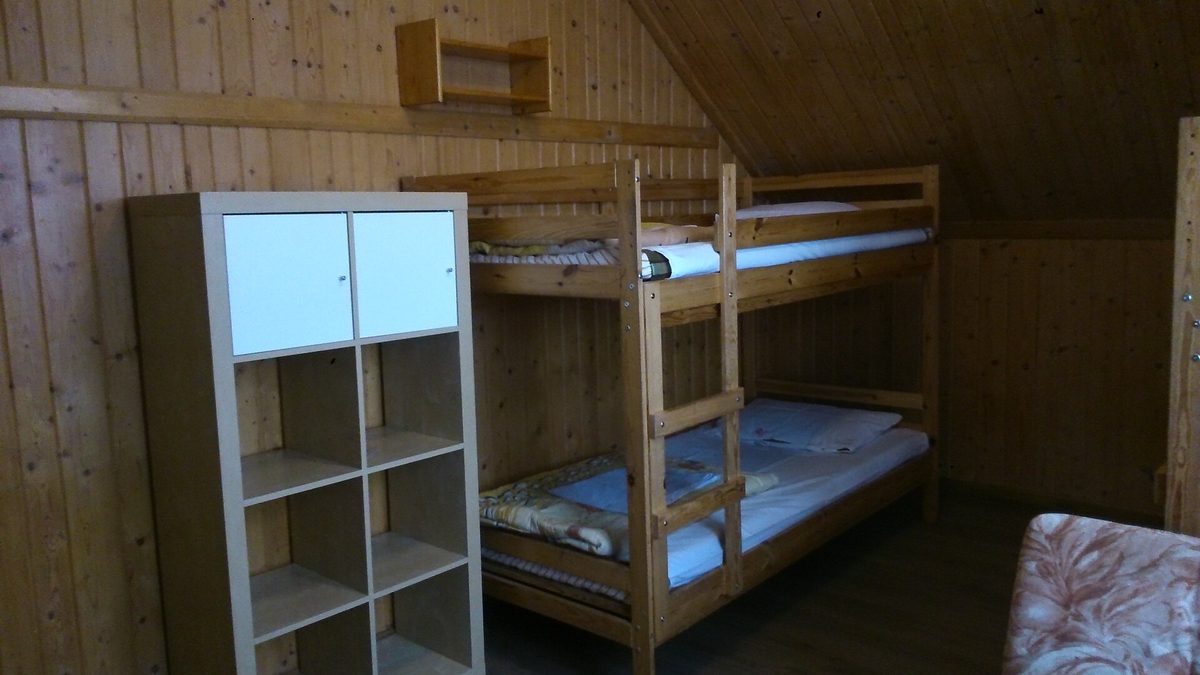
A €60 double costs €60 whether one person sleeps in it or two, which works out to $65. In Ohrid, a double bed private room runs $16.50 per person per night.
The Room Is Priced Per Room
A hotel charges for the room. That is the whole thing. A €60 double costs €60 whether one person sleeps in it or two, which works out to $65. A couple splits that and pays $32.50 each. A solo traveler pays $65. This is the single biggest line item separating solo budgets from everyone else’s, and it explains why hostels and guesthouses matter so much if you are traveling alone.
It is worth sitting with that for a moment, because the arithmetic quietly reshapes an entire trip. Two people traveling together for a month are not simply paying half of what one person pays; they are paying for one room and dividing it, which means their nightly accommodation cost can fall below the dorm rate in the same city. A solo traveler, meanwhile, is stuck with the full room rate every single night, and that penalty compounds over weeks. The usual workaround is dorm beds, but dorm beds come with their own costs — interrupted sleep, shared bathrooms, and the small social tax of constantly negotiating lights and alarms with strangers.
A dorm bed is priced per person. So is a private room in a hostel, and that is where the math gets interesting.
What a Private Room Actually Is
If you stay in a private room in a hostel, you are basically staying in a low-budget hotel room. Maybe you share bathrooms. Maybe you don’t. A genuine hostel stay is a dorm room, and dorm rooms range from 4 beds to 18 or more in one room.
In Ohrid, a double bed private room runs $16.50 per person per night. In Bolivia, a simple double room with a private bathroom starts at $12. A hostel in Coiyhaique, in Patagonian Chile, charges $22 for a bed in a dormitory and $60 for a standard double room. Split that double between two people and it is $30 each. Stay solo and you eat the whole $60.
That is the trade. A dorm bed is cheaper than a private room per person, always. But a private room split two ways can undercut a dorm bed in the same building.
The vocabulary matters more than it should. In Georgia, a “guesthouse” is usually a family home with a few spare rooms, and the price is quoted per room, not per head, which is why two travelers often pay less there than one. In Armenia, the same word can mean anything from a purpose-built B&B to a converted Soviet-era apartment block with a shared kitchen. Neither country has much of a hostel tradition outside Yerevan and Tbilisi, so the dorm-versus-private calculation that works in Southeast Asia does not map cleanly onto the Caucasus. A solo traveler in Armenia will often find that a private room in a guesthouse costs barely more than a dorm bed would in a Western European city, which changes the calculus entirely.
Splitting Changes Everything
Some numbers make the case better than an argument does. A dorm bed in Coiyhaique: $22. A private double split two ways: $30 each. You pay $8 more and get a door that locks. In Ohrid the private room is $16.50 per person, which is below the upper end of dorm pricing in plenty of places.
Then there is the hotel math. For $65 you can get a double room in a top five-star hotel. Split it and that is $32.50 per person. Two dorm beds in a mid-range hostel can cost more than that.
Sex is another reason. Just get a private room and split the costs.
Sulfur baths run $30 to $60 per hour per room, split between the group. Same principle, different setting.
The sulfur bath detail is not a joke about the region; it is the same principle applied to an afternoon rather than a night. Tbilisi’s bathhouse district prices its private rooms by the hour, and a group of four splitting a room pays a quarter each of what a solo bather pays. The same logic runs through guided tours, taxis, and the marshrutka minibuses that connect most Georgian and Armenian towns — the vehicle is priced as a vehicle, so the per-person cost falls as the group grows.
What Regions Cost
The north of Thailand — Chiang Mai and Chiang Rai — is typically the most budget-friendly region in the country. Hostel dorms there run $6 to $12 a night. Basic private rooms run $15 to $30. Daily expenses including street food, local markets and temple visits can be as low as $20 to $35.
Bolivia sits in a similar range. Most backpackers can travel there comfortably on $25 to $40 per day. That covers a dorm bed or a basic private room, meals at local markets and local transport. Plan with these: hostel dorm $6 to $12, simple private room $12 to $30, menu del día lunch $2 to $5.
A mid-range ten-day budget lands around $600 to $1,000. That buys private rooms, varied meals, intercity transport and several guided activities.

Georgia and Armenia sit somewhere between those two poles, closer to the Bolivian end on accommodation and closer to the Thai end on food. A dorm bed in Tbilisi or Yerevan runs roughly what a Bolivian dorm runs, while a guesthouse double in a smaller town — say, in the Armenian highlands or the Georgian wine country — can come in below the equivalent Bolivian private room. The catch is that both countries have a short high season, and prices in the popular mountain towns can double or triple in July and August while barely moving the rest of the year. Locals in the hospitality trade tend to quote their summer rate first and their shoulder-season rate only if asked directly, so it pays to ask what the same room costs in October.
The Direct Booking Lever
Accommodation across one long trip came to $6,697. Mostly one- and two-star hotels with double rooms, often sharing a bed, or guesthouses.
On a few occasions, better rates came from staying longer in one place or speaking directly with hosts. In Bolivia, private rooms came in around $5 a night by booking directly at reception rather than through online platforms.
That $5 is not a typo and it is not typical. It is what happens when the room is priced per room, the owner sets the rate in person, and nobody in the transaction is paying a commission.
The same lever works in the Caucasus, though the mechanism is slightly different. In Georgia and Armenia, the big booking platforms take a cut that small family-run guesthouses resent, and many of them would rather fill a room at a lower rate than hand over a percentage. Walking up to a guesthouse in the late afternoon, when the owner can see the room is about to go empty for the night, is a genuinely effective tactic. It helps to have a few words of Russian or, better, a translation app, and it helps even more to be flexible about which guesthouse — the second or third one on the same street will usually match whatever the first one quotes.
Cash is the other half of the equation. Many small guesthouses in both countries prefer local currency in hand over a card transaction, and a guest paying cash often gets a better number than one who asks to pay by card. ATMs are reliable in the cities and unreliable in the mountains, so it pays to carry enough cash for a few nights before heading out of town.
The dorm versus private question has a boring answer. Per person, the dorm wins. Per room, split between two, the private room often wins, and sometimes by a margin wide enough to cover dinner.
Leave a Reply