Bosnia at $35 to $60 a day, Montenegro at about $59 on the coast and $43 in the north, Croatia and Slovenia above that.
What Things Cost
Bosnia and Herzegovina runs roughly $35 to $60 a day. That is the working figure, and it covers a comfortable backpacker trip rather than a survival one. The spread matters. Thirty-five dollars is a slow week of guesthouses, market food and buses. Sixty is a faster pace, more meals out, more paid entries, maybe a private room instead of a dorm bed.
In practice the daily number is decided by two things: how often the bus moves and whether the coffee stops turn into meals. Coffee in Sarajevo is a ritual rather than a transaction — a small cup, a glass of water, and no one hurrying anyone along — and two or three of those a day is where a quiet budget quietly disappears. None of it is expensive; it just adds up faster than the food does. Cash still does most of the work outside the bigger hotels. Marks come out of ATMs without much drama, though machines in smaller towns can be picky about foreign cards, so it pays to carry a reserve rather than arrive in a village with an empty wallet.
The country sits at the cheap end of the Balkan scale. Across the region, €35 to €45 a day, or about $38 to $49, covers comfortable backpacker travel in most countries. In the cheaper destinations — Kosovo, Albania, Bosnia — you can go lower. In the pricier ones — Croatia, Slovenia — budget a bit more. Montenegro sits in the middle. Cheaper than Croatia but pricier than Bosnia. The Bay of Kotor is the most expensive area there. Budget about $59 a day for the Montenegrin coast, and about $43 a day for the north. Put those side by side and Bosnia looks like the place where your money stretches furthest without changing how you travel.
Days and Cities
One traveller spent 24 days moving around the Balkans and covered six countries in that time: Greece, Bulgaria, Serbia, Bosnia and Herzegovina, Croatia and Montenegro. Ten cities. Athens, Delphi, Thessaloniki, Sofia, Nis, Belgrade, Sarajevo, Mostar, Dubrovnik, Kotor. Two of those ten are Bosnian. Sarajevo and Mostar, in a run that also took in the Greek mainland, the Bulgarian capital, a Serbian stopover, the Croatian coast and the Bay of Kotor.
That is a fast trip. It also shows how Bosnia fits into a regional route rather than standing alone at the end of one. You come in from Serbia or Croatia, you go out toward Montenegro. The country is a segment, and a cheap one, which is part of why it lands where it does in a 24-day plan.
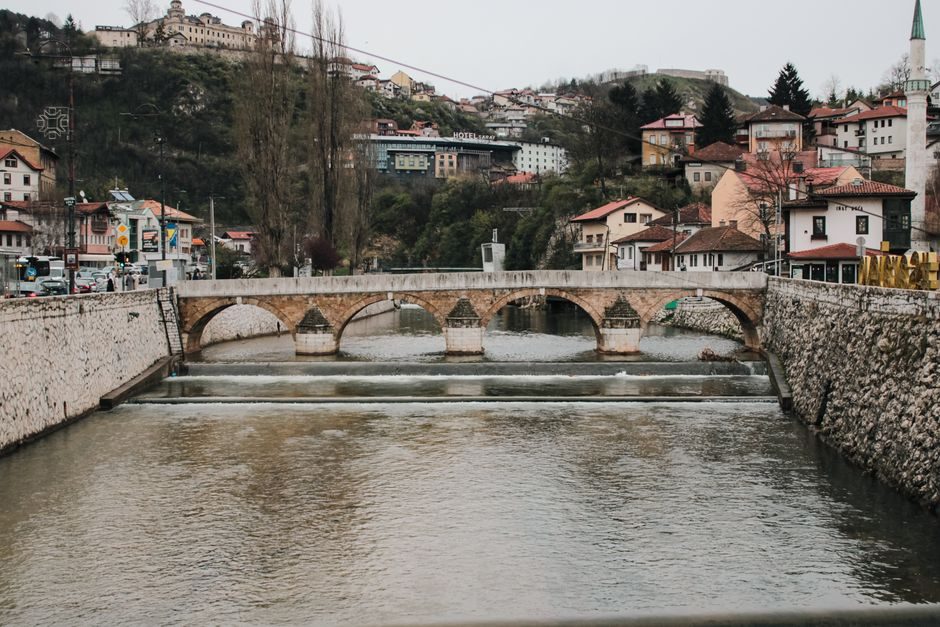
The two Bosnian stops do different jobs. Sarajevo is a city you walk, and the walking is the point: the old bazaar quarter, the seam where Ottoman streets meet Habsburg facades, the hills rising close on both sides. Mostar is smaller and sharper, built around the rebuilt bridge and the water below it, and it can be done in a day if the buses cooperate. They often do not. The rail line between the two is slow and scenic, the bus is quicker and less comfortable, and either way a chunk of the day goes to the journey rather than the destination. Travellers who try to squeeze both into two days usually end up wishing they had given Mostar a night.
Sleeping and Eating
Accommodation is very affordable throughout the country. Local guesthouses, known as sobe, offer home-cooked breakfasts and a genuine insight into Bosnian family life. That is the shape of the budget here. Not hostels with a bar downstairs, but rooms in houses, breakfast included, run by people who live there.
The sobe sign in a window is still the way a lot of this works, though most places now also list online. What guests tend to remember is the breakfast, which arrives as a spread rather than a plate — bread, cheese, eggs, sometimes a slice of something sweet, and coffee made slowly. Hosts will often point out the bus stop, warn about which taxi drivers to avoid, and occasionally drive a guest to the station themselves. The trade-off is that these are family homes, not hotels: check-in times can be loose, and the owner may be at work when you arrive. A message ahead about the arrival hour saves a lot of standing on a doorstep.
Street food does the rest. Ćevapi, the national dish, is excellent, ubiquitous, and extremely cheap. Those three words do a lot of work. Excellent is the part that matters most. A country can be cheap and you can still spend your evenings hunting for something worth eating. Here the cheap option is also the thing you came for. Ćevapi shows up everywhere, which means you are not routing your day around finding it. You eat it when you are hungry, near wherever you happen to be, and it costs very little.
The serving is a plate of small grilled links of minced meat, usually beef and lamb, tucked into a flatbread with raw onion and a soft cheese spread, and it arrives with a side of yogurt to drink. It is heavy, it is cheap, and it is best eaten at a plain table with no menu in English. Burek — flaky pastry rolled around meat, cheese or spinach — is the other standby, sold by the tray in bakeries from early morning, and it makes a breakfast that costs less than a coffee back home. Vegetarians will find the cheese and spinach versions everywhere and little else in the meat-forward grills, which is worth knowing before committing to a week of it.
Run the numbers. At $35 a day, a sobe bed with breakfast and street food for the other meals leaves room for buses and a few entries. At $60 you are not straining. The gap between those two figures is mostly comfort, not access. You can see the country at the lower end.
The Regional Comparison
The Balkans reward anyone willing to cross a border. Bosnia at $35 to $60 a day, Montenegro at about $59 on the coast and $43 in the north, Croatia and Slovenia above that. Kosovo and Albania below Bosnia. The differences are not enormous in dollar terms, but they compound over three weeks. Twenty-four days at the Bosnian low end is a different trip than twenty-four days at the Croatian high end.
What the comparison hides is travel time. Borders in this part of the world are not the ordeal they once were, but a bus that crosses one can still eat half a day, and a route that looks short on a map can take longer than the distance suggests because the roads climb. The trick most travellers settle on is to bunch the cheap countries together and spend the savings on a few expensive days rather than spreading the money evenly. A long, slow stretch in Bosnia and Kosovo funds a comfortable night or two on the Adriatic coast without changing the total.
That is the useful thing to carry. Not a single daily number, but the order of things. Bosnia is cheap. Montenegro is mid. Croatia and Slovenia cost more. Plan the route with that in mind and the total lands where you want it, whether you are moving every two or three days or staying put in Sarajevo and Mostar and letting the rest of the region wait.
What It Adds Up To
Two Bosnian cities in a ten-city, six-country run. A daily budget of $35 to $60. Sobe beds with home cooking. Ćevapi on every corner for very little money. None of this is hidden. It is the reason the country keeps appearing in itineraries that also include Greece and Croatia, places that cost noticeably more per day.
The arithmetic is simple. Bosnia is where the money goes furthest in that group, and it is not because you are doing without. You are sleeping in family guesthouses, eating the national dish, and moving between Sarajevo and Mostar on a budget that would not cover a single day in some of the cities on the same route.
Leave a Reply