Some links on this page are affiliate links. If you book or buy through them, we may earn a small commission at no extra cost to you. It never changes what we recommend — every price here is one we would pay ourselves.
A surfboard rental runs $5 a day in some places. A two-hour surfing lesson in Puerto Escondido came in just under $20 per person.
What a Surf Day Actually Costs
A day of activities on Sri Lanka’s south coast averaged about $6. That covered a mix of diving, snorkeling and surfing, plus the city sightseeing in Colombo, Galle and Kandy that came with the same trip. Six dollars a day is not a typo, and it is not the whole picture either, because how you spend it decides everything. The average survives on a simple trick: the expensive days get balanced by the days that cost nothing at all, and most people only remember the expensive ones when they sit down to do the sums.
The line items are small and specific. A surfboard rental runs $5 a day in some places. A surf lesson runs $15 to $25. Temple admission sits at $2 to $5. Yoga classes go for $5 to $8, temple visits for $1 to $3. Those are the numbers that matter, and they sit far below what most people assume a surf town costs. The expensive part is not the water. It is everything built around the water.
What the $6 figure hides is the shape of the day. Mornings start early, because the wind picks up by mid-morning and the glassy window closes fast; a rented board picked up the evening before saves the walk to the shop twice. Breakfast from a roti stand or a fruit stall costs less than a cafe plate and takes five minutes. The middle of the day is for shade, hammocks, and the kind of slow reading that does not appear on any receipt. Late afternoon is the second surf session, then a rice and curry dinner at a family-run place a few streets back from the beach, where the price drops as soon as the sea view disappears. The board hire is the only line that shows up every single day, which is exactly why it dominates the total.
Small things go wrong in predictable ways. Boards get dinged, and shops often hold a passport or a cash deposit against damage, so it pays to photograph the board before taking it out and to ask what a ding costs to repair before it happens. Sunburn arrives on day one because the water hides it. Reef cuts on the feet heal slowly in humidity, so most long-stay surfers keep a bottle of antiseptic in the bag. None of this is expensive; it is just the unglamorous overhead that a first-timer’s budget misses.
Six Months, Two Hundred Dollars
Over six months of travel, one person spent roughly $200 in total on tours and attractions. Most of that went to hiring surfboards. The rest of the time went to free walking tours, free attractions, hikes and camping. Two hundred dollars across half a year works out to about $1.11 a day. That is not a budget hack. That is just a different set of habits, where the default is a trail or a campsite instead of a paid tour.
For anything that caps daily visitors, an advance reservation is essential.
The same pattern shows up elsewhere. In Oaxaca and Chiapas, all-day multistop tours ran $15 to $25 per person. Three hours of horseback riding in Chiapas cost $10 per person. A two-hour surfing lesson in Puerto Escondido came in just under $20 per person. Anyone who books a paid tour every second day is spending at a completely different rate than someone who books one a week. The surf towns themselves are cheap. The itinerary around them is where money leaks.
The free options are not consolation prizes. Walking tours in Oaxaca run on tips and cover the same ground as the paid versions, just with more walking and a guide who is happy to point out where the locals eat. Hikes out of town cost nothing but time and water. Camping on a beach costs nothing but tolerance for sand in everything. The pattern that keeps the annual total near $200 is not denial; it is choosing the unpaid version most days and paying properly for the thing that actually needs a professional, like a board under the feet or a dive instructor.
The Cheapest Country in the Region
Nicaragua is Central America’s cheapest country on these numbers. Surf hostels in San Juan del Sur run about $30. Colonial Granada and volcano boarding on Cerro Negro sit at roughly $30 each. Those are real prices for real activities, not backpacker folklore.
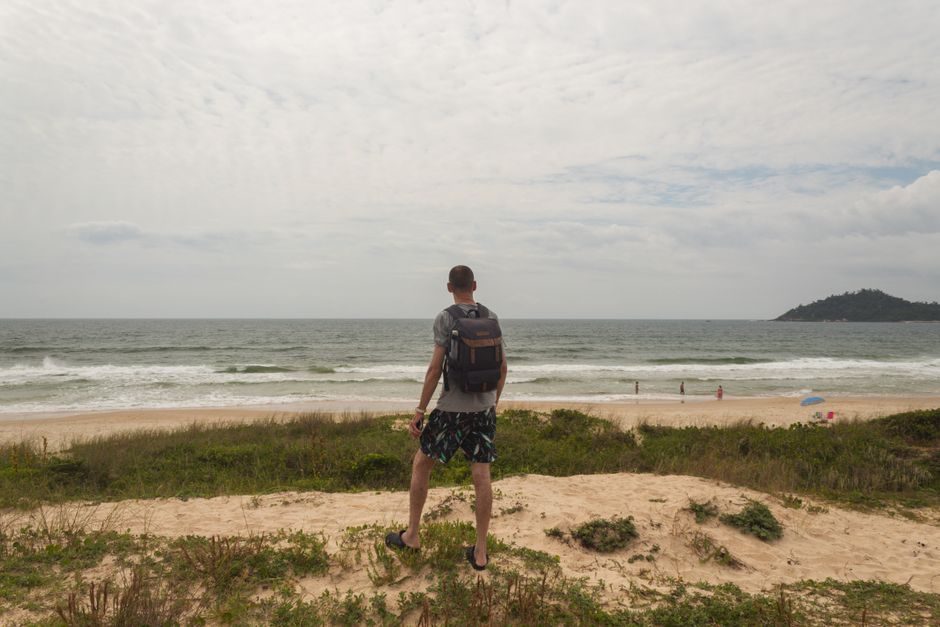
San Juan del Sur is a bay town with a horseshoe beach and a statue of Christ on the ridge above it, and the surf breaks sit a short drive north along a dirt road where the hostels cluster. The town itself is walkable and the hostels fill with people who came for a week and stayed for a month. Granada is the opposite mood entirely, a colonial grid of painted walls and a cathedral on a central plaza, best seen on foot in the early morning before the heat settles. Volcano boarding on Cerro Negro involves a hike up a black ash cone in a borrowed jumpsuit, a wooden board, and a descent that takes about a minute and leaves grit in every seam of everything. It is a genuinely odd way to spend a morning and worth doing once.
Siargao in the Philippines draws a different crowd. White sand beaches, good surfing, rock climbing and cave exploration, and a pace relaxed enough that visitors stay for months rather than weeks. Sri Lanka’s Weligama and Hiriketiya pull remote workers for the same reason. The mix is surf culture plus work-friendly cafes, which changes what a day costs. You are not paying for a resort. You are paying for a desk, a board and a bed.
Kuta Beach in Bali is the familiar version of all of this. A long sandy shoreline, sunset views, surfing, and a lot of people doing the same thing at the same time. Familiar means easy. It does not always mean cheap.
The Cost Nobody Counts
A flight landing at 9pm in Rome still costs a full hotel night. So does an early departure at the far end of a trip. This is the line that quietly disappears from most plans, and it is why counting nights rather than sightseeing days matters. A six-month trip with twelve badly timed flights has twelve extra nights baked into it, and at $30 a night that is $360 that never appeared in anyone’s estimate. At $18 a night it is $216. Either way it is real money that a surf town budget will not absorb on its own.
The fix is dull but effective. Booking the first night before arrival, even at a slightly higher rate, removes the scramble of landing after dark in an unfamiliar town with no room and a taxi driver who knows it. Overnight buses and trains turn a travel day into a bed, which is why long-stay travelers use them constantly. Red-eye flights do the same thing at altitude. The rule of thumb is that any arrival after about eight in the evening, or any departure before about six in the morning, is going to cost a night somewhere whether it is booked or not.
Adventure Cover
Insurance is the other quiet line. Policies differ, and the fine print decides what is included. One provider covers a range of sports including diving, trekking and surfing at no additional cost, with cover for trekking up to 5,000 metres, diving up to 30 metres, and surfing. That is the shape of the question to ask before paying for a policy, because a cheap policy that excludes the thing you came to do is not cheap. Check current State Department guidance before booking anything, particularly for Nicaragua.
The practical version is to read the exclusions list before the price, not after. Search it for the words surfing, diving, trekking and scooter, because those are the four activities that quietly void more policies than anything else. If a sport is not named, assume it is not covered. Claims also tend to require receipts, police reports and, for medical matters, paperwork from the treating clinic, so keeping a folder of documents on a phone is worth more than it sounds when something actually goes wrong. The annual cost of a policy that names the sports is a fraction of one evacuation, which is the comparison that matters.
The math is simple once the numbers are on the table. A $5 board, a $2 temple, a $6 day. Six months for $200. The surf towns are not the expense. The extra nights and the uncovered dives are.
Leave a Reply