Some links on this page are affiliate links. If you book or buy through them, we may earn a small commission at no extra cost to you. It never changes what we recommend — every price here is one we would pay ourselves.
Converted, that is roughly $5.40 to $6.50 to feed two adults on local food. Street food at $5.40 for two beats a restaurant.
What Street Food Actually Costs
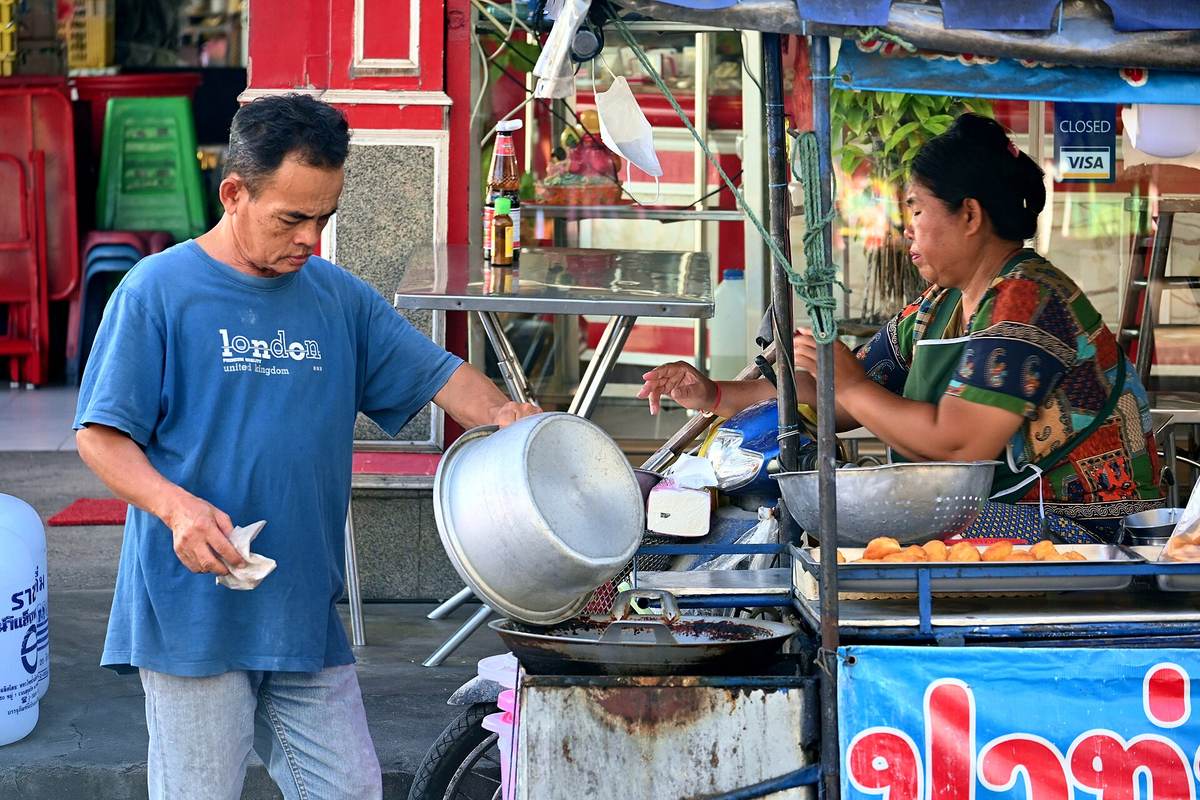
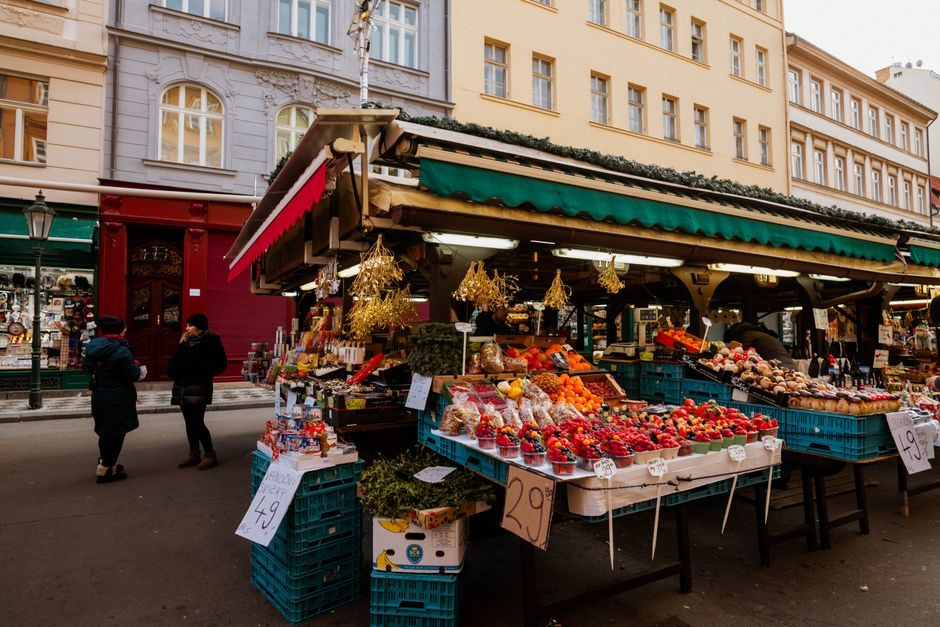
Five and six euros for two people. That was a real meal, not a sad one eaten standing up next to a gutter. Converted, that is roughly $5.40 to $6.50 to feed two adults on local food. Sit-down restaurants and hotels in much of the world still run on cash, which was the case as recently as 2016 in a lot of places and has not changed as much as people assume. Carry notes. A card that works fine in one town will fail in the next.
What that money buys varies enormously, and the variance is the point. In Southeast Asia, five or six dollars for two usually means two bowls of noodle soup, a shared plate of grilled meat, and a couple of drinks from a cooler, eaten at a plastic table on the pavement while a fan blows hot air at the back of your neck. In parts of Latin America the same money buys a set lunch — soup, a plate of rice and beans with some kind of meat, and a fresh juice — served at a counter where the menu is written on a whiteboard and erased when the day’s food runs out. The price is fixed, the portion is not, and regulars get more than tourists until they become regulars too. That takes about three visits.
Watch how the stall prices things. Some charge per skewer, some per plate, some per person, and the sign is not always right. The reliable signal is what the person ahead of you pays and what they get for it. If the locals are ordering a small bowl and adding their own condiments from the jars on the table, do the same; the condiments are usually free and they are usually where the flavour is. If a stall has no prices posted at all, it is either very cheap or it is about to charge the foreigner rate, and the way to find out is to ask before ordering, not after eating.
The gap between a street stall and a restaurant is not a rounding error. It is often the single largest line in a daily budget. On a long trip, that gap decides whether you are moving every three days or staying put for a week. A restaurant meal for two in the same city might run three or four times the stall price once drinks and a tip are added, and the food is rarely three times better. Street food also fails in specific ways worth knowing: stalls close when the food runs out, often by early afternoon, and the best ones sell out first. A stall that looks empty at seven in the evening is not a hidden gem, it is a stall that already had its day.
Cash, SIMs, Laundry
A local SIM card can cost less than paying for hostel WiFi for the same stretch of days. Run those two numbers against each other before you check in. It is a small decision that repeats every time you change towns. Buying one usually means a passport, a form, and a queue at an official carrier shop rather than a kiosk in the terminal, and the kiosk will charge more for less data. The process takes twenty minutes in a proper shop and rather longer if the system is down, which it sometimes is.
For anyone landing at an awkward hour, an eSIM is active before you queue.
Laundry is the other quiet expense. In Thailand, a laundromat runs about 40 baht per kilogram, which is $1.08. One dollar and eight cents for a kilo of clean clothes. Wash by the bag, not by the item, and the cost stays flat no matter how long you have been on the road. The catch is turnaround: bag laundry is usually returned the next day, sometimes the day after, so it pays to drop it off in the morning on a day you are staying put rather than the night before a bus. Hand-washing in a sink is free but rarely dries overnight in humid places, and a damp shirt in a pack is how a trip starts to smell. In colder countries laundromats are coin-operated and you sit and wait, which is its own kind of travel day.
Cheap Countries, Cheap Regions
Some destinations do the work for you. Portugal, Peru, China, Cambodia and Fiji all belong on a list of places where the daily spend stays low without much effort. That is not a ranking of scenery. It is a ranking of how far your money goes. Portugal is the outlier on that list because it is in Western Europe, and the reason it works is that the cheap food is genuinely good — a plate of grilled sardines, a bowl of caldo verde, a glass of house wine — and the country is small enough that buses between cities cost little and take hours rather than days.
Europe can be done for less than people expect. One couple travels the continent on under €29 a day, which is $31.32, and that figure includes Iceland and Norway. Two of the most expensive countries in Europe, folded into a number under thirty-two dollars. It is done by eating where locals eat and moving on buses instead of planes. The Nordic leg of a trip like that works because the expensive part is accommodation and alcohol, and both can be avoided: campsites, hostels with kitchens, and the state alcohol monopoly shops rather than bars. Grocery stores in Norway are not cheap by any normal standard, but they are a fraction of restaurant prices, and a supermarket picnic on a fjord beats a restaurant meal anywhere.
Clothes are worth buying in some places and not others. In Brazil, three pairs of jeans, two bikinis and six tops came to €100, or $108. That is six tops at roughly $18 each if you split it evenly, except you should not split it evenly, because the jeans are the expensive part and the bikinis are not. Buy where the making happens. The same logic holds for tailoring in Vietnam and Thailand, where the price depends far more on the fabric chosen than on the labour, and for leather in parts of Morocco and Spain. Sizing runs differently almost everywhere, so try before committing, and expect alterations to take a day or two.
Getting There and Getting Around
Flying is sometimes the cheap answer. A short hop cost €15, or $16.20, and took under 20 minutes. The same trip on the ground would have eaten a day. Short regional hops like that are common in places with islands or bad roads, and the fare is low because the alternative is a ferry or a long, winding drive.
But the ticket price is not the whole cost. Hotel check-in usually runs from 1 PM to 3 PM. Land at 10 PM or 11 PM and you have to pay for a night you will spend asleep and nothing else. That extra night can cancel out whatever the cheap fare saved you. Add it before you book, not after. The same trap sits at the other end of the day: a 6 AM departure means a taxi before public transport runs, and that fare is not in the ticket price either.
Day of week matters. Flights leaving Monday, Tuesday or Wednesday tend to cost less than Friday, Saturday and Sunday. On one route the difference reached R$500, which is about $92. Same route, same seat class, ninety-two dollars apart. The pattern is not universal but it is common enough to check both dates before deciding, and shifting a trip by a single day is often the cheapest saving available.
Buses are slower and that is the trade. A Munich to Barcelona bus ticket comes in cheaper than flying, but the ride takes 23 hours. Twenty-three hours is a full day of your trip spent in a seat. Sometimes that is fine. Sometimes it is not. Long-distance buses, rail passes and ride-sharing all sit in the same category: you pay in hours instead of dollars. Overnight buses blur the line, since the seat doubles as a bed and the night was going to be spent asleep anyway, but sleeping on a bus is not sleeping in a bed, and the day after an overnight ride is usually a write-off. Budget for that too.
The Long Trip Math
There is a break-even point on insurance and on trip structure. A single long-term trip costs less than assembling the same number of days out of separate shorter trips. Annual coverage only wins if you are actually travelling 120 days or more across the year. Below that, you are paying for days you will not use. The same arithmetic applies to gear: a good pack and a pair of shoes that survive a year cost less than replacing cheap ones twice, and the replacement always happens somewhere inconvenient.
The same logic runs through everything above. Street food at $5.40 for two beats a restaurant. A $1.08 kilo of laundry beats washing in a sink. A $16.20 flight beats a 23-hour bus when your time is worth more than the fare. None of it is complicated. It just has to be counted.
Leave a Reply