Some links on this page are affiliate links. If you book or buy through them, we may earn a small commission at no extra cost to you. It never changes what we recommend — every price here is one we would pay ourselves.
On a 10-day trip where you spend $3,000, that’s $30 to $90 in pure fees, on top of whatever the exchange rate does to you. Over a two-week trip that’s $70, and you haven’t made a single call home that mattered.
Cards Work, Cash Still Rules
In Tashkent and Almaty, a Visa or Mastercard will get you through most of the day. Step outside the major cities, into a small town or a market, and the card stops working. The Uzbek Som and the Kazakh Tenge are local currencies, and cash is still the norm where the card readers haven’t arrived. Bring US dollar bills, new notes, and exchange them locally.
This is not exotic advice. It’s the gap between what your bank statement implies and what the pavement requires.
The practical version of that gap looks like this. In Tashkent, the hotel desk taps the card without a word, and the coffee shop near the metro does the same. Two hours down the road in a provincial bazaar, the vendor selling dried apricots by the kilo has a smartphone and no terminal. The banknote in your pocket is the only thing that settles the transaction. In Almaty the split is just as sharp: the mall food court takes plastic, the stall outside selling horse meat and flatbread does not.
Currency exchange in both countries rewards a little patience. Banks and official exchange points give a reasonable rate, but the spread widens the further you get from the centre, and the small kiosks that advertise the best numbers often add a commission that eats the difference. Count the notes before leaving the window, in front of the teller, because a miscount corrected on the spot is a conversation and a miscount corrected at the hotel is a loss. New, unmarked US dollar bills matter more than anything else: a note with a fold, a stain or a stamp from a previous trip can be refused outright, and arguing about it in a language you don’t speak rarely ends well. Keep the bills flat in a passport holder, not folded in a pocket.
Cash also solves the smaller problem of the day: taxis, market snacks, tips, the bottle of water from the corner kiosk. Carrying a modest amount of local currency at all times means never hunting for an ATM at the exact moment one is needed, and ATMs outside the big cities run dry or reject foreign cards often enough that relying on them is a gamble.
What a Year of Fees Looks Like
Someone travelled for an entire year in 2015 and 2016, before the modern crop of low-cost card apps existed. They took their regular bank card from home and incurred £500 in fees. That converts to roughly $540. That is a month of travel in some places, handed over to a bank for the privilege of spending your own money.
The standard structure hasn’t changed much for ordinary cards. Most US credit cards charge 1 to 3 percent on international transactions. On a 10-day trip where you spend $3,000, that’s $30 to $90 in pure fees, on top of whatever the exchange rate does to you. A card with no foreign transaction fee removes that line entirely. Check before you go. Most travel cards don’t charge it, but the checking is the point.
The fees rarely arrive as one clean line on a statement. They hide inside the exchange rate the network applies before the bank adds its own percentage, which is why two cards used on the same day in the same shop can produce different totals. The only way to know what a card actually costs abroad is to test it early in a trip on a small purchase, then compare the amount deducted against the amount on the receipt. That single comparison tells more than any fee schedule.
Withdrawing cash adds a second layer. Most banks charge a flat fee per foreign ATM withdrawal plus a percentage, and the machine itself usually adds a surcharge. Taking out a larger sum less often beats several small withdrawals, as long as the cash can be kept somewhere safe. When an ATM offers to convert the withdrawal into dollars at the machine, declining and letting the home bank do the conversion is almost always cheaper. The difference is small per transaction and adds up over a long trip.

It also pays to carry two cards from different networks, kept in different places. A card that works everywhere at home can be declined abroad for reasons that have nothing to do with the balance, and having a backup in a separate bag turns a crisis into an inconvenience. Telling the bank about travel dates beforehand takes two minutes and saves more; an unexpected block on the first morning of a trip is a slow way to start.
Phone Bills and Port Fees
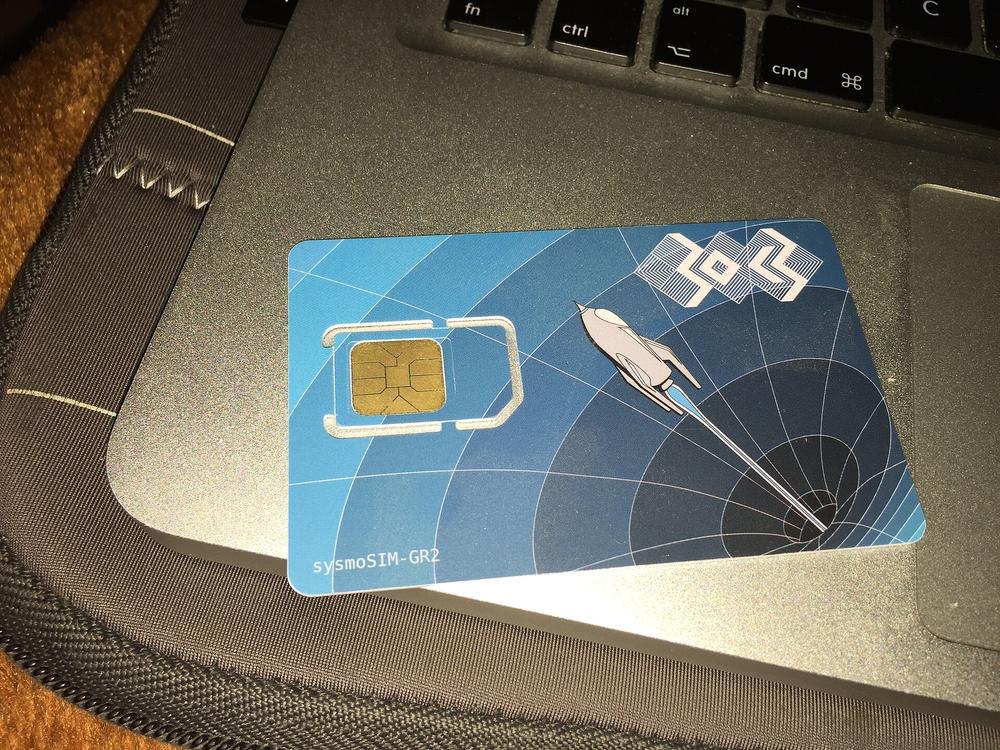
Two smaller leaks. AT&T and Verizon may charge $5 per day while you’re touring around London or Scotland. Over a two-week trip that’s $70, and you haven’t made a single call home that mattered. A local SIM or an eSIM plan can cover the same ground and keep the data connection strong enough to post from.
Buying a local SIM at the airport is convenient and rarely the cheapest option; the same SIM from a shop in town often costs less and comes with a friendlier data allowance. The process is usually quick. A passport is required for registration in most countries, the clerk photographs it, and the SIM is active within minutes. The catch is that some plans only work inside the country of purchase, so a SIM bought in one country may be useless the moment the border is crossed. An eSIM sidesteps the whole ritual: install it before leaving home, activate it on landing, and skip the queue at the arrivals hall. The trade-off is that eSIM data plans are priced per region or per country, and a long multi-country trip can end up costing more than a handful of local SIMs would.
If roaming charges worry you, an eSIM is the cheap workaround.
Then there are the port fees nobody mentions until the ferry is boarding. At one Greek port, passengers pay €20 per person per stop until 30 September. That drops to €12 in October and €4 from November. Other Greek ports charge €5, €3 and €1. In dollars, that’s about $21.60, $12.96 and $4.32 for the first port, and $5.40, $3.24 and $1.08 for the others. Off-season travel does not just lower the room rate.
The fee is collected at the gangway, in cash, by someone with a receipt book, and the queue forms fast once boarding is called. Having the exact amount ready saves standing in a scrum with a backpack on. Ferries in the shoulder season also run on thinner schedules, so a crossing that happens twice a day in August may run once every other day in November. The saving on the port fee is real; the cost is flexibility.
Teahouses and the Unwritten Rule
On the popular trekking routes, the cheap room rate comes with a condition. Most teahouses expect you to eat dinner and breakfast at the lodge. This is an unwritten norm, not a formal rule. Decline to eat there and you’ll often be charged the full room rate of $15 to $30 instead of the subsidized $5 to $10. The food is where the margin lives. The room is bait.
The system is straightforward once it’s understood. A lodge on a busy route fills beds at a price that barely covers the firewood, then makes its money on dal bhat, tea and the occasional beer. The menu prices are set accordingly, and they climb with altitude, because everything above a certain point arrives on someone’s back or on a mule. A plate of noodles that costs a couple of dollars in the valley can cost several times that near the top of a pass. Nobody is being cheated; the arithmetic is just more visible up there.
What typically goes wrong is a group that decides to eat somewhere else and expects the same room rate on the way out. The lodge owner has heard the argument before and simply quotes the full rate, and there is no recourse at that point. Paying for dinner and breakfast at the lodge is the price of the cheap bed, and it usually works out cheaper than the alternative anyway. Cash is the only thing that works at altitude, and the nearest ATM is a long walk downhill, so trekkers carry more than they think they need and treat the last village with a working machine as the final top-up.
Guides and porters are a separate line. A trekking guide charges $30 to $40 each day. Porters charge $20 to $30, or $20 to $25 depending on who you hire. On the Annapurna Base Camp Trek, a booked package runs anywhere between $900 and $1,200. What you pay depends on the outfitter, the services included, and the transport. Fly to and from Kathmandu and Pokhara and the trip cost rises further.
Flights to Lukla run roughly $220 each way. Add that to the guide and porter days and the arithmetic gets serious fast.
The flights themselves are a category of their own. The Lukla airstrip is short, sloped and weather-dependent, and flights are cancelled often enough that a buffer day on each end of a trek is not paranoia, it’s planning. A cancelled flight means a night in a guesthouse and a rebooking, and the extra cost lands on the traveller rather than the airline. Reputable outfitters build slack into their itineraries for exactly this reason, which is one of the things the higher package price is buying.
The Small Stuff and the Big Safety Net
Magnets, postcards, trinkets. These run $1 to $5 each, or 30 to 150 baht. They add up in a way that never shows up in a budget spreadsheet, and they are almost always a cash purchase.
The same goes for the rest of the small daily spending: a bottle of water, a temple entrance, a bag of fruit, a seat on a shared taxi. Individually these are rounding errors. Across a few weeks they quietly become one of the biggest lines in the budget, and because each purchase is small, nobody tracks them. A simple note of cash spent at the end of each day, kept on a phone, is enough to see the pattern before it becomes a problem.
One more number worth knowing. Trip Cancellation and Interruption Insurance typically maxes out at $10,000 per covered trip and $20,000 per eligible card over a 12 consecutive month period. That is the ceiling on what a card will reimburse if the trip collapses. It is not unlimited, and it is per card, not per person.
In tourist restaurants, a 10 percent service charge often appears on the bill. Check it before you add a tip on top. The bill tells you what’s already been taken.
The service charge habit varies by country, and reading the bill is the only reliable guide. In some places the charge is mandatory and goes to the owner rather than the staff, in which case a small cash tip is still the right thing. In others it is genuinely shared with the kitchen and waiters. Asking the person serving is never rude, and the answer is usually more accurate than any guidebook.
Receipts are worth keeping for anything substantial, partly for the insurance claim that never happens and partly because a dispute over a double charge is settled with a piece of paper and not with a story. Photographing them as they accumulate takes seconds and puts the whole trip’s spending in one place at the end, which is the only honest way to find out what the trip actually cost.
Leave a Reply