Some links on this page are affiliate links. If you book or buy through them, we may earn a small commission at no extra cost to you. It never changes what we recommend — every price here is one we would pay ourselves.
The first is $120 to $350 per person per day, which is the going range for most Africa overland safaris in 2026. The $95 figure came from 119 days on the road.
What Overlanding Actually Costs
Two numbers sit at the centre of any overland budget. The first is $120 to $350 per person per day, which is the going range for most Africa overland safaris in 2026. That figure moves depending on the route, the accommodation style and what activities are bundled in. The second number is $95. That is what one Africa overland trip averaged out to, per person per day, across 119 days.
The gap between those two numbers is the whole story. A packaged lodge tour and a self-organised overland trip are not the same product, and they do not cost the same. The $95 figure came from 119 days on the road. That is nearly four months of movement, and the daily average held below the bottom of the standard range. Long trips dilute the expensive days. A single park entry or a one-off transfer hurts less when it is spread over a hundred days.
It helps to picture what those two trips look like side by side, because the numbers only make sense once the daily rhythm is visible. On the packaged version, the day starts with a set breakfast, a vehicle that is already fuelled and loaded, a guide who has handled the permits, and a lodge bed already paid for before anyone gets in. On the self-organised version, the day starts with a run to the market, a check on fuel prices, a conversation about whether the road ahead is passable, and a decision about where the next night’s camp will be. Both are legitimate ways to cross a continent. They are simply not the same job, and the price reflects who is doing the work.
The other thing worth knowing up front is that overland costs are lumpy rather than smooth. A week of cheap bush camping and self-catering can be followed by a single day that blows the budget apart: a border crossing with an unexpected vehicle fee, a park entry charged per person per day, a ferry that only runs when it is full. Budgeting by daily average is useful for planning, but the actual spending arrives in spikes, and the travellers who cope best are the ones who keep a cash buffer for the spike days rather than assuming the average will hold every single day.
Ground Transport
Long-distance buses run about $7 per 100 kilometres. That is the baseline for overland travel in most of the places where overlanding makes sense. A 600-kilometre leg costs roughly $42. A 1,200-kilometre leg costs roughly $84. In Vietnam, domestic flights between cities run $30 to $80, which is the fastest way to cover long distances without spending much. In Portugal, the Lisbon to Faro route costs $5 to $20. That is a bus covering most of a country for the price of a sandwich in some cities.
What that $7 per 100 kilometres buys is worth spelling out, because it sets expectations. It typically means a seat on a bus that leaves when it is full rather than when the timetable says, stops at roadside stalls where vendors sell grilled meat and warm drinks through the windows, and arrives at a station on the edge of town rather than the centre. The ticket itself is only part of the cost; getting from that out-of-town station to a bed is where the local transport surcharges appear. Locals tend to walk to the main road and flag down a shared minibus or a motorcycle taxi for the last stretch, which is almost always cheaper than the taxi touts who meet the arriving buses.
Not every leg is cheap. When terrain gets in the way, prices change. A road journey through mountainous ground takes approximately 7 to 9 hours, and you have two options: a private jeep at $100 to $200, or a bus at $10 to $12 per person. The private jeep costs ten to twenty times the bus. If four people split it, the maths shifts. If you are alone, it does not.
The private jeep is not purely a luxury, either. On mountain roads where the bus fills up early and the last stretch is unpaved, the jeep is often the only vehicle that will make the trip in a single day. Travellers who assume the cheap bus will always be available sometimes find themselves waiting an extra night in a transit town for a seat, which quietly costs more than the jeep would have. Asking at the guesthouse the night before about how the buses actually run on that road is the standard move, and the answer is usually more accurate than anything printed at the ticket desk.
River and sea crossings add their own line. Multi-day riverboat journeys range from $50 to $200 depending on distance and boat class. Ferries between Chile and Argentina through Patagonia start around $50 one way.
On the multi-day riverboats, the ticket class decides almost everything about the experience. The cheapest fare usually means deck space and a hammock, with meals bought from the boat kitchen or from vendors who come aboard at each stop. The upper end buys a cabin with a berth and a door that closes. Both boats move at the same slow speed, so the difference is comfort, not time. The crossing itself is often the highlight of the route rather than a chore to be endured, but it does mean a day or more with no transport spending at all, which is its own kind of saving.
The Hidden Line Items
Airport transfers and local transport surcharges run $10 to $80 depending on the city and the distance. That is a wide range, and it catches people out. The $80 end is not unusual in a city where the airport sits far from anything useful. Over 119 days, even a modest transfer every few days adds up.
Food is the other variable. Penang’s street food costs $1.50 to $3 a plate. That is a full meal, not a snack. Long-distance buses in the region are comfortable and cheap, and Kuala Lumpur’s upscale hotels go for half of what Western cities charge. Southeast Asia keeps the daily number low in a way that Southern Africa does not.
The transfer problem has a predictable shape. In cities where the airport is close and the train or bus runs straight to the centre, the cost is small and the process is obvious. In cities where the airport sits out on a ring road with nothing around it, the only options are a licensed taxi or a pre-booked shuttle, and the price is set accordingly. The practical warning is to check the arrival process before landing rather than after, because the difference between a cheap transfer and an expensive one is usually just knowing which counter to walk to. The unofficial drivers who approach arrivals are rarely the cheapest option, however friendly the pitch.
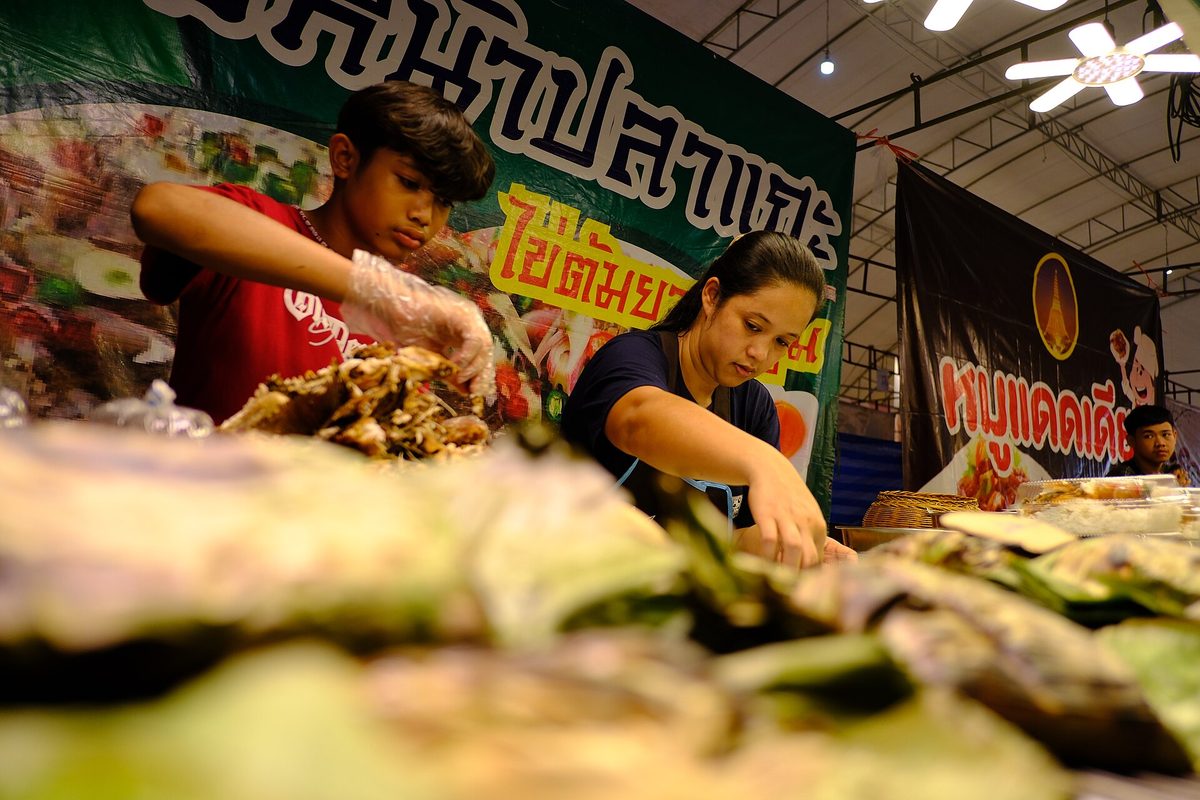
Food follows the same logic. Where street stalls do a high turnover, the food is cheap, fresh and fast, and a plate costs less than a coffee in a European capital. Where the only options are hotel restaurants and tourist-facing cafés, the same meal costs several times as much for no better quality. Over a long trip, the habit of eating where the locals eat is worth more to the budget than almost any other single decision, and it has the side effect of being the best part of the day.
Two Ways to Run the Same Route
Namibia is a clean example of how the numbers split. Twenty days of road tripping across the country covers accommodation, fuel, camping, food, activities and overlanding costs. Every one of those is a separate decision. Camping instead of lodging. Self-catering instead of restaurants. Driving your own vehicle instead of joining a tour.
If the bus timetable is your constraint, a rented car removes it.
What that looks like in practice is long gravel roads between towns that appear on the map as a single dot and turn out to be a fuel station, a small shop and a campsite. Distances between stops are measured in hours, not kilometres, because the surface dictates the speed. Fuel is bought at whatever station is next, and the price does not vary much because there is often only one. A day’s driving might end at a campsite with a cold shower, a braai pit and a sky full of stars, and the total spend for the day is fuel plus a bag of groceries. The next day might include a park entry and a guided activity, and the daily cost jumps accordingly. That swing between cheap days and expensive ones is the normal pattern of self-organised travel, not a sign that something has gone wrong.
A lodge overland tour through the Southern Tanzania highlands to Lake Malawi, Zambia’s South Luangwa, the Zambezi River and Victoria Falls is a packaged product. The price reflects the vehicle, the guide, the lodges and the park fees, all handled for you. The $120 to $350 per day range covers that style of travel.
The packaged version removes the decisions rather than the costs. Someone else has already worked out the route, booked the beds, paid the park fees in advance and arranged the vehicle. The trade is money for time and certainty. On a route where park fees and cross-border paperwork are genuinely complicated, that trade is often worth making, which is why the packaged price sits where it does.
The $95 per day figure came from the other approach. Same continent. Same kind of distances. Different structure.
What the Numbers Suggest
The per-day cost of overlanding is not a fixed thing. It is a function of how long you go, how you sleep, how you eat and how you move. A 119-day trip averaged $95 per person per day. A packaged safari runs $120 to $350 per person per day. A bus costs $7 per 100 kilometres. A plate of food in Penang costs $1.50 to $3.
The numbers do not tell you which trip to take. They tell you what each one costs. The rest is a decision about what you actually want out of the miles.
Leave a Reply