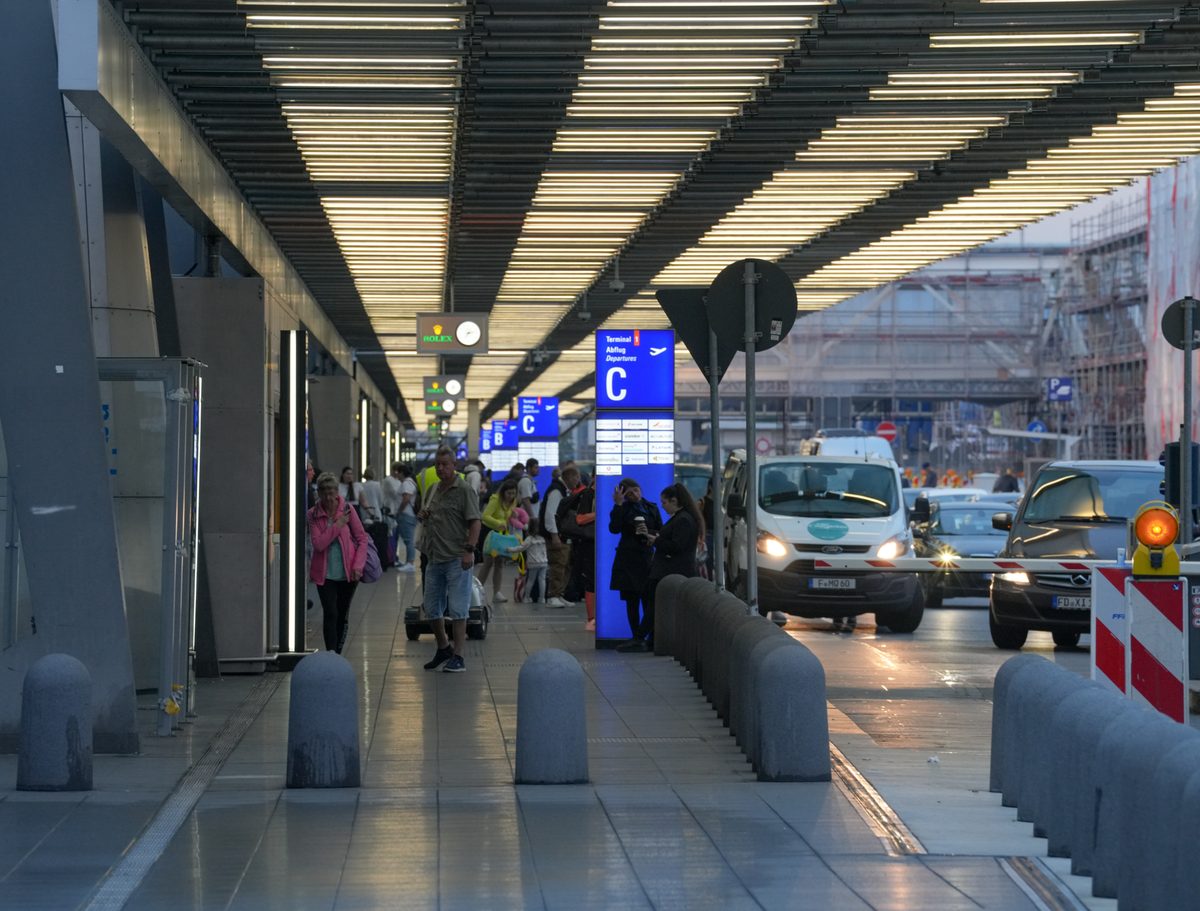
Checked baggage can cost $30 or more, and some charge extra for big cabin luggage as well. Run the arithmetic on a return trip with one checked bag at $27 to $42 each direction.
The Bag Sets the Limit
A 40-liter bag holds enough for weeks and still slips under most carry-on limits. That is the whole trick. The pack size sets the ceiling on how much you bring, so go smaller than you feel comfortable with. If you leave room, you fill it.
The reason this works is that a 40-liter bag forces a series of small, boring decisions at home rather than expensive ones at the airport. Four t-shirts instead of seven. One pair of shoes worn, one packed. A dopp kit the size of a fist. The first two days on the road feel slightly under-equipped; by the fourth day it feels normal, and by the second week the people hauling 65-liter packs up station stairs look like they are being punished for something.
The Tortuga Expandable Backpack has enough capacity for one-bag travel at its baseline. Open the expansion zipper and you get an extra 5.5 liters. It is a bit too large to pass as a daypack. The compressible profile does help with carry-on compliance, which is the point. Compression straps matter more than the headline liter count. A half-empty 40-liter pack that cinches down to the size of a school bag will clear a sizer; a stuffed one that bulges at the seams will not, even if the label says 40. Pack it, then tighten every strap before walking to the gate.
Then there is the French option. A 40L model that passes as cabin baggage on most low-cost flights, built for travellers who know how to settle for the essentials. One of the better value-for-money packs on the market. Its price: $75.59.
Budget packs cut corners in predictable places: thinner zippers, softer back panels, fewer internal pockets. None of that matters much on a trip where the bag spends most of its life in an overhead bin or on a bus floor. What does matter is the harness, so load it at home with roughly the weight intended and walk around the block for twenty minutes before committing. A pack that digs into the shoulders empty will be unbearable full.
Low-Fare Airlines Charge for Everything
There is no such thing as an almost-free lunch. Low-fare airlines make their money through extortionate extra fees. Everything costs, from meals onboard to printing your boarding pass at the airport. Checked baggage can cost $30 or more, and some charge extra for big cabin luggage as well.

The boarding pass printout is the one that catches people out most often. Several carriers now charge for a pass issued at the desk, and the fee is charged per person, per leg. Download the app and screenshot the pass before leaving the accommodation, because airport Wi-Fi is unreliable and the queue at the check-in desk moves slower than the queue at security.
Keep in mind that you will have to pay to check your baggage on these cheap flights. It costs about $27 to $42 for one checked bag. Wait until the gate to pay for that luggage and you end up paying almost double. Carry-on only avoids the added cost entirely. The fee structure is deliberate: online, in advance, is the cheap price; at the airport it climbs; at the gate, with the aircraft already boarding and no time to argue, it climbs again. The gate agent has all the leverage and knows it.
Volaris is a no-thrills, low-cost airline. You can bring two carry-on items, one carry-on and one personal, onboard for free. Avoid baggage fees by making sure your luggage does not weigh more than 15 pounds. They will check. The weighing happens at the desk and sometimes again at the gate, and a bag that passed in the morning can fail in the afternoon if souvenirs have been added. The personal item is the escape hatch: a small shoulder bag or tote that goes under the seat in front, holding the laptop, the documents and anything heavy that can be shifted out of the main pack in a hurry.
What Carry-On Only Avoids
One carry-on. No checked bag fees at $30 to $60 each way. No waiting at baggage claim. No lost luggage stress.
Run the arithmetic on a return trip with one checked bag at $27 to $42 each direction. That is $54 to $84 gone before you have left the airport. Pay the gate rate and the same bag costs close to double. On a two-week trip that money is a bed for several nights, or most of a bus ticket across a country.
The 15-pound limit on Volaris is worth treating as a real constraint rather than a suggestion. A 40-liter pack at its baseline weight, filled properly, can sit under that. Fill it because there is space and it will not. Hanging around the baggage carousel is also its own tax: twenty minutes on a good day, an hour when a flight lands late, and occasionally a lost-bag claim that eats an afternoon and a phone battery. Walking straight out of arrivals while a hundred people wait for their suitcases is the part of this approach that never gets old.

Buses Do Not Play These Games
Flixbus is usually the cheapest bus option, with prices starting as low as $5.40. Their buses include Wi-Fi, electrical outlets, free baggage — one carry-on and one stored under the bus — and comfy seats. Megabus still runs in the UK. The under-floor bag goes in without a scale, a receipt or a queue, and on many routes the driver simply opens the hatch and points. Wi-Fi on board is patchy and the outlets do not always work, so charge everything at the hostel before boarding and treat the connection as a bonus rather than a plan.
Compare that with the airline bag fee. The bus gives you a second bag under the floor for nothing. The airline charges $30 or more for the same bag, and you have to stand at a carousel to get it back.
That gap explains why a carry-on-only traveller ends up on more buses than they planned. The bag rule and the transport choice are the same decision. A pack that fits the cabin keeps the cheap bus cheap, keeps the low-cost flight free of fees, and keeps you moving through the station rather than waiting at the belt. Bus stations also tend to sit closer to city centres than airports do, which quietly removes another fare from the day.
The Size You Pick
Pick the pack before you pick the flight. A 40-liter bag is the practical ceiling for most carry-on limits. The Tortuga expansion adds 5.5 liters when you need it and compresses back when you do not. The French 40L at $75.59 does the same job for less money.
Then weigh it. Fifteen pounds is the number that matters on Volaris. Everything else on a low-cost carrier is a fee waiting to happen, from the boarding pass printout to the meal to the cabin bag that turns out to be too big. A cheap luggage scale lives in the pack permanently; hotel bathroom scales work in a pinch if the pack is held and the difference noted, though the reading is never quite trustworthy.
One carry-on, weighed and within the limit, is the version of this that costs nothing extra. That is the entire argument.
Leave a Reply