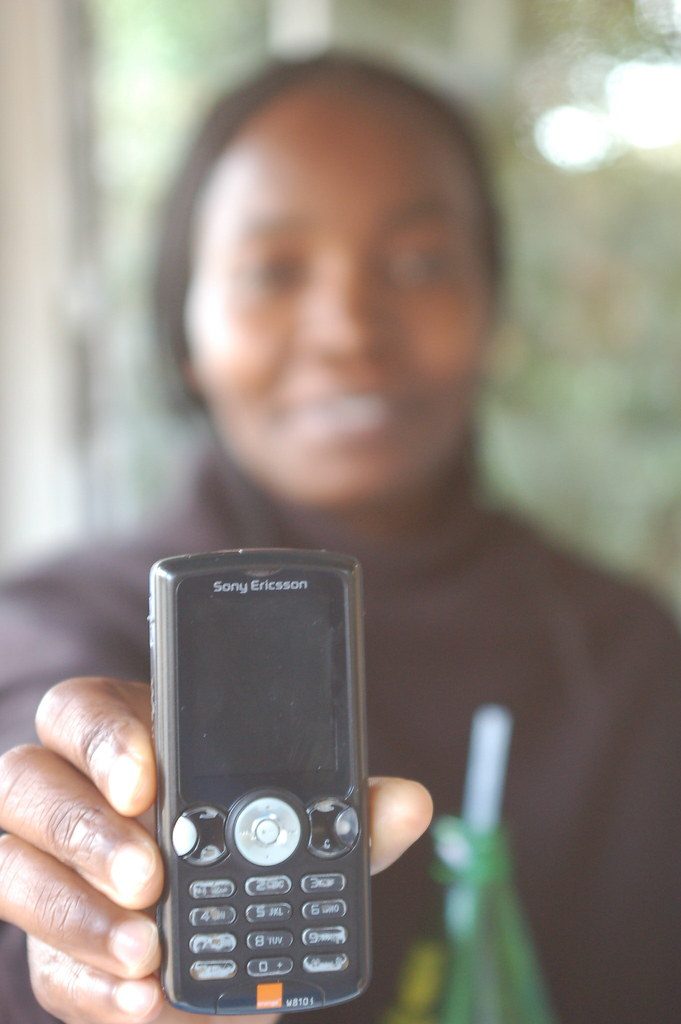
What a SIM Actually Costs
A physical SIM at the airport counter in most of Southeast Asia runs about the same as a plate of noodles. The eSIM discount codes floating around travel forums are worth roughly $3 off a first purchase, which tells you something about the margins involved. Nobody is getting rich selling data to backpackers.
The trick is knowing what you are actually buying. A two-week trip through Southeast Asia costs roughly $700 to $1,200 per person for backpackers, $1,800 to $3,500 mid-range, and $6,000 and up for luxury, land only, excluding international flights into the region. Against those numbers, a $10 SIM is noise. Against a $700 trip, it is 1.4 percent of your budget. That is the frame worth keeping.
The Overlander Math
There is a principle that overlanders repeat to each other: the less money you spend, the longer you can stay on the road. People who follow it stop working regularly. They work occasionally, when necessary. Every dollar saved is not a dollar saved, it is a day added.
That logic applies to connectivity more than most people admit. If you are paying $70 plus 18 percent tax per person per day to visit the Serengeti, and another $60 plus 18 percent tax per person per night to sleep there, your daily burn rate is already over $150 before you have eaten. Ngorongoro Crater adds $70 plus 18 percent tax per person per day, plus $299 plus 18 percent tax for the vehicle to enter. Those are not SIM card problems. But the same instinct that makes you balk at a $299 vehicle fee should make you balk at a $15 roaming charge you did not need.
Where the Money Goes
Accommodation in Morocco sits at $25 to $50 for a budget riad, private room, shared or simple bathroom. In parts of Europe, pitch prices for two people run between $22 and $86 per night depending on region and season, with electricity, shower, and often wifi included. Breakfast in Nepal costs $4 for a simple plate: two eggs, toast, hash browns, and tea or coffee. Bolivia vacation packages start from as low as $825.
Notice the pattern. The places where a SIM costs the most relative to income are rarely the places where you are spending the most per day. The places where you are spending $150 a day on park fees are the places where a local SIM is a rounding error.
The Testers
Some people buy a minimum of 10 eSIMs every time they are in a country, specifically to test speeds and coverage across multiple destinations. That is not normal behaviour. It is also the only way to know which provider actually works on the ground rather than in the marketing copy. For everyone else, the practical takeaway is simpler: buy one, test it in the first city, and do not commit to a month-long plan until you know the network holds up outside the airport.
An eSIM solves one specific problem. You land, you have data, you do not have to find a shop. Outside the UK and EU, that is often worth the small premium. Inside the UK and EU, roaming rules make it less urgent.
Doing the Arithmetic
A two-week backpacker trip through Southeast Asia lands between $700 and $1,200 land only. A honeymoon or anniversary trip is a different category of spending entirely, and the SIM is not the line item anyone argues about there either.
The number that matters is not the SIM price. It is the daily burn rate. Tanzania at $70 plus 18 percent tax per person per day for park access, plus $60 plus 18 percent tax per person per night, plus $299 plus 18 percent tax per vehicle for the crater, is a $400-plus day before you have paid for the tent. A $10 SIM on top of that is not a budget decision. It is a convenience fee.
Buy the data. Skip the roaming. Do the arithmetic on the things that actually move the total.
Leave a Reply