
Some links on this page are affiliate links. If you book or buy through them, we may earn a small commission at no extra cost to you. It never changes what we recommend — every price here is one we would pay ourselves.
Meanwhile a European trip runs $40 to $80 per day, covering accommodation, food, transport and activities, with Eastern and Southern Europe sitting at the lower end of that range. Split the same costs with one other person and it drops to about $45 per person per day.
The Real Numbers
Post-conflict regions get talked about in two ways: dangerous, or transformative. Neither helps you budget. The dangerous framing sells you a security consultant’s invoice; the transformative framing sells you a memoir. What actually determines whether a month in a recently stabilised country costs $600 or $6,000 is the same boring arithmetic that governs a trip to Portugal: where you sleep, how many people share the car, and how long you stay put.
Start with the arithmetic. You can backpack around Asia for six months, flights and travel insurance included, for $4,000. That’s the whole thing. That number comes from an earlier trip, and prices have risen since, but plenty of countries still stretch money a long way. Meanwhile a European trip runs $40 to $80 per day, covering accommodation, food, transport and activities, with Eastern and Southern Europe sitting at the lower end of that range. Same continent, different budget, different trip. The spread inside Europe alone should tell you that “region” is a useless unit of measurement — a night in a Tirana guesthouse and a night in a Venice hostel are not the same purchase, even though both are technically Europe.
Then there’s Sri Lanka. Traveling solo costs roughly $60 per day. Split the same costs with one other person and it drops to about $45 per person per day. Not a discount on a room. A discount on everything, because two people divide the car, the guide, the pot of rice and curry. A tuk-tuk booked for a day of temple-hopping costs the same whether one person or two are sitting in the back, and the driver will happily wait at each stop while both of you eat. That single arrangement, repeated across a week, is where the $15 per day difference actually comes from.
What Lodging Does To A Budget
Lodging is the expense that ruins the plan. Not because rooms are expensive everywhere, but because fees pile on top: cleaning fees, service fees, hotel fees, hostel fees. Fifty dollars a night is hard to justify when the room is somewhere you sleep and store a bag between actual days. The booking sites are very good at showing the nightly rate and very bad at showing what lands on the card three weeks later. A guesthouse that advertises a modest nightly rate can quietly add a service charge, a card-processing surcharge, and a mandatory breakfast, none of which appear until checkout.
Two people change that math more than any booking trick. One room, two people, half the nightly cost each. The $45 versus $60 split in Sri Lanka is mostly this. One traveler pays for a bed. Two travelers pay for a bed and a half. There’s a second-order effect too: a double room is often barely more expensive than a single, because the fixed costs — the room itself, the cleaning, the key — don’t double. Ask for the double rate even when travelling alone. In a lot of small guesthouses the owner will shrug and give it to you, because an empty bed earns nothing.
What typically goes wrong is arriving without a reservation in a town where the one decent guesthouse is full, then taking whatever’s left at whatever price. In post-conflict areas the accommodation stock is often thin and unevenly distributed — a town might have three places worth staying and nothing else for sixty miles. Booking the first night online, even at a slightly higher rate, buys you the ability to walk away from the bad options rather than settle for them.
East Africa, Priced Honestly
A Kenya and Tanzania trip is one of the bigger line items people attempt. The standard combination runs 10 to 21 days and covers Masai Mara, Lake Nakuru and Amboseli on the Kenyan side, plus Serengeti, Ngorongoro Crater and Tarangire in Tanzania. Long days, park fees, vehicles, guides. This is not a region where you wander in and figure it out. The itinerary exists because the distances are real and the parks are far apart. A drive between two parks that looks short on a map can take most of a day once you account for the state of the roads, the gate formalities, and the fact that you are not allowed to drive yourself inside most of the parks.
Park entry fees are charged per person per day, and they reset every twenty-four hours, which is why operators structure itineraries around getting in and out efficiently rather than lingering. Vehicle hire usually includes a driver-guide, fuel and the vehicle itself, and the price depends on how many people share it — the same land cruiser split four ways costs a quarter as much per head as it does solo. If you are going to spend serious money anywhere on a long trip, it will be here. Budget accordingly and don’t pretend otherwise.
The major sights all sell out in high season — buying in advance is the simple fix.
The practical warning is that the cheap version of this trip doesn’t really exist. Group camping safaris are the budget option, and they still cost real money, and they still involve long days in a truck with strangers. What you can control is the number of days and the number of people in the vehicle. Shaving three days off the itinerary saves more than switching operators.
Where The Money Comes From
Saving $25,000 for a long trip is not a normal starting position, and the person who did it added $4,200 more through a brand ambassador job in Miami, worked between South America and Asia. That is the honest shape of it: money earned in chunks, in places you didn’t plan to be, between legs. The pattern repeats often enough to be worth naming — a stint of work, a leg of travel, another stint, another leg. The work is rarely glamorous and rarely planned. It’s a bar job, a hostel reception shift, a few weeks of something seasonal.
Smaller numbers matter too. Some travel plans run from about $2.62 per week. That is not a typo and not a full travel budget. It is what a specific arrangement costs, and it is the kind of figure that only makes sense once you know what it covers. Read any suspiciously low per-week number as a clue about what’s excluded — usually accommodation, usually food, sometimes the flight that got you there.
Annual travel insurance covering multiple trips, including Japan, runs from $100 to $500 or more depending on coverage and how often you travel. A pack large enough for the whole trip can cost $250. Those are the costs that don’t show up in a per-day rate and still have to be paid. Add the visa fees, the vaccinations, the replacement of whatever breaks — a strap, a zip, a phone screen — and the true daily cost creeps up without ever appearing in a spreadsheet.
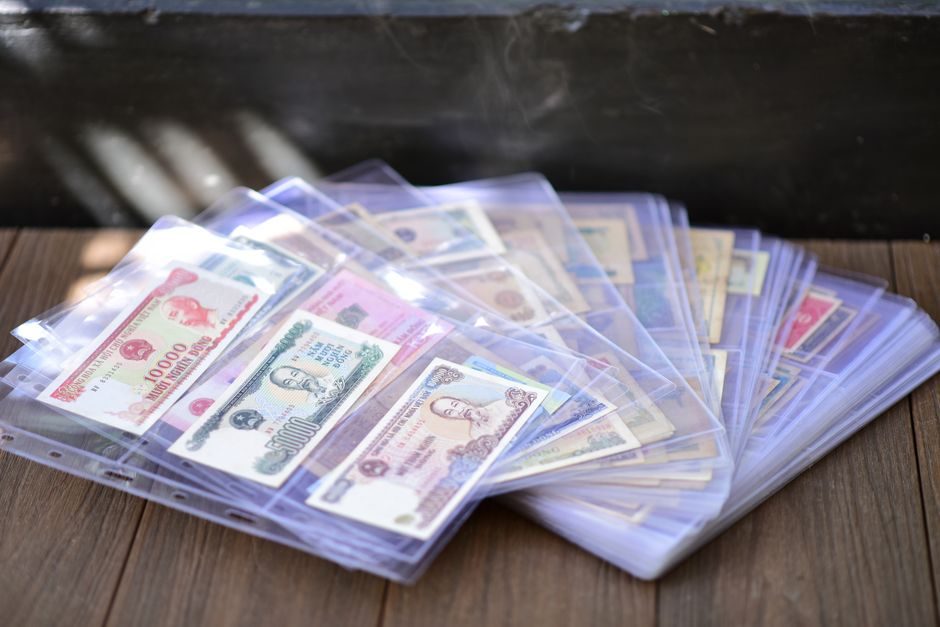
One more thing worth knowing: in many post-conflict economies, cash is still the operating system. ATMs exist in cities and vanish outside them, and the ones that do exist run dry on weekends or refuse foreign cards without warning. Carrying enough local currency to cover a few days, and knowing which of your cards actually works abroad, matters more here than in a country where every stall takes a phone.
What To Do With All This
Post-conflict regions are not automatically cheap, and they are not automatically expensive. The numbers depend on where you sleep, who you split costs with, and how long you stay in one place. The countries that spent decades closed to visitors often have thin tourist infrastructure, which cuts both ways: fewer competitors means higher prices in the places that do exist, but also far less of the upselling and tourist-tax economy that inflates costs in well-trodden destinations.
A $4,000 Asia trip over six months works out to roughly $22 per day, flights and insurance included. A $40 to $80 European day is ten to twenty times that in the wrong country. The gap is not about courage or hardship. It is about which side of the border you are standing on. The same person, with the same habits and the same willingness to eat where the locals eat, will spend wildly different amounts depending on nothing more than geography.
Budget travel in these places is mostly arithmetic done in advance. Know what lodging costs with fees attached. Know what a shared cost looks like per person. Know that insurance and gear are separate from the daily rate. Then go, and let the numbers be the numbers.
Leave a Reply