
Some links on this page are affiliate links. If you book or buy through them, we may earn a small commission at no extra cost to you. It never changes what we recommend — every price here is one we would pay ourselves.
A local beer in Ivory Coast costs around $3.30 in a restaurant or bar. If you are paying $10 for a drink, you are not in a local bar anymore.
Beer and What It Costs
A local beer in Ivory Coast costs around $3.30 in a restaurant or bar. In a store, the same beer is about half that. This is the single most useful number I can give you, because it sets the floor for everything else. If you are paying $10 for a drink, you are not in a local bar anymore. You are in Arugam Bay, or its Ivorian equivalent, and you have left the budget behind without noticing.
That gap between $3.30 and $10 is the whole trip in miniature. The cheap version exists. It is just not always the version that presents itself first. In practice, the price of a beer tracks the company you keep. A maquis — the open-air neighbourhood bar-restaurant that anchors most Ivorian evenings — will sell you a Flag or an Ivoire in a sweating brown bottle, sometimes with a plastic stool and a plate of grilled fish you did not ask for but will eat anyway. The same bottle in a hotel bar in Plateau or Cocody arrives with a coaster, air conditioning, and a markup you are paying for the postcode, not the liquid. Order at the counter or sit outside and the number stays where it should. Sit down in a lobby and it does not.
What typically goes wrong is not the beer itself but the rhythm around it. One round becomes two, the fish arrives, someone orders another, and an evening that started at $3.30 finishes at a figure that would have paid for a bed. That is not a disaster, but it is the pattern worth watching. The locals I drank with rarely bought rounds for the table; they bought their own and stayed for hours, which is a much cheaper way to have the same conversation.
Sleeping Well for Less
Here is the part that surprises people. You can stay somewhere genuinely decadent — a proper hotel, a private villa — for $75 to $125 a night. That is not a typo and it is not a hostel bunk. It is a room with staff and a pool and probably a view. In most of West Africa that price band does not buy luxury. In Ivory Coast it can.
But the same logic that applies to beer applies here. A $100 villa in a city where you are out from morning until night is $100 spent on a bed you barely use. The decadent option is worth it in some places and not in others. The trick is knowing which is which before you book, not after.
There is also a lower tier. The cheapest hotels run around $23 a night. Add roughly $11 for patat frites and a little extra, since you are likely eating once a day, plus a few dollars for public transport if you stay mostly in one neighborhood. That is a day. It is not a glamorous day. It is a day.
The cheap tier is worth describing honestly, because the photos never do. A $23 room is usually a fan rather than air conditioning, a bathroom where the shower is a bucket or a head over a tiled floor, and a mattress that has hosted a great many previous guests. It is clean more often than not. The fan matters more than the décor, because the heat is the thing you will remember. Ask to see the room before you pay, check whether the water runs at the hour you actually want to shower, and confirm whether the quoted price is for the room or per person — that last distinction has quietly doubled a bill for more than one traveler. In smaller towns the desk will often knock a little off for a stay of several nights if you ask, and paying for the first night only, then deciding, keeps you free to move if the noise or the mattress turns out to be too much.
Where the villa earns its money is on a coast day or a rest day: a pool, a garden, a kitchen, and the option to do nothing at all. Where it does not is a city stop where the itinerary runs from breakfast to late dinner. Match the room to the day, not to the mood, and the budget holds.
Tours and Transport
Private tours cost around $76 to $140 for two hours. That is the converted figure, and it is worth sitting with. Two hours. That money does not move you from city to city. It does not get you to the next town. It is a guided walk or a drive through something specific, and it is not a local mode of transport. Taking private tours everywhere will drain a budget faster than almost anything else on this list, because the cost is per tour, and tours multiply.
Public transport on the routes tourists actually want is limited. One of the few that works is the run between Windhoek and Swakopmund or Walvis Bay on the coast. Private pre-booked shuttles there cost around $19 and take four to five hours. That is a real number for a real distance, and it shows what transport should cost when it is not dressed up as an experience.
Inside the cities, the everyday options are shared taxis and the minibuses that run fixed routes for a handful of coins, plus the orange taxis that will stop for anyone and charge by negotiation. The negotiation is not a confrontation; it is the transaction. Agree the fare before the door closes, because the price discussed at the kerb is the price that holds, and the one discussed at the destination is whatever the driver decides the traffic was worth. For longer intercity runs, the big bus companies leave from their own stations in the early morning, sell tickets at a window, and are slower and cheaper than anything arranged through a hotel. The hotel desk will happily book you a car, and that convenience has a price attached that the bus station does not. Knowing the difference is most of the skill.
If your plans are fixed, locking in tickets early costs nothing and saves a lot.
Booking and Buffers
Book six to ten weeks ahead. Fly mid-week. Use one-ways and budget carriers. None of this is exotic advice, but the timing matters more than people think, because the difference between booking early and booking late is usually the difference between the cheap version of a trip and the expensive one.
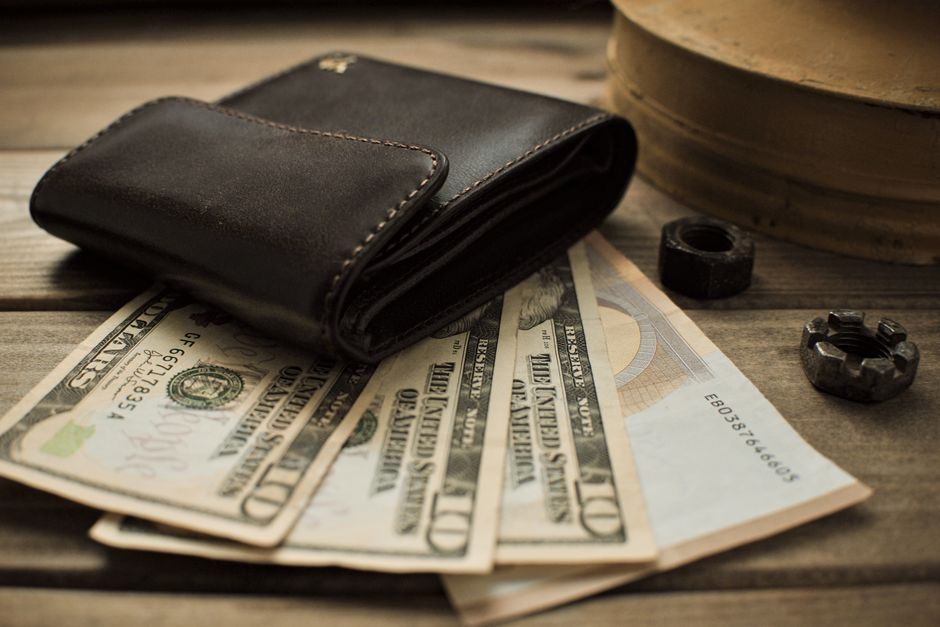
Then there is the buffer. Budget travelers spend very little; mid-range travelers spend more; comfortable travelers spend more still. Carry an extra $13 to $33 per day for the unexpected. That is the converted range, and it is not padding. It is the money that covers the taxi you did not plan for, the meal that cost double, the day that went sideways.
The buffer is also what stops a small problem becoming a large one. A missed connection, a phone that dies, a market where the only working ATM is out of cash — each has a cheap solution if there is cash in hand and an expensive one if there is not. Keeping the buffer in local currency, topped up in small amounts rather than one big withdrawal, means you are never hunting for a machine at the worst possible moment. Change is genuinely scarce in daily life here; vendors and drivers frequently cannot break a large note, so carrying a stash of small denominations is its own kind of buffer and saves more arguments than any negotiation tactic.
The Same Holiday, Three Times the Price
Try to have the same holiday in Europe and you will spend three times as much. That is the honest comparison. A $2 street meal — pho with herbs, scallions, lime and chili — anchors a Vietnam budget, and Ivory Coast has its own version of that anchor, just less photographed.
The most expensive meal on a trip like this can easily be $20. Which sounds like nothing, and is nothing, until you realize it is on the low side of dinner elsewhere.
Track everything. From a ten-peso caramel to a $1,000 trek, every expense goes in the same column, and the column is the only thing that tells you the truth about what you are actually spending. I once spent $27.18 on something I did not need. It did not ruin the trip. It just sat there in the notes, a small honest fact.
The tracking is dull and it is the entire method. Write the number down the moment it leaves your hand, in whatever currency you paid, and reconcile it at the end of the day while the memory is still fresh. The categories that quietly grow are the ones nobody logs: the water bottles, the sim top-ups, the small gifts, the taxi you took because it was raining. None of them is a mistake on its own. Together they are the difference between the trip you planned and the trip you actually took, and only the column knows which one it was.
Leave a Reply