Some links on this page are affiliate links. If you book or buy through them, we may earn a small commission at no extra cost to you. It never changes what we recommend — every price here is one we would pay ourselves.
A beer in Kyrgyzstan usually runs between $0.89 and $1.35. In pricier places, that same beer can hit $1.79. Cocktails average around $4.50, though some bars charge more.
Beer, Cocktails, and What Drinks Actually Cost
A beer in Kyrgyzstan usually runs between $0.89 and $1.35. In pricier places, that same beer can hit $1.79. Cocktails average around $4.50, though some bars charge more. Those are the numbers to hold onto when you’re planning a night out, because they tell you something useful: the floor is low and the ceiling is not especially high. You can drink cheaply here without trying hard. You can also spend three times as much for the same drink if you sit down in the wrong room.
What the price band doesn’t tell you is where the line between cheap and expensive actually falls. In Bishkek it tends to follow the room rather than the street. A basement pub with plastic chairs and a television showing football will pour you a local lager for the price of a bus ticket, while a bar two blocks away with exposed brick, English menus and a cocktail list charges several times that for a drink made with the same domestic spirit. The beer itself is often the same brand. The gap is rent, staff and the assumption that foreigners won’t flinch. In smaller towns, the spread collapses almost entirely: there is one price, it is low, and nobody is trying to sell you a concept.
Local drinking culture runs on rounds and toasts rather than the solitary pint. At a table, someone is nominated to make the toast, everyone drinks, and glasses get refilled before you’ve noticed they were empty. Vodka appears at celebrations and sometimes at dinner; a bottle from a shop costs less than a single cocktail in a bar. If you’re invited to a table, the etiquette is to eat something with every drink and to at least raise your glass when a toast is made, even if you’re nursing the same one all evening. Nobody is counting your consumption, but they are noticing whether you participate.
Two practical warnings. First, bars in the centre of Bishkek often add a service charge, and some add it without saying so; check the receipt before you tip on top of it. Second, draft beer is not universal outside the capital. What arrives will sometimes be warm, and asking for ice in it is a losing battle.
The Daily Budget Question
Count on roughly $54 a day for a somewhat pleasurable stay, assuming good planning and no extras. That figure is the honest one. It does not include the things that creep in — a taxi you didn’t plan for, a souvenir, a second cocktail. It assumes you’ve done the work beforehand.
The work matters more than people admit. Research well, because some items are expensive here or simply unavailable. Contact lenses are the classic example. Products that cost a little at home can cost ten times as much, or not exist on the shelf at all. Bring what you need.
The same logic applies to medication, sunscreen, decent socks and any electronics accessory with a specific connector. Pharmacies in the capital are well stocked; pharmacies in a village may have a shelf and a woman who knows exactly what she has, which is often not what you came for. If you wear glasses, pack the spare pair. If you take a prescription, bring enough for the whole trip plus a margin, in the original packaging, because a customs officer who can’t read the label has no reason to be generous.
There is no single cheapest month for the whole country, because each region has its own weather patterns. May, September and October often produce good hotel deals in some destinations. For lower costs, travel outside public holidays, avoid resort weekends, and aim for each region’s shoulder season. That’s not a hack. It’s just how the calendar works.
Transport is the other place the daily average quietly breaks. Shared taxis and marshrutka minibuses between towns cost very little, but they leave when full, which can mean a two-hour wait on a bad morning and a seat with someone’s chickens on the next one. Long-distance journeys eat a day each way. Building those days into the plan is cheaper than paying for a private car because you ran out of patience. Cash is king outside the capital; a card works in Bishkek supermarkets and almost nowhere else, so withdraw more than you think you need before heading for the mountains.
Food, and How Much It Varies
Dinner is where your budget bends. Some days you’ll spend $3. Other days, $10. The difference is almost entirely about how westernized the restaurant is. A local place and an expat-facing place can sit fifty feet apart and charge you wildly different amounts for a meal that fills you up the same way.
The local staple is straightforward and cheap: noodles or rice with meat, dumplings, a bowl of broth, flatbread, tea. A plate of plov — rice cooked with carrots and lamb — is served everywhere from a canteen with laminated tables to a wedding hall, and it fills you up for the price of a coffee back home. Portions are large. Tea is bottomless and often free. What costs money is the imported idea of a meal: a burger, a pizza, a salad with leaves that had to travel.
That variance is the thing to plan around. If you know a $10 dinner is coming, you can balance it with a $3 one the next night. Three days of eating can total $38 if you keep it simple and eat where you’re staying. That’s not deprivation. That’s just arithmetic.
Breakfast is worth checking. At some hostels it isn’t included, which changes the daily math by a few dollars in a way that adds up over a week.
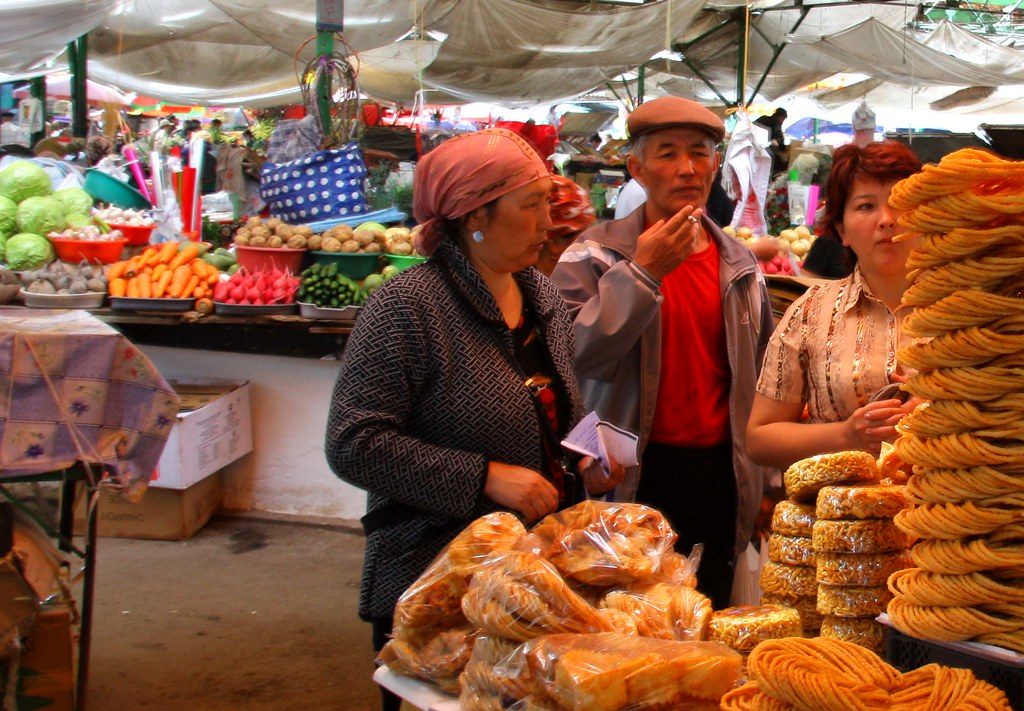
Markets are the third option and usually the best value. A bazaar in any town will sell bread, cheese, dried fruit, nuts and pastries by weight, and the whole lunch costs less than a single restaurant dish. Vendors expect you to point, and they will hand you a plastic bag with more than you asked for and a price that isn’t negotiable but also isn’t unfair. Go in the morning. By mid-afternoon the good bread is gone and the meat has been sitting out.
Free Things and the Signal Problem
Most shrine visits cost nothing. Some charge ¥300–500 for inner gardens, which converts to roughly $2 to $3.40. That’s the whole entry fee. Walking through thousands of torii gates, strolling a philosopher’s path, wandering a crossing, exploring a market, browsing an electronics district, watching people in a narrow alley of bars — none of it requires a ticket.
When the attraction is the point of the stop, booking entry early removes the risk.
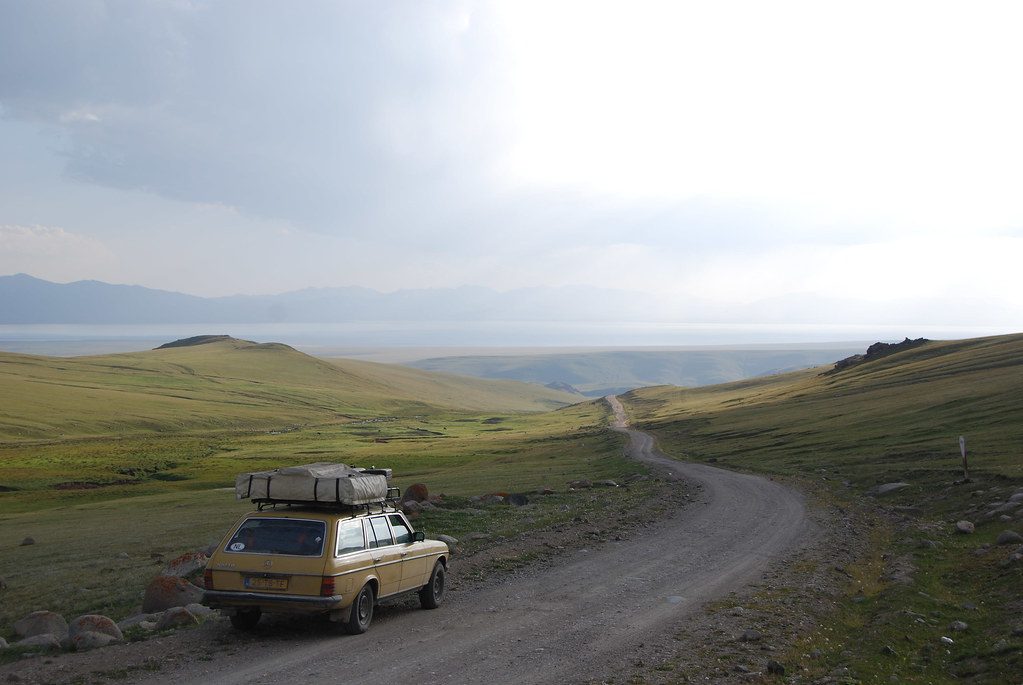
The same holds in Kyrgyzstan, where the best hours are unmonetised. Alpine lakes, mountain passes, the walk between two villages, the long sit on a bench outside a teahouse watching the town go past — none of it has a gate or a cashier. What costs money is getting there, and the price is usually a shared ride and a few hours of patience. Museums and national parks do charge, typically a small amount at a booth that closes mid-afternoon, so arrive before then or find the gate shut for the day.
If you’re the type who needs to be busy, plan free activities before you leave. A deck of cards. A book. A hiking trail you looked up in advance. These aren’t filler. They’re the days that keep the $54 average from becoming $80.
Network signal is unstable in some areas. Bring offline maps and a translation app. This is not optional if you’re moving between towns, and it costs nothing to prepare.
Two smaller things worth knowing. A local SIM with a data bundle is cheap and takes about ten minutes to buy with a passport, and it will work in most towns but fail in the valleys. Guesthouses often advertise wifi that exists and does not function; treat it as a bonus rather than a plan. Download everything before you leave the last city, and write down the address of where you’re sleeping in the local script, because showing a driver a screenshot in English is how a short ride becomes a long one.
What to Actually Budget
Common advice says spend 5–10% of your annual income on travel. There’s no right answer. Some people spend 2% and are happy. Some spend 20% because travel is what they care about. Budget what you can afford without going into debt.
Choose your destination with the numbers in front of you. Some countries are cheaper than others, and Kyrgyzstan sits on the cheaper side of most comparisons. A beer under $1.40 and a cocktail around $4.50 tell you more about a place than any photo does.
The last piece is the one nobody puts in a spreadsheet: the cost of getting it slightly wrong. A missed bus, a card that won’t work, a hostel that looked better online, a day spent solving a problem instead of seeing anything. Every one of those has a price, and it’s always higher than the beer. The budget that survives a trip is the one with a little slack in it — enough to pay for the sensible option when the cheap one has already failed. Kyrgyzstan rewards people who arrive with a plan and a reserve, and it is unforgiving to nobody in particular. It simply carries on without you while you sort yourself out.
Leave a Reply