Some links on this page are affiliate links. If you book or buy through them, we may earn a small commission at no extra cost to you. It never changes what we recommend — every price here is one we would pay ourselves.
A ten-month backpacking trip around the world cost $18,559 per person. Another asked whether $10,000 was too tight for a planned route.
The Real Numbers
A ten-month backpacking trip around the world cost $18,559 per person. That is the figure from one traveller who recorded every expense in a daily spreadsheet across 17 months of travel. The spreadsheet method matters more than the route. When you log what you spend each day, the total stops being a mystery.
That same traveller’s summary covered a full year on the road: accommodation, transport, food, activities, visas, insurance, the lot. The number is neither frightening nor cheap. It sits in the middle.
What made the record reliable was its stubbornness. The habit was a few minutes each evening, usually with a phone propped against a hostel bunk, entering the day’s cash and card spending into a single running sheet with rough categories attached. Receipts got photographed and thrown away. Cash withdrawals were logged as expenses when they were spent, not when they left the ATM, which matters because a pocketful of leftover pesos or shillings otherwise masquerades as savings. Currency conversions were done at the day’s rate and then forgotten. Over ten months the small errors cancel each other out; what is left is a total that is close enough to argue with.
The other thing worth knowing is what the number excludes. A round-the-world figure like this typically leaves out the long-haul flights booked before departure, gear bought at home, and anything paid for with points or miles. Two travellers running the same route will land on different totals simply because one paid for a new backpack and a travel vaccination course in the same month. When comparing totals from strangers on the internet, check what got counted before deciding the number is impossibly low or reassuringly high.
Mount Kenya hiking runs about $200 per person per day. That price moves depending on group size, time of year, which route you take, and how many days the whole trip runs. A solo hiker on a longer route pays more than a group of four on a short one. The park fees, hut or camp fees, guide and porter wages and the mandatory rescue levy are usually bundled into that daily rate, which is why the figure looks high next to a normal day of backpacking. It is not a day of travel; it is a day of guided mountain logistics with permits attached. Book through an operator registered with the park, confirm in writing what the fee covers, and expect the quoted price to be per person per day rather than a single lump sum. Groups form in Nairobi and at the park gates, and joining one is the standard way to bring the per-head cost down.
Africa Overland
Most Africa overland safaris cost between $120 and $350 per person per day in 2026. The spread is wide because the product is wide. Route, accommodation style, and included activities all move the number. A camping trip through Namibia looks nothing like a lodge-based safari in Tanzania, and the daily rate reflects that.
At the bottom of the range the day involves a truck, a dome tent pitched by the travellers themselves, and meals cooked in a camp kitchen by a rotating roster of passengers. At the top it involves a permanent tented camp with plumbing, a vehicle with a pop-up roof for game viewing, and a guide who has spent years learning the behaviour of individual animals. The park fees themselves are often a fixed and substantial slice of any day’s cost, which is why a day inside the Serengeti costs far more than a driving day between parks. Ask what is excluded: drinks, tips for the crew, and optional activities such as balloon flights or walking safaris are usually extra, and they add up quickly over a month.
For a month-long trip, the range is similarly broad. Eastern Europe runs $2,500 to $4,000. Mixing regions brings it to $4,000 to $6,000. Western Europe and Scandinavia sit at $6,000 to $10,000.
Those are per-person, month-long figures. They assume you are moving, eating, and sleeping somewhere. They do not assume luxury.
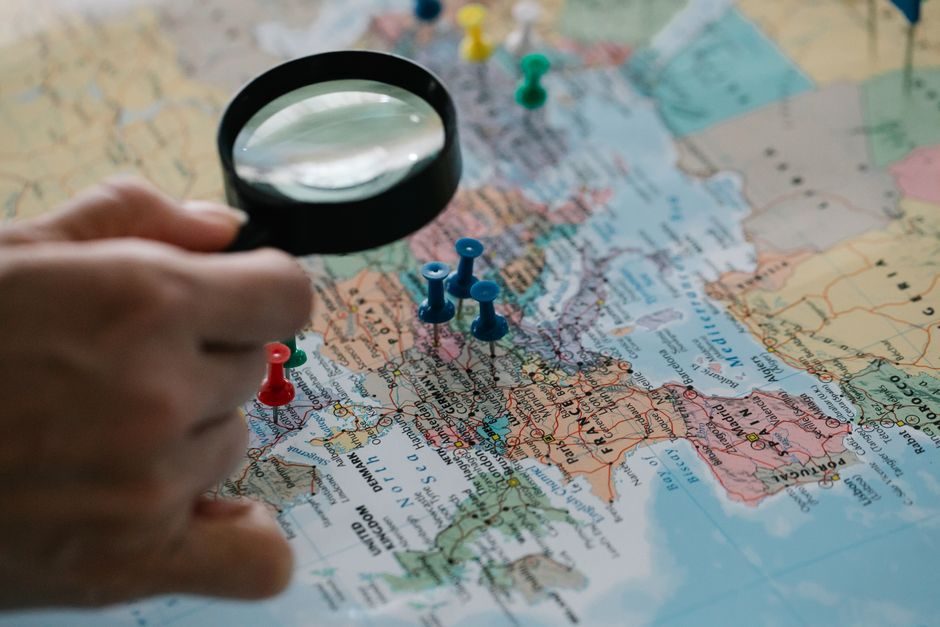
The pattern is easy to read once it is laid out. A month in Poland, Romania or the Baltics buys hostel beds, trains and supermarket lunches for the price of a fortnight in Norway. Mixing cheap and expensive regions in one trip tends to land in the middle, because the expensive days are short and the cheap ones stretch. The travellers who come in under these ranges usually do it the same way: fewer cities, longer stays, and a willingness to cook. The ones who blow past them are usually the ones who booked accommodation day by day in high season and paid whatever the first available bed cost.
Food Is the Silent Cost
For a weeklong trip for two, food alone can cost over $1,000 if you are not paying attention. That is one week. Two people. No flights, no hotels, no museum tickets. Just meals.
If you only have a few days, buying tickets ahead protects the time you have.
This is where budgets quietly break. A daily spreadsheet catches it. A vague memory of “we ate cheaply” does not.
The mechanism is almost always the same. Breakfast at the hotel is included, so it feels free. Lunch is grabbed near a major attraction, where the menu is priced for people who will never come back. Dinner is somewhere with a view and a wine list, because it has been a long day. Three modest decisions, repeated seven times, produce a food bill larger than the accommodation. The fix is not austerity. It is noticing. Locals in most cities eat their main meal at midday, from a fixed menu, at a fraction of the evening price. Markets sell the same produce the restaurants buy. A supermarket picnic on a park bench is not a compromise; it is what a lot of people on long trips actually do several days a week.
Alcohol deserves its own line in the spreadsheet. It is the single easiest category to lose track of, because it is bought in small amounts, in social settings, in foreign currencies, and rarely written down. Splitting it out makes the pattern visible within a week.
Getting Around
Rideshare and taxi costs vary enormously by city. A typical ride across Mexico City costs $3 to $8. That is a real number for a real distance in a real city.
But Mexico City is not the whole country. On the Cancún–Tulum route, rideshare apps do not operate legally because of taxi union restrictions. You use official taxis or ADO buses there instead. The cost difference between those two options is not small, and it is not optional. The rules change by region, and the cheap option you used in one city may not exist in the next.
The Cancún–Tulum corridor is the clearest example, but it is not the only one. Airport arrivals are the other classic trap: at many airports the official taxi counter is inside the terminal, the touts are outside it, and the price gap between the two is large. The counter is almost always the better deal, and the queue moves faster than it looks. For intercity travel, the ADO bus network along the Riviera Maya runs frequent, air-conditioned services between the main towns, and booking a seat a day ahead is normal rather than paranoid in high season. Rideshare availability can also shift with local disputes, so an app that worked on one visit may be dead on the next. The habit that saves money is checking the local options on arrival rather than assuming the app from the last city will work here.

What a Big Budget Looks Like
One retired traveller described a $100,000 budget and unlimited time. Another asked whether $10,000 was too tight for a planned route.
Both numbers are real answers to the same question, and they are $90,000 apart. The gap is not about right and wrong. It is about what the trip includes, how long it runs, and where it goes.
The $100,000 figure usually belongs to a trip with no end date, comfortable accommodation, restaurant meals, and a willingness to fly rather than endure a thirty-hour bus. The $10,000 figure usually belongs to a trip with a fixed itinerary, dorm beds, overnight transport, and a hard stop when the money runs out. Both travellers can be telling the truth. What differs is the standard of the day, and the standard of the day is the single biggest lever on any long trip. Someone who spends a year in cheap countries and eats where the locals eat can come home with a smaller total than someone who spends three months in expensive ones. The budget is not the trip. The trip is the budget, spent slowly.
The $18,559 figure for ten months works out to roughly $1,856 per month. Compare that to the $2,500 to $4,000 monthly range for Eastern Europe. The long trip was cheaper per month than a shorter, more focused one. That happens when you slow down, stay longer in cheaper places, and stop paying for transit every few days.
There is a mechanical reason for this. Transport is the great budget killer, and it is charged per move rather than per mile. Every time a traveller changes city, there is a ticket, a night in transit or a new room, a meal bought at station prices, and an afternoon lost to logistics. A trip that changes location every three days pays that tax over and over. A trip that stays a fortnight pays it once and then lives at local prices. The same logic applies to accommodation: weekly and monthly rates in guesthouses and hostels are routinely lower than the nightly rate, and asking for the long-stay price is standard practice rather than an awkward request. Slower travel is cheaper travel, and it is also, in most accounts, better travel.
The Foundations
The daily spreadsheet is the whole trick. Record what you spend. The total will tell you what your trip actually costs, not what you hoped it would.
A $200 per day hike in Kenya, a $120 to $350 per day safari, a $3 to $8 taxi ride, a $1,000 food week for two. These are the pieces. Add them up before you leave, and again while you are moving.
Rough numbers are enough for the planning stage. Pick a daily figure for each country on the route, multiply by the days, and add the fixed costs: flights, visas, insurance, vaccinations, gear, and the tours that have to be booked in advance. The result will be wrong, but it will be wrong in a useful direction, and it gives the trip a shape before anything is paid for. The spreadsheet then does the rest, one day at a time, in whatever currency is in the pocket that evening.
The $18,559 trip was not a bargain. It was a record. The traveller knew the number because they wrote it down.
Leave a Reply