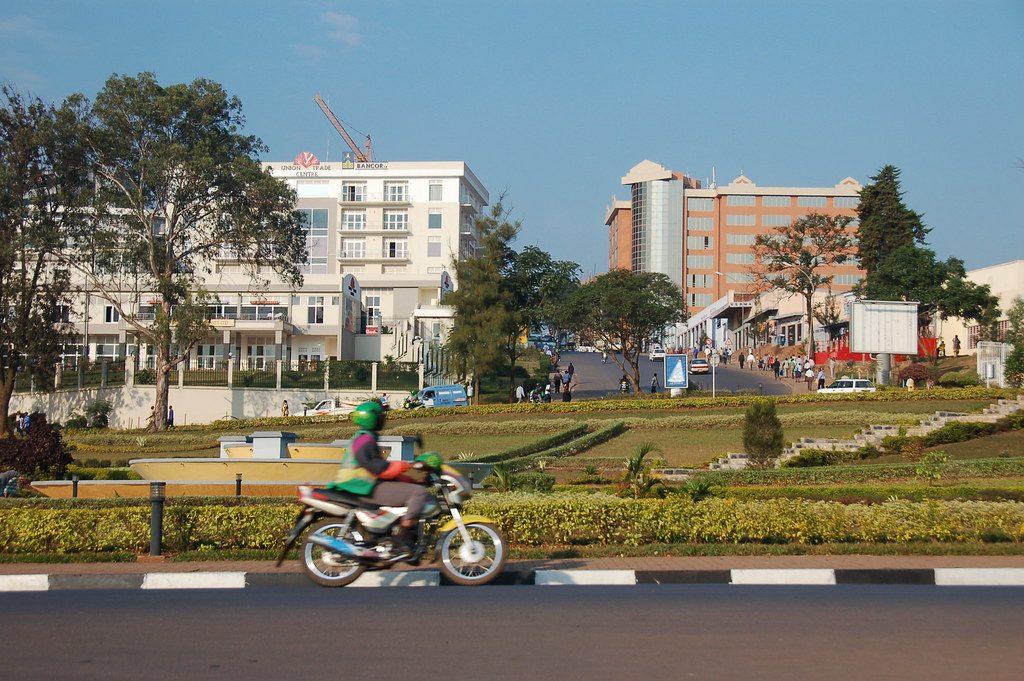
What Rwanda Actually Costs
The yen fell, and Japan got cheap. That is the first thing worth understanding about travel prices right now. Since 2022, the depreciation of the yen has made Japan 30–40% cheaper for Western visitors. Hotel rooms, meals and transport cost less than equivalent quality in France, Italy or the UK. A country people wrote off for decades as impossibly expensive is now often the better-value option than a week in Provence.
Which brings me to the question people keep asking about Rwanda, and to a wider point about how these numbers actually work.
The Gare d’Est Problem
Walk up to a ticket window at a major station and you pay for the privilege. At the Gare d’Est in Paris, one of the main rail stations in the capital, the counter price came out at nearly double what had been found online. The fare was 568 reais each. That was the single most expensive transport leg of that entire trip.
The lesson is not that counters are a scam. It is that transport pricing is not a fixed quantity. It moves depending on where you buy, when you buy, and which airport or station you name. New York, Los Angeles and San Francisco are good examples: checking fares into a second airport can pay off, particularly if you are not heading into the city center anyway. The same logic applies to trains across borders.
A Real Number From the Road
Here is a concrete one. A 14-hour bus ride across the whole of northern Spain to France cost $30. Fourteen hours. Thirty dollars. That is a full day of movement for less than most people spend on lunch in a Western capital.
And here is the other end of the scale. A flight from Manila to São Francisco was 1,223 reais on 21 March. Convert that and you are looking at roughly $235 for a long-haul international crossing, booked on a specific date. Not a sale price pulled out of the air. A real fare.
Now compare that to a monthly transit pass in Prague: about $25, for unlimited use of the network for a whole month. On a month when you are staying put, that is the entire transport budget. On a month when you are moving from one base to another, trains from Rennes in France to Prague in the Czech Republic run to around $300.
So the range for a month of transport on the road is $25 to $300. That is a twelve-fold spread. Anyone quoting a single figure for “transport costs in Europe” is either selling something or has not moved around much.
Free Nights and Cheap Beds
Three weeks across the UK and France produced six nights of paid accommodation. Six out of twenty-one. The rest came from a combination of other arrangements. That is a ratio worth holding onto when you are sketching a budget, because it changes the arithmetic completely. If two-thirds of your nights cost nothing, your daily average collapses even in expensive countries.
Peru offers the same lesson in a different register. Arrive in Lima, founded in 1535 by the Spanish conqueror Francisco Pizzaro, a modern metropolis with colonial layers on top. It is known as the City of Kings and divided into 43 districts, each with its own character. A transfer from the airport to your accommodation is a normal first cost, and after that the country prices itself at a level that makes a three-week trip feasible on what a week in Western Europe would cost.
The pattern across all of this is consistent. Seat prices vary enormously for the same route. A 14-hour bus is $30. A month of unlimited city transit is $25. A cross-continental flight can be $235. A train between two European cities can be $300. The same physical distance can cost ten times more depending on the mode, the timing and the point of purchase.
Rwanda sits in the same framework. It is not cheap the way people imagine Southeast Asia is cheap, and it is not expensive the way people imagine Switzerland is expensive. It is a set of specific numbers that you either find or you do not. The travellers who come back saying a country was affordable and the ones who come back saying it was ruinous are usually describing the same place with different booking dates.
The only honest way to write about cost is to give the figures and let them sit there. $18, $55 and $185 for the same seat. $25 for a month of city transport. $30 for fourteen hours on a bus. $235 across an ocean. Those are the numbers. Everything else is marketing.
Leave a Reply