What Things Actually Cost
A three-course meal with a glass of wine costs around $11 in the less-touristed neighbourhoods of Portugal, if you look for the signs advertising a *prato do dia*. That is the benchmark. It tells you what a full sit-down meal with alcohol should cost when you are not paying tourist prices.
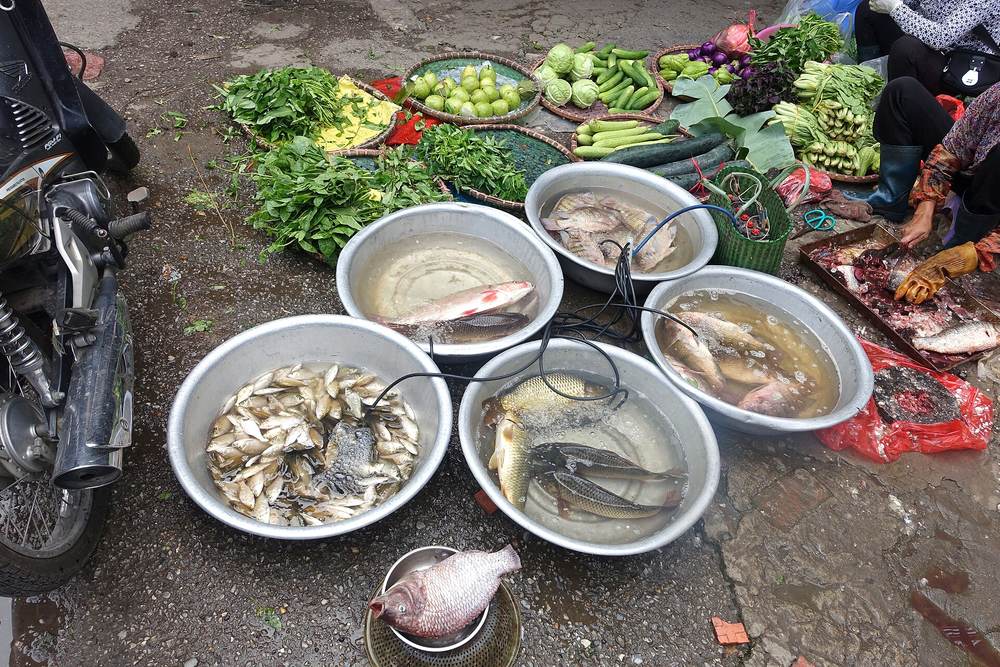
Vietnam runs a wider range. Street food or a local eatery is $1 to $5. A mid-range restaurant in a tourist area is $8 to $20 per person. Higher-end places charge more, and there is no ceiling on that. A $3 or $4 meal should be very satisfying. If your budget cannot stretch to that, the question is what you plan to eat instead.
This matters because most people underestimate how much of a trip is just food, and how quickly restaurant meals at the upper end of a local range add up over weeks. Ten dollars a day on food in Vietnam is generous. Twenty is easy to spend without noticing.
Six Months in Southeast Asia
A couple backpacking Southeast Asia for six months spent $13,581 in total. That works out to roughly $2,260 each per month, or about $75 per person per day. That figure buys hostel beds or basic hotel rooms, sightseeing whenever you want, sit-down restaurant meals multiple times a day, local transport, tourist shuttle services and the occasional short-distance flight.
Read that list again. Nothing on it is extravagant. No luxury hotels, no private drivers, no fine dining. It is a comfortable mid-range backpacker existence, and it costs $75 a day per person. Anyone planning on $30 a day for six months in the region is planning a different trip — one with dorm beds, cook-your-own meals and very little paid transport.
Getting Around on a Budget
A 10-day pass usable within a two-month window costs $400 to $550. It makes sense if you are covering four or more countries. For single-country travel, point-to-point tickets are usually cheaper, and often considerably so.
The pass is not a bargain by default. It is a bargain in a specific situation. Four countries in two months means a lot of long-haul legs, and a pass smooths those out. One country means short hops, and short hops bought individually cost less. The $400 to $550 is a real figure, not a marketing one, and it is worth checking against what your actual route would cost in single tickets before committing.
Accommodation, SIM Cards and the Rest
Hotel prices in some markets run $50 to $100 per night. That is not backpacker territory, but it is worth knowing where the ceiling sits so you can recognise a good deal when you see one.
Mobile data is one of the few genuinely cheap things left. Azerbaijan has three operators — Azercell, Bakcell and Nar mobile. Azercell has the largest coverage and low prices for calls and internet. For tourists, the best offer is unlimited internet for a month at 30AZN, which is $17. That is a month of data for the price of two street meals.
In Jordan, the Jordan Pass starts at about $99 and bundles your visa with entry to Petra and 40 other sites. Falafel dinners cost $1 to $2. Wadi Rum desert camps run $25 to $40. The pass is the priciest single entry on this list, but if Petra is on your itinerary it pays for itself almost immediately.
The Number That Matters
The cost of living in the cheapest South American country is $730 per month. That is a monthly figure, not a daily one, and it covers living costs rather than travel costs. It is still a useful anchor. If you can live somewhere for $730 a month, you can travel there slowly for something in that region, and that changes what a long trip looks like.
So the honest range for a backpacker is wide. $1 to $5 for a meal in Vietnam, $11 for a three-course lunch with wine in Portugal, $17 for a month of mobile data in Azerbaijan, $400 to $550 for a multi-country rail pass, $13,581 for six months for two people in Southeast Asia. None of these numbers are guesses. They are what people actually paid.
The trick is not finding the cheapest number. It is knowing which number applies to the trip you are actually taking. A single-country trip and a four-country trip have different maths. A street-food trip and a restaurant trip have different maths. Pick the numbers that match your plan, add them up honestly, and then decide whether you can afford the plan or need a different one.
Leave a Reply