Some links on this page are affiliate links. If you book or buy through them, we may earn a small commission at no extra cost to you. It never changes what we recommend — every price here is one we would pay ourselves.
A total budget of £10,000, which is $10,800 at 1.08 dollars to the pound. Take out travel insurance and a rental car, divide what’s left by 62, and you land at roughly £130 a day.
Nine weeks. Sixty-two days. A total budget of £10,000, which is $10,800 at 1.08 dollars to the pound. Take out travel insurance and a rental car, divide what’s left by 62, and you land at roughly £130 a day. That’s $140 a day, every day, for over two months. It is not a small number, and it is the number most people get wrong before they go.
The Dominican Republic sits in an awkward spot for the budget traveller. It is not Southeast Asia, where a 7-day trip runs between $500 and $1,200 per person depending on comfort level and itinerary. It is not a three-week Peru and Bolivia backpacking route either. It is the Caribbean, and the Caribbean has its own price logic. Understanding where the money actually goes is the difference between a trip that works and one that quietly drains you.
Part of the difficulty is that the DR contains several different countries wearing the same flag. There is the all-inclusive coast, where everything is prepaid and nothing is priced. There is the colonial core of Santo Domingo, where a coffee costs what a coffee costs in any mid-sized city. And there is the interior, the cordillera and the small agricultural towns, where a plate of rice, beans and chicken is sold from a window for less than a bottle of imported sunscreen. Most visitors move between these worlds without noticing the seams, and then wonder why the daily average came out higher than they planned.
Water, Beer, And The Daily Bleed
Start with the small stuff, because the small stuff is what nobody budgets for. Bottled water all the way, plus local beers. A large bottle of water costs about Bs7, which converts to around $0.11 at current rates. Beers come in at about $2 each. Neither figure looks like much on its own. Multiply the beer by fourteen nights and the water by every single day of a two-month trip and you have a real line item.
The water rule is not fussiness. Tap water is not for drinking, and the ice question is settled by observing what locals do: in tourist areas the ice comes from bagged, filtered supply and nobody thinks about it, while in smaller inland comedores the safe move is a cold bottle from the fridge and no ice at all. That costs nothing extra. A large bottle from a colmado, the corner shop that anchors every neighbourhood, is cheaper than the same bottle from a hotel minibar by an order of magnitude, and the colmado is open earlier and later. Buy two at a time. The heat means a litre disappears faster than expected, roughly one large bottle per person per waking day, more if there is hiking or a long bus ride involved.
Beer is the other steady drip. Presidente is the local default, sold cold in small and large bottles, and the price rises with the setting rather than the beer. A beach shack charges a fraction of what a resort bar charges for the identical bottle. Fourteen nights of two beers is a trivial sum in isolation and a noticeable one across a long trip, which is exactly the kind of arithmetic that catches people out.
Here is the thing about the £130 a day figure. It was calculated after removing insurance and the rental car, which means it covers accommodation, food, drink, transport between towns, and whatever else you do. Once you strip out the fixed costs, the daily number is mostly food and drink and beds. In the DR, that $140 a day can be comfortable or it can vanish by lunchtime, depending on whether you’re eating where the tour buses stop or where the motoconcho drivers eat.
Accommodation Is The Big One
Accommodation typically makes up around 30% of total cost when working with a local operator, which is roughly a third of what you spend. If that ratio holds for independent travel, then of your $140 a day, about $46 is going to a bed. That leaves roughly $94 for everything else: three meals, water, beers, transport, entry fees.
If you would rather not gamble on the door, buying ahead settles it.
The kind of room that $46 buys varies enormously by town. In the capital’s Zona Colonial, it is a small room in a restored colonial building with thick walls, a ceiling fan, occasional hot water and a courtyard where breakfast is served at a table shared with whoever else is staying. In the beach towns of the north coast and the Samaná peninsula, the same money buys a cabaña a few minutes’ walk from the sand, often with a hammock and a resident dog. In the mountain towns, it buys a family-run guesthouse where the owner cooks dinner if asked in the morning. What it rarely buys is air conditioning, a pool, or a location directly on the water, and trying to get all three at once is what pushes a bed budget past its third of the daily spend.
The mechanics matter too. Smaller places often do not list online, or list on only one platform, and the price at the door is sometimes lower than the price on the screen because there is no commission in the middle. Walking up works more often than people expect outside the peak weeks around Christmas, Easter and the northern summer. Cash is preferred and sometimes required, and the nearest ATM may be a bus ride away, so it pays to arrive in a new town with enough pesos for a night or two before committing.
That ratio is worth holding onto. If your accommodation creeps above a third of your daily spend, something else has to give. Usually it’s food, and usually that means you eat badly for a week and then blow the budget on one nice dinner to compensate. Better to keep the bed cheap and spend the money on the parts of the country you came to see.
Flights And The Booking Window
Airfare is where the arithmetic gets cruel. Add about 20% if you’re booking a month or less before departure, and another 20% if you buy less than two weeks out. That’s roughly what it costs. You can get lucky and find cheaper fares, but you cannot count on luck. On a $600 return fare, a month-out booking becomes $720. Two weeks out becomes $864. That’s $264 gone before you’ve left the airport, and it comes straight out of the daily budget.
The pattern behind those increases is simple. Airlines hold a certain number of cheap seats and release them early, then price what remains upward as the departure date approaches and the plane fills. The reason the penalty compounds rather than arriving all at once is that the cheapest fare classes sell out first, and what is left a fortnight out is a different, more expensive class of ticket rather than the same ticket marked up. Direct flights from the US east coast fill fastest in the weeks around school holidays, when the fare curve steepens well before the one-month mark. Travellers with flexibility do better by shifting the whole trip a week either side of a peak, which is a scheduling decision rather than a spending one, and costs nothing but a calendar edit.
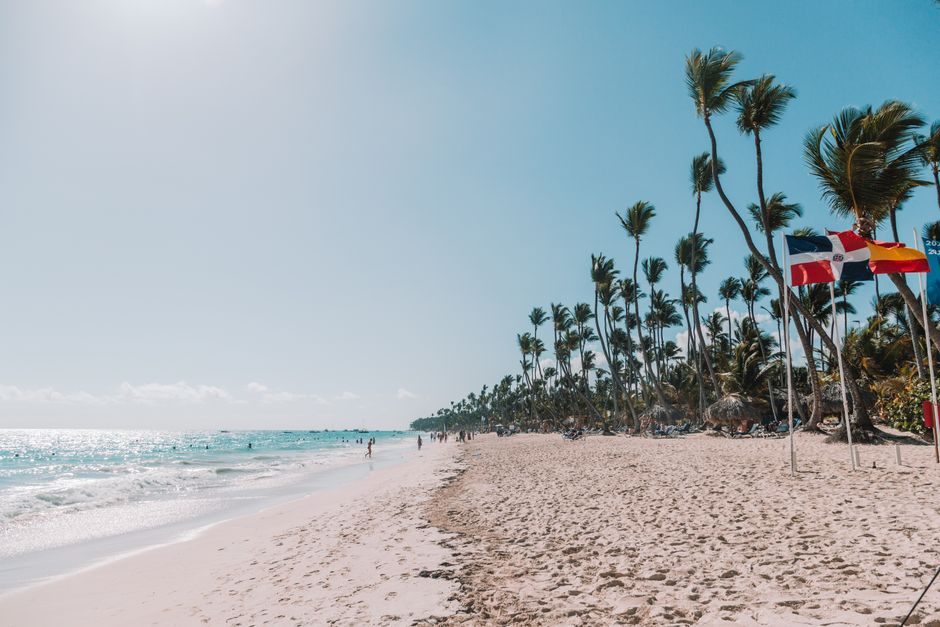
One more wrinkle: arrival airports are not interchangeable. Punta Cana handles the bulk of package traffic, Las Américas serves the capital, and a handful of smaller airports along the north coast take seasonal flights. The transfer from the airport to the first bed is a real cost and a real chunk of time, and a cheaper fare into an airport that leaves a long, expensive ride to the first town is not actually cheaper.
The travellers who budgeted £130 a day were working from a total of £10,000 across 62 days. That kind of planning requires the flight to be locked in early, because a late booking eats three or four days of spending money in one transaction.
Insurance And The Long Trip
The average price of the most basic coverage plan is about $85. That figure covers plans that include trip cancellation coverage but exclude optional add-ons such as Cancel For Any Reason coverage or pre-existing medical condition coverage. For a short trip, $85 is fine. For nine weeks, it is the cheapest part of the whole exercise, and it is the part people skip.
Long trips change what insurance is for. Over nine weeks the likely claims are not a cancelled flight but a sprained ankle on a wet trail, a stomach bug that needs a clinic visit, or a phone dropped in the sea. The clinic visit is the one that matters. Private clinics in the larger towns are clean, quick and priced for foreigners, and payment is usually expected up front before the insurer is involved, which means the policy needs to reimburse rather than pay directly, and the receipts need to survive the trip. Photograph every receipt the day it is issued, because thermal paper fades to blank in a hot bag within weeks. Keep the policy number somewhere other than the phone.
World travel costs for budget-luxury travellers can run as high as $50,000, or much more. That is the other end of the spectrum, and it is not what a backpacker is doing. But it is a useful reminder that the DR is not a cheap destination by default. It is cheap if you treat it like one.
The numbers are not complicated. A large water is about $0.11. A beer is about $2. Accommodation should be around a third of your daily spend. Flights punish late bookings by 20% and then another 20%. Insurance starts at $85. Add it up honestly before you go, and the £130 a day figure stops looking like a warning and starts looking like a plan.
Leave a Reply