Some links on this page are affiliate links. If you book or buy through them, we may earn a small commission at no extra cost to you. It never changes what we recommend — every price here is one we would pay ourselves.
A five-month run from Argentina up to Colombia, working north, can be done on a $15,000 budget with $5,000 still in the account at the end.
The Airport Fee
Argentina charges you at the airport if you fly in. It is not a visa fee. People call it one, but it isn’t. Fly into Chile, Bolivia, Paraguay or Brazil instead and cross into Argentina by land, and the charge does not apply to you. That is the whole trick. Have a good trip.
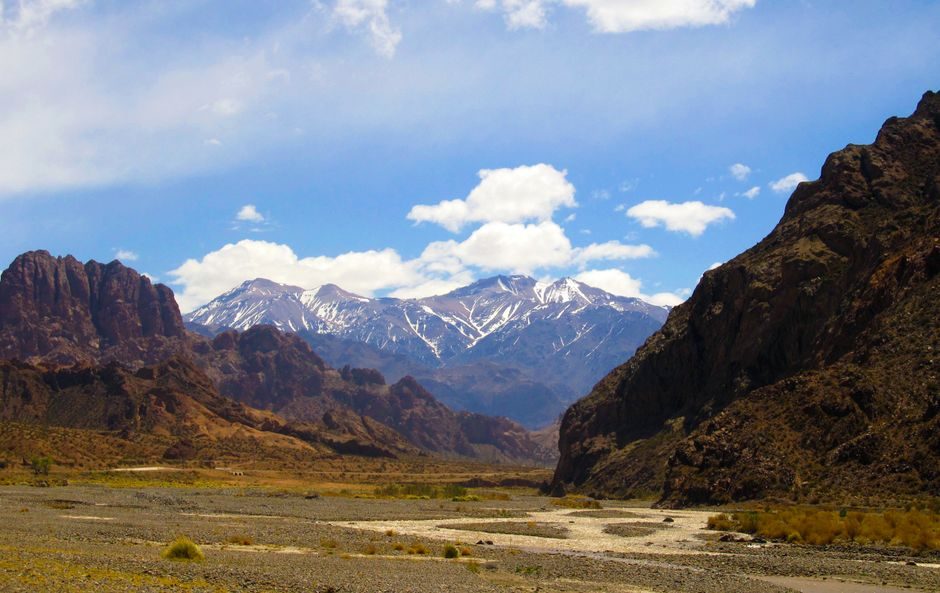
What the charge actually is, in practice, is a reciprocity fee levied on certain nationalities at the point of arrival, paid at a desk before you reach immigration, and it has been applied on and off for years depending on which passports are involved. The desk is usually a small counter set back from the main queue, staffed by someone who has answered the same three questions several thousand times and has the patience of a saint about it. Cards are accepted at some windows and not others, and the whole transaction tends to take longer than the flight did, because the queue forms fast when two wide-body arrivals land within an hour of each other. The practical consequence is that arriving overland is not just cheaper but calmer: a border crossing at a land checkpoint is a stamp, a wave, and a bus that waits for everyone to get back on. The land crossings from Chile over the Andes are the most scenic version of this, winding up past ski resorts and switchbacks before dropping into Mendoza or Bariloche, and the ones from Bolivia and Paraguay are flatter, hotter and considerably less photographed. Either way, the fee does not follow you across a land border. That is the whole trick, and it holds.
What Things Cost Now
A nice bife de chorizo, a sirloin steak, in a restaurant in Buenos Aires runs about $13. That is restaurant steak, not supermarket steak. A quesadilla at a street stand should not cost more than roughly $2. A pile of fresh produce from a vegetable stand, the kind of pile that looks excessive when you buy it and reasonable by the time you have eaten it, adds up to $12. Ice cream was $2.
The steak figure deserves a note, because it is the number people repeat and the one most likely to mislead. A bife de chorizo at that price is a proper plate, thick-cut, cooked to order, and it arrives with nothing else unless you ask. Sides are ordered separately and priced separately, which is how a $13 steak becomes a $20 dinner once a salad and a bottle of water join it. The cheap version of the same meal exists at the neighborhood parrillas away from the tourist strips, where the menu is taped inside the window, the grill is visible from the street, and the clientele is entirely local and entirely unhurried. Lunch is the better-value sitting at these places, and it is also when the locals actually eat their big meal. The quesadilla at $2 is the street-stand benchmark, and the stands that hit it are the ones with a queue of people who work nearby. The produce pile at $12 comes from the small verdulerias on residential corners rather than the supermarkets, and it is worth knowing that the person behind the counter will pick the fruit for you if you point, which usually produces a better bag than choosing it yourself. The ice cream at $2 is a single scoop from a heladeria, and the portions are generous enough that ordering two scoops is a commitment.
Alcohol came to $76 for two people. The wine was bought from grocery stores, mostly red Malbec and white Torrontés, with a stock-up at a winery in Tupungato called Giaquinta. That number is for the whole alcohol spend, not one bottle.
To put the wine in context: Malbec is the Mendoza grape and Torrontés is the white grown further north in Salta, and both are cheap enough in grocery stores that buying by the bottle rather than the glass becomes the default. The winery stop in Tupungato is the kind of thing that happens on a bike rental day in the Uco Valley, where the roads between bodegas are flat, the tastings are informal, and the bottles bought at the source are cheaper than anything in the capital. The $76 figure covers the entire trip for two people, which says more about Argentine wine pricing than about anyone’s restraint.
Sleeping is cheap in Buenos Aires. A dormitory bed in a hostel costs $6 to $10. A budget double room starts at $25. Down in El Chalten, camping costs about $5 a day and a dormitory bed starts at $10.
Hostel prices in Buenos Aires vary by neighborhood more than by quality. San Telmo and Palermo are the two poles, and the cheaper beds cluster around the transport hubs rather than the pretty streets. The $25 double is a private room with a shared bathroom in most cases, and a private bathroom pushes the price up by a margin that is worth asking about before booking. In El Chalten the calculus is different: the town exists for the hiking, the campgrounds are municipal and central, and the $5 camping fee buys a pitch within walking distance of the trailheads. The dormitory beds at $10 fill up in the summer trekking season, so the camping option is not just cheaper but more reliable when the town is full. El Chalten is also a place where the weather does the deciding, and the days when the mountains are clear are the days nobody is in the hostel anyway.
The expensive part is getting around. Overnight buses in Argentina were the most expensive in South America. Each bus was at least $100. That is per bus, and the distances are enormous. Ushuaia, the southernmost city in the world, to Cusco in Peru, was done entirely by bus and jeep.
The overnight buses are worth describing properly, because the price is the least of what happens on them. Argentine long-distance buses are comfortable, with reclining seats that go nearly flat in the front rows, meals served on trays, and films dubbed into Spanish at a volume that makes sleep optional. The catch is that the distances are continental, so a single leg can run most of a day and a night, and the tickets are priced accordingly. Booking in advance at the terminal or through the local agencies is cheaper than turning up on the day, and the front-row seats sell first. The Ushuaia-to-Cusco run by bus and jeep is the extreme version, crossing the whole continent and several border posts, and it is the kind of journey that exists because flying the route is expensive and the overland version is the point.
If your plans are fixed, locking in tickets early costs nothing and saves a lot.
The Country Changed
Ten years ago the ranking was simple. Peru and Bolivia were the bargains. Chile was the most expensive. Argentina was also cheap, because it was recovering from a recession. That is not the ranking anymore. Argentina has been powering ahead, and prices have moved with it. The $2 ice cream is the clearest way to say it. People who remember the old Argentina keep waiting for the old prices to come back. They have not.
The mechanism behind the shift is worth understanding, because it explains why the prices feel different from month to month. Argentina has run high inflation for years, and prices in pesos move faster than the exchange rate, which means the cost of things in dollars drifts upward steadily rather than jumping all at once. Travelers who arrive expecting last year’s prices find them gone, and travelers who arrive expecting last decade’s prices find them gone twice over. The practical result is that budgeting from an old guidebook is a losing game, and the only reliable approach is to check current prices on the ground and adjust. The upside is that the country is still cheaper than home for most visitors, just not dramatically so, and the places where the savings are real — food, wine, accommodation — are the places a backpacker spends most of their money anyway.
This is why some travellers who expected to stay a few weeks in Argentina end up staying two months, including one month in Patagonia. The budget does not survive contact with the place. A trip that was supposed to be cheap turns into a trip that is merely cheaper than home.
Patagonia is the specific trap. The region is enormous, the towns are far apart, and the hiking is the reason people come, which means the days are spent on trails and the nights are spent in whatever accommodation is nearest the trailhead. El Chalten, El Calafate and the towns around Torres del Paine all have the same shape: a small grid of streets, a cluster of hostels and outfitters, and a bus terminal that is the only way in or out. Staying a month in Patagonia is not a failure of planning so much as an inevitability once the weather clears, and the cost of that month is mostly the buses between towns plus the camping fees, which are modest. The overspend is in the time, not the money.
The Long Numbers
A five-month run from Argentina up to Colombia, working north, can be done on a $15,000 budget with $5,000 still in the account at the end. That is the shape of it. The overspend came from falling for Argentina and staying two months instead of passing through. Nine days of that was an apartment in Buenos Aires near the start of the trip. The cushion fund survived anyway.
The $5,000 left over is the reassuring part of that arithmetic, and it is worth saying plainly that the budget was not blown, only stretched. Five months across a continent for $15,000 works out to roughly $100 a day, which covers the buses at $100 a leg, the dorm beds at $6 to $10, the steak at $13 and the wine by the bottle, with room to spare. The nine-day apartment in Buenos Aires is the line item that looks extravagant in hindsight, and it was: a private place to land at the start of a long trip, with a kitchen and a washing machine, costs more per night than a hostel but buys back the time spent doing laundry and eating out. The cushion survived because everything else was cheap enough to absorb it. That is the pattern for the whole continent: the expensive things are the ones that move you, and the cheap things are the ones that keep you alive and happy between moves.
Read those numbers together and the picture is clear. The steak is $13. The produce is $12. The hostel bed is $6 to $10. The bus is $100 and up. Argentina is not a country where you save money on transport. It is a country where you save money on everything else and then hand it back at the bus terminal, one long overnight at a time.
There is a workaround, and it is the one locals use: the buses are cheaper when booked in segments rather than as one long haul, and the smaller regional services that connect the towns between the big cities cost a fraction of the overnight expresses. The trade is time and comfort. The expresses are fast, the regionals are not, and the regionals stop in places worth stopping. Travelers who build the trip around the regionals end up seeing more and paying less, at the cost of a few extra nights on the road. The overnight expresses are for when the schedule matters more than the money, which, on a five-month trip, is rarely.
The airport charge is avoidable by arriving overland. The bus prices are not. Plan around the second one and the first one takes care of itself.
Leave a Reply