Some links on this page are affiliate links. If you book or buy through them, we may earn a small commission at no extra cost to you. It never changes what we recommend — every price here is one we would pay ourselves.
One example: as many as 100,000 Membership Rewards points after spending $8,000 in eligible purchases within the first six months of membership. A green TIMS card costs $20 for independent trekkers.
The Card in Your Wallet
Contactless works almost everywhere now. That part is settled. The problem is the fee schedule attached to the card you happen to own, and the markup a merchant decides to add on top of it.
An Indian credit card charging a 2% conversion fee is the baseline case. Reward points can offset that, assuming the card is actually enabled for international use. It often is not, and the first you learn about it is at a counter with a queue behind you.
The solution people keep landing on is a dedicated forex card. One traveller picked up a Thomas Cook Visa card with zero forex markup, loaded it with US dollars by paying the rupee equivalent, and then spent it in whatever currency the country used. That works. It also comes with a quiet catch. Many establishments charge an extra 2–3% when you pay by card at all, regardless of whose card it is.
So a card is not always the cheaper route. Sometimes it is just the more convenient one, and you pay a few percent for the convenience without noticing.
What that looks like in practice is a terminal held out with the amount already keyed in, and a small printed note taped beside it announcing the surcharge in the local language. Nobody explains it. The surcharge simply appears as a separate line on the slip, and the total is a little higher than the menu said. In tourist-heavy districts this is close to universal; two streets back, at the shop where locals buy their phone credit, the same transaction often goes through at face value. The gap is not about the card network. It is about who the merchant thinks is standing in front of them.
The other thing worth knowing is that the “no foreign transaction fee” promise on a forex card applies to the card, not to the ATM at the other end. A card can be genuinely free to swipe and still cost money the moment it goes into a machine. Those are two different fee schedules, and they get conflated constantly.
What Cash Still Buys
Japan is the clearest test case. Cash remains essential for small temples, some restaurants, and market stalls. The advice from people who have done it is specific: withdraw from 7-Eleven ATMs, which accept foreign cards reliably, and keep somewhere between ¥10,000 and ¥20,000 on hand. That is roughly $65 to $130, and it does not go as far as it sounds.
A PASMO card covers the train ride, valid on JR and subways. The minimum charge is ¥500, which buys you maybe two train stations. Loading ¥10,000 onto a PASMO is the working figure people use. That sits in the same $65–130 band as the cash float, and it is a separate pool of money. Two floats, not one.
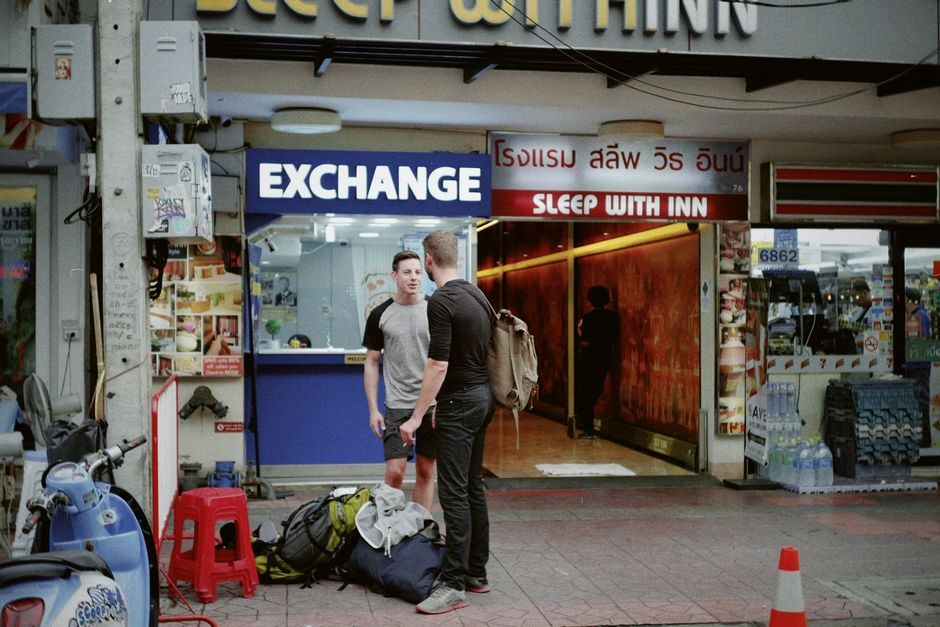
The pattern repeats elsewhere. Small operators, temples, market stalls — the places where a card surcharge stings most are also the places most likely to prefer notes.
The reason is mechanical rather than cultural. A stallholder with a card reader pays a monthly rental whether or not anyone taps, plus a percentage on every sale, and that percentage comes out of a margin already thin enough that the day’s profit lives in a biscuit tin. Notes settle instantly, cannot be reversed weeks later, and do not require a phone signal. That is why the ramen counter with eight seats takes coins and the chain restaurant next door takes everything.
The practical rhythm most people settle into is to spend down the cash float across the day and top it up every few days rather than carrying a large amount at once. Coins accumulate fast in Japan and are worth feeding into vending machines and station lockers rather than hauling around. A small zippered pouch beats a wallet, because the volume of low-denomination coins is genuinely surprising. The float also doubles as an emergency buffer for the moments when a card is declined for no reason anyone can explain — which happens, usually at the worst possible hour, and is solved by having notes.
The Cash Advance Trap
Withdrawing cash from a credit card is a bad idea. The cash advance fee is very high. This is not a marginal cost you can absorb; it is a different category of charge from a foreign transaction fee, and it starts accruing immediately.
Debit and ATM withdrawals are the alternative, which is why the 7-Eleven detail matters. The machine you choose changes whether the withdrawal happens at all.
There is one more cash obligation that has nothing to do with ATMs. In parts of Africa, the payment made in cash on arrival is called the Local Payment. That money goes to your tour leader at the start of the tour and covers local expenses: camping fees, an average of two meals per day, and the included excursions listed in the trip itinerary. It is cash, it is collected up front, and it is not something a card can substitute for.
The cash advance charge compounds in a way that catches people out because it is not one fee but three stacked on top of each other. There is a flat percentage of the amount withdrawn, there is usually a minimum charge that applies even to a small withdrawal, and there is interest that begins the day the money leaves the machine rather than at the end of a statement period. On top of that, the ATM operator adds its own charge, and the exchange rate used is typically the card issuer’s own, which is rarely the one advertised on the board outside. The arithmetic is not worth doing because the answer is always the same: use a debit card, or bring the money already converted.
The Local Payment is the one that ruins budgets because it is large, it is due on day one, and there is no ATM at the meet-up point. Tour operators usually state the figure clearly in the trip notes and quote it in dollars, which means the cash has to be sourced before leaving home or hunted down in a city on the way in. Turning up short is not a small problem. The group leaves on schedule either way.
Cards That Do Less Damage
Travel-specific cards and apps tend to offer lower foreign transaction fees and better exchange rates. Many let you load multiple currencies and lock in a rate when it is favourable. That is the whole point of them.
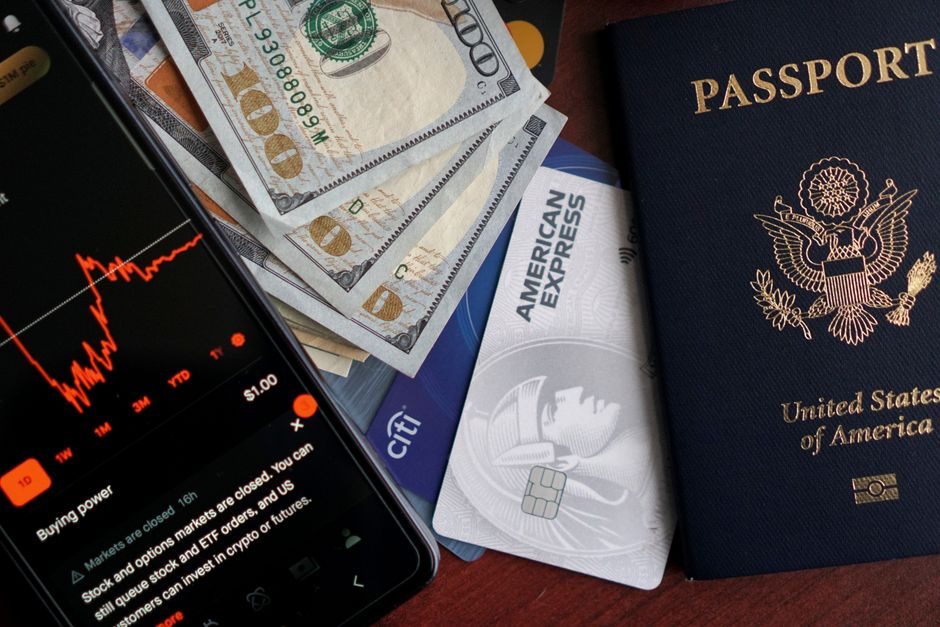
For purchases you were going to make anyway — gear, flights, the big-ticket items — a cash back credit card in the 1–2% range is a reasonable home for the spending. Some welcome offers run considerably higher. One example: as many as 100,000 Membership Rewards points after spending $8,000 in eligible purchases within the first six months of membership. Welcome offers vary and you may not be eligible.
None of this replaces the cash float. It sits alongside it.
The multi-currency feature is the part worth understanding properly, because it is where the real saving hides. Loading a card with a currency while the rate is good fixes that rate for later spending, which removes the guessing game entirely. The catch is that not every currency can be loaded, and the ones that cannot get converted at the prevailing rate at the moment of the transaction — usually a worse one. The other catch is that money loaded onto a travel card is not sitting in a bank account. It is a balance with a payments company, and getting it back out at the end of a trip usually involves a fee and a wait. Load what will plausibly be spent, not a round number chosen for comfort.
When You Go Matters More
Accommodation prices between peak and low season can differ by as much as 50%. On a safari, the low (green) season saves a substantial amount of cash, and that saving dwarfs anything a card fee will do to you.
Guided city walking tours run $15 to $35. Free tours with tip-based payment are widely available and cost whatever you decide they cost. In Mexico, over six weeks, the “other costs” line stayed small — tips, bathroom fees, laundry, a SIM card and mobile data. Random expenses, individually trivial, collectively not.
If roaming fees are the worry, an eSIM caps the cost upfront.
Two trekking permits in Nepal illustrate how small the margins get. A green TIMS card costs $20 for independent trekkers. A blue one costs $10 for trekkers in a group with a guide. Ten dollars is the difference between going alone and going with someone. That is a cash decision, made at a counter, and no card fee table is going to matter more than it.
The green season on safari is not a worse trip, just a wetter one. Vegetation is thicker, which makes some animals harder to spot, but the parks are quieter and the camps are grateful for the booking. The rate difference shows up most sharply in the lodges themselves, which is where the bulk of a safari budget sits. Flights and park fees move far less, so the saving is real but concentrated in one line item.
Tipping is the expense that quietly escapes every budget, because it is paid in small amounts at unpredictable moments and nobody logs it. The convention varies by country and sometimes by city, and the honest approach is to ask at the first hotel rather than guess. Bathroom fees, bag storage, a bottle of water from a kiosk — none of these are worth a line in a spreadsheet individually, and together they are the reason the daily spend runs higher than the plan. Keeping a rough tally in a notes app for the first week gives a realistic daily number to work from, and that number is almost always higher than the estimate made at home.
Leave a Reply