Some links on this page are affiliate links. If you book or buy through them, we may earn a small commission at no extra cost to you. It never changes what we recommend — every price here is one we would pay ourselves.
If you want fish, you are looking at $7 to $8. The $22 room is often a fan-cooled double with a private bathroom, a kettle, and a wall that has been painted a colour nobody would have chosen.
What a Double Room Costs
The Maldives has a reputation problem. The reputation is that you cannot go there without a large budget, and that reputation is not the complete truth. A double room runs about $22 a night. That is not a typo and it is not a hostel bunk. Eating normally costs $3 to $4 a head. If you want fish, you are looking at $7 to $8. Getting to $10 a head for a meal is, in practice, almost impossible. Those are the numbers from travellers who went in 2025 and wrote down what they spent.
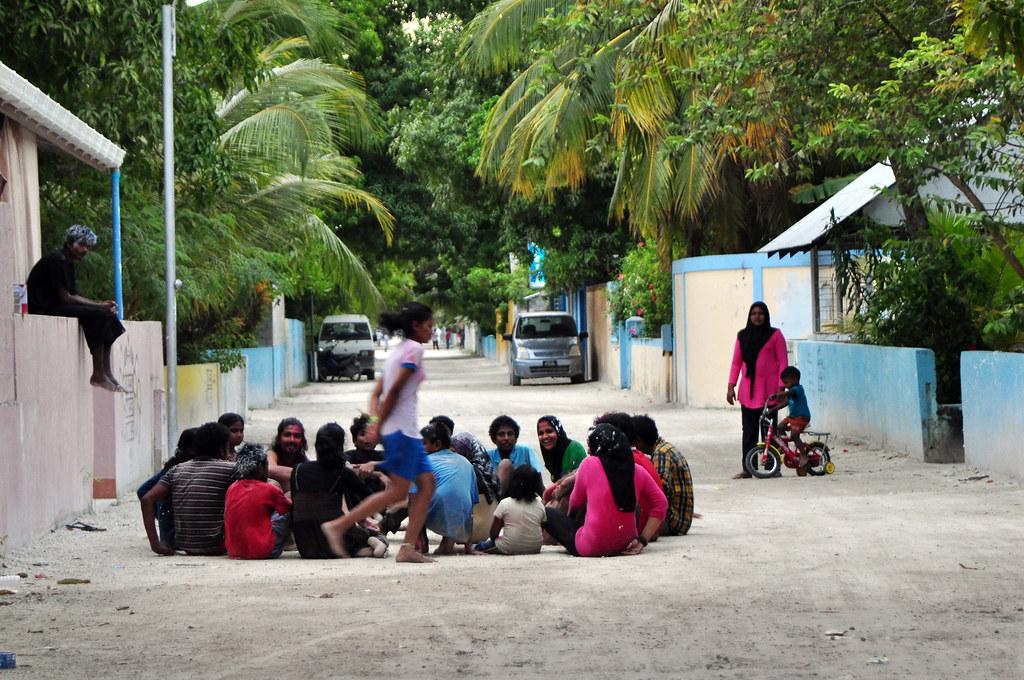
The rooms at that price are on the local islands, not the resort islands, and the distinction matters more than any other single thing in this article. A local island is a inhabited island where Maldivians live: a mosque, a school, a harbour, a few cafés, a bikini beach set aside for visitors. The guesthouses are family-run, usually three or four rooms on the ground floor of a house, with a courtyard and a rack of flip-flops by the door. The $22 room is often a fan-cooled double with a private bathroom, a kettle, and a wall that has been painted a colour nobody would have chosen. Air conditioning may push the rate up a little. The room is clean, the bed is firm, and the water pressure is best described as hopeful.
Food at those prices is local food. Breakfast is usually included and usually the same everywhere: eggs, roshi flatbread, a tuna and coconut mash called mas huni, and sweet milky tea. Lunch and dinner at a local café is rice, curry, and a piece of fried fish, eaten at a plastic table under a ceiling fan while a cricket match plays on a wall-mounted television. The $3 to $4 plate is what the men who work the boats are eating at the next table. The $7 to $8 fish is a proper grilled reef fish, and it is worth doing once. Alcohol is not sold on local islands; it exists on the resort islands and on a few licensed liveaboard boats, which is one more reason the local-island bill stays low.
Compare that to Singapore, which came out as the most expensive stop on one traveller’s route through the region. A single night in an ordinary semi-hostel there cost $43. One night. Ordinary. The Maldives, on those figures, is cheaper per day than a night in Singapore that nobody would describe as luxurious.
The Sixty-Five Day Limit
There is a hard constraint worth knowing before you plan a long stay. On standard annual travel cover, a single trip is capped at a maximum duration of 65 days. Anything longer has to be insured under a separate single-trip policy. Sixty-five days is over two months, so this only bites if you are stringing together a very long run. But it bites suddenly if you are not expecting it.
What that looks like in practice is a phone call from a claims office, not a friendly warning. If a trip runs past the cap and something goes wrong on day sixty-six, the insurer can decline the whole claim on the grounds that the policy had already lapsed, and the hospital bill is the traveller’s problem. The fix is unglamorous but cheap: read the trip-duration clause on the policy before booking the flight, and if the plan is to stay past the cap, buy the separate single-trip cover for the whole stretch rather than extending month by month. The wording to hunt for is the maximum duration per trip, which is a different line from the maximum duration per year even though the two are printed side by side. A visa on arrival is granted for a set number of days and can be extended for a fee at the immigration office in Malé, and the airline will ask for proof of onward travel before boarding, so the itinerary and the insurance need to agree with each other before departure rather than after.
Solo Math
A one-month solo trip comes in at $1,200 to $1,700 at backpacker level. Mid-range, the same month runs $2,800 to $4,200. Flights are excluded from both figures. Solo travellers pay roughly 15 to 25 percent more per person than couples do, for the simple reason that rooms and taxis do not split. If you are a solo female traveller, add $3 to $8 a day. That covers well-located accommodation and rides after dark. It is not a tax on being a woman so much as the cost of not walking home at midnight, and it is worth paying.
Many hostels run female-only dorms. They often cost the same as a mixed dorm. Same price, extra layer of comfort and security. That is a straightforward trade.
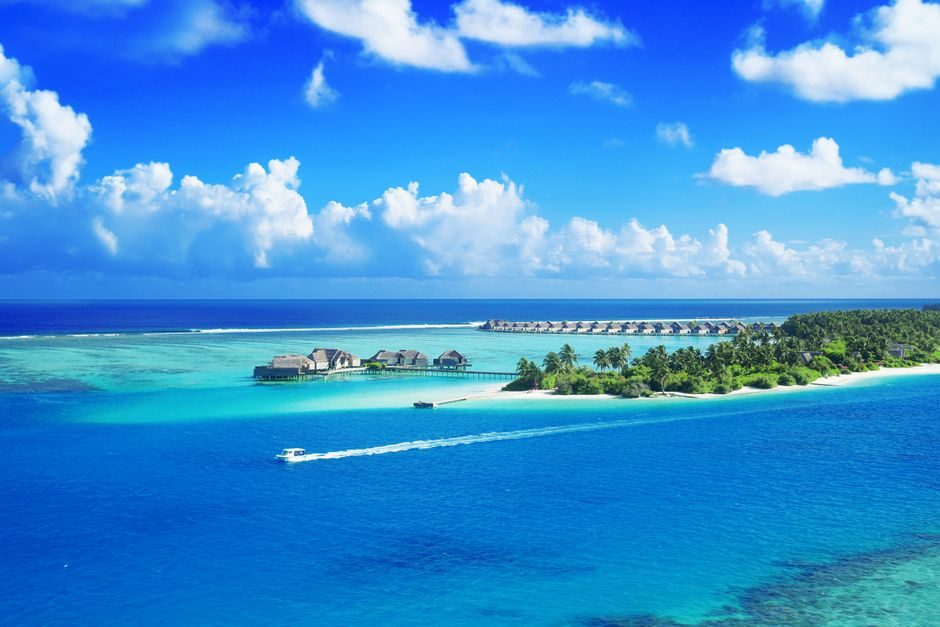
The daily budget band is wide because the two ends of it are genuinely different trips. At the bottom, a month is guesthouse rooms, café food, public ferries, and days spent on the beach and in the water. At the top, it is air-conditioned rooms with a sea view, the occasional excursion, and a speedboat instead of a slow one. Most of the gap is transport, not beds. A public ferry between local islands is a few dollars and takes an afternoon. A speedboat on the same run is many times the price and takes under an hour, and it is the single line item that most often turns a cheap month into an expensive one. There is no booking office and no timetable app that anyone trusts. The reliable method is to ask at the guesthouse desk the night before, because the ferry runs when it runs and the guesthouse owner usually knows a cousin who works the route.
What the Numbers Say
Add it up. A month at backpacker level, solo, with the female-traveller supplement at the low end, lands near the top of that $1,200 to $1,700 band. At the high end of the supplement, you are pushing past it. The room and the food are cheap. The flight and the solo premium are what move the total.
The Maldives is not a budget destination in the way that northern Thailand or Laos is. It is, however, a place where the daily costs are lower than most people assume, and where the assumption of exclusivity keeps some travellers away who could afford it. A double room at $22 and dinner at $4 is not a luxury trip. It is a trip.
The cost of getting there is the part that does not bend. Once you are on the ground, the arithmetic is friendlier than the brochure suggests.
If your flight gets in at an awkward hour, a pre-booked transfer is the reliable answer.
Leave a Reply