Some links on this page are affiliate links. If you book or buy through them, we may earn a small commission at no extra cost to you. It never changes what we recommend — every price here is one we would pay ourselves.
A ride across Tbilisi, city center to the outer districts, runs about $3. A proper lunch — khachapuri, khinkali, a side salad, a non-alcoholic drink — at a local restaurant costs $4 to $8.
What Things Cost
A ride across Tbilisi, city center to the outer districts, runs about $3. That is the number to hold onto when you start pricing the rest of the country, because it sets the scale. A private taxi can be bargained down. Online taxi services exist alongside the private ones, and both are cheap enough that you stop thinking about them as a line item. The practical wrinkle is that street taxis quote foreigners a starting price several times the local rate, so the bargaining is not optional — it is the transaction. The apps remove the negotiation entirely and charge what they charge, which is usually less than the opening ask from a driver standing outside a station. Late at night, when the metro has stopped and the marshrutkas have parked, the apps still work and the price barely moves.
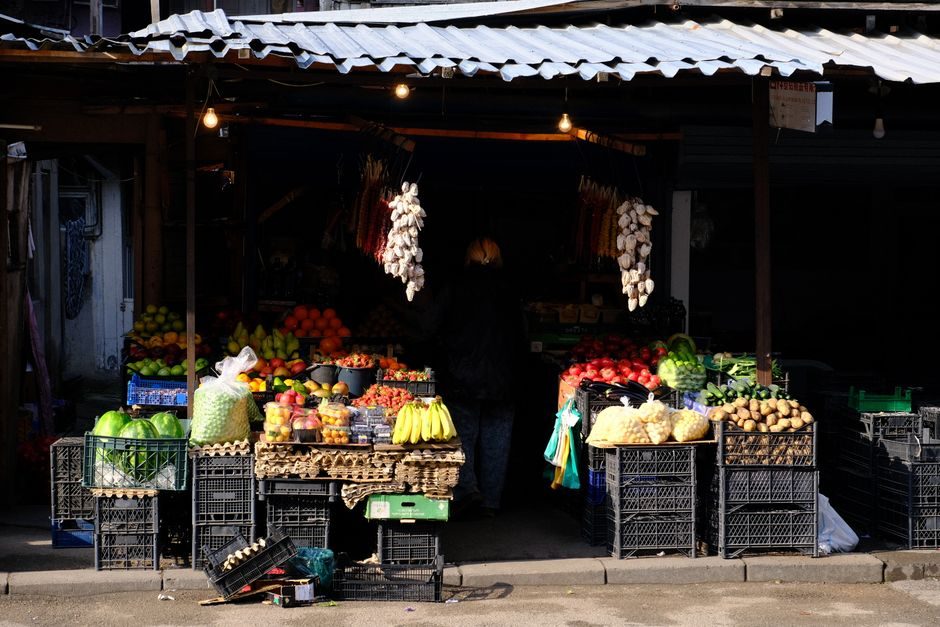
Food is where Georgia gets almost unreasonable. A proper lunch — khachapuri, khinkali, a side salad, a non-alcoholic drink — at a local restaurant costs $4 to $8. From a tonii, the traditional bakery, a bag of freshly baked bread is $0.30. Market stalls selling khinkali, lobiani and churchkhela charge $0.50 to $2 per item. One traveller reported spending $4 per day on everything, all categories, while eating in five-star hotels. That figure is an outlier and probably involves someone else’s hospitality, but it is not as absurd here as it would be almost anywhere else. The mechanics behind the low prices are worth understanding. Khinkali are ordered by the piece, not by the plate, and the count matters — most people stop somewhere between five and eight, and the stems are left on the plate as a tally. A supra, the Georgian feast, is not a restaurant bill so much as a running tab that keeps arriving, and the cost per head collapses when more people sit down. Wine by the jug in a neighborhood restaurant is cheaper than a single glass in most European capitals, and the house pour is often better than the labeled bottle. Tipping is not baked into the system the way it is in the US; rounding up or leaving a small amount is normal, and a full 20 percent is not expected.
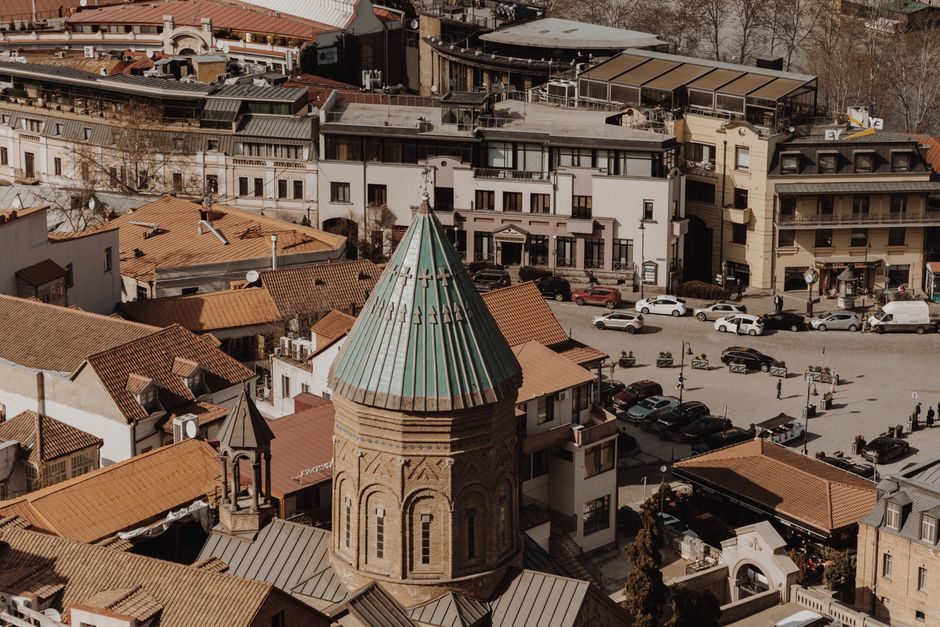
Accommodation has shifted. Tbilisi now has a growing number of boutique hotels, restored townhouses and contemporary mid-range places in the Old Town and the neighborhoods next to it. En-suite bathrooms, reliable WiFi, and often a design aesthetic that would cost triple elsewhere: $40 to $80 per room. That is the middle band. Below it, guesthouses and hostels exist, and the $4-a-day figure suggests the floor is low. The old-town guesthouses tend to be family-run, with a shared kitchen and a courtyard, and the host will usually offer to cook breakfast for a small supplement rather than advertise it. Outside Tbilisi the same money goes further — in Kutaisi or Telavi a private room with a bathroom can sit at the bottom of that band or below it, and the difference between a good guesthouse and a mediocre one is almost always the host rather than the furniture. The thing that catches people out is seasonal pricing: August on the Black Sea coast and the ski season in Gudauri push rates up sharply, and the same room quoted at one price in spring can be quoted considerably higher in peak weeks.
Mobile data is not a problem. Three operators cover the country with high-quality service at low prices, and all three sell tariff plans built around unlimited 4G internet — the most useful product for a visitor. Connectivity is cheap enough that it does not belong in a budget. The SIM is bought at an operator’s own store or kiosk with a passport, takes a few minutes to activate, and works in the mountains as well as the city, though coverage thins in the deepest valleys of Svaneti and on remote stretches of the military highway. The practical advice is to buy at the source rather than from a reseller at the airport, where the same plan is sold at a markup.
The Long Hauls
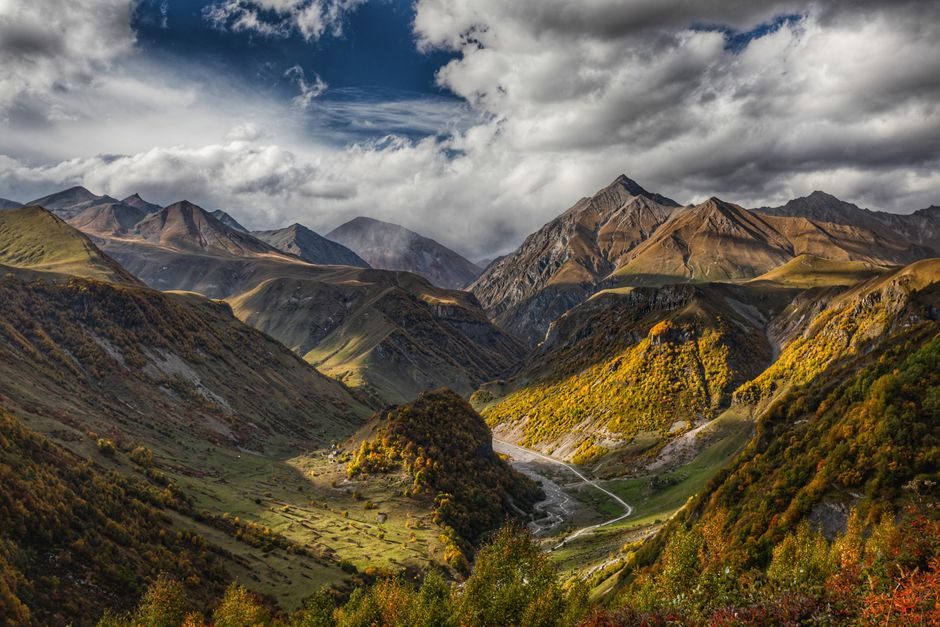
Domestic transport is where the arithmetic changes. Tbilisi to Mestia, in Svaneti, runs $50 to $80 each way if booked in advance. That flight is weather-dependent and prone to cancellation. A land route as backup is not optional advice; it is the thing that determines whether you get to Svaneti at all. The flight is short — under an hour in the air — but the mountain weather decides the schedule, and cancellations can stack up for days in the wrong season. The land alternative is a long marshrutka or shared taxi ride from Zugdidi or Tbilisi, most of a day on winding roads, and it runs regardless of what the sky is doing. Locals treat the plane as a convenience and the road as the guarantee. The same logic applies to other domestic hops: the train between Tbilisi and Batumi is comfortable and cheap, the overnight service saves a hotel night, and the bus network fills in everywhere the rail does not reach. Marshrutkas leave when full rather than on a timetable, which means an early start is the only way to guarantee a seat and a departure before noon.
Currency rules are simple. Import and export of local and foreign currency is unrestricted. Amounts from $10,000 upward must be declared.
For a longer stay, one 23-day trip through Georgia came to $3,082, or $134 per day. That is a mid-range number — someone flying domestically, sleeping in the $40 to $80 band, eating well. It is not the $4-a-day figure, and both are real. The gap between them is mostly flights, rooms and how often you move. ATMs are everywhere in the cities and dispense local currency at a reasonable rate; cards are accepted in most Tbilisi restaurants and hotels but far less reliably in the regions, where cash still runs the show. Carrying a stack of small notes solves most problems, and change is a chronic shortage — vendors will hold onto coins rather than hand them over, so breaking a large note early in the day is worth the effort.
Georgia or Armenia
The comparison comes up because the two countries sit next to each other and get visited together. Georgia feels more lively and interactive — there is constantly something happening, which suits couples who want variety and activity and find it easy to stay engaged. Armenia feels peaceful and less touristy. The overall vibe is more private and relaxed, better for slow travel and calm. Neither is a correction of the other. They are different products. The border between them is a straightforward land crossing, and travellers routinely do both in one trip, usually entering one and leaving from the other. Georgia’s advantage is the range — coast, mountains, wine country and a capital that stays up late — while Armenia’s is the quiet and the sense that nothing is being staged for visitors.
Getting There
Georgia connects to major hubs, and fares vary enormously by route and timing. One data point from a different market: budget carriers sometimes offer fares under $300, and a range of $200 to $600 appears for certain routes. The same seat on the same plane can be priced at $18, $55 and $185 depending on when and how it is bought. That spread is the whole game. The cheap fares exist; they are not the default. The routes that produce the low numbers tend to be the ones with competition — a connection through a hub where several carriers fly the same leg — while a direct flight from a single-carrier city rarely drops. Booking early helps, but so does flexibility on the date: shifting a departure by a day or two can move the fare more than booking months ahead. Arrival itself is quick. The airport is close to the city, the visa rules are generous for most Western passports, and the formalities at the border take minutes rather than hours.
Neighboring Sri Lanka has gained a lot of popularity and is well connected to hubs around Asia, with cheap flights from cities such as Kuala Lumpur. That is a separate trip. For Georgia, the practical point is that arrival costs swing widely, and the country itself does not.
The Honest Number
Strip out the flight and Georgia is one of the cheapest countries in the region to move around in. A $3 taxi, a $0.30 loaf, a $4 to $8 lunch. Add the flight and a $50 to $80 domestic hop to the mountains, and a three-week trip lands near $134 a day. The country is cheap. Getting there and getting around inside it is where the money goes. The distinction matters because it shapes the trip: a longer stay lowers the daily average, since the fixed cost of the flight is spread across more days, and a slower itinerary that leans on trains, guesthouses and markets lands closer to the low end than a fast one built on domestic flights and mid-range hotels. The figures here are not a warning. They are a map of where the money actually goes.
When the arrival hall is chaos, having a car waiting is the calm option.
Leave a Reply