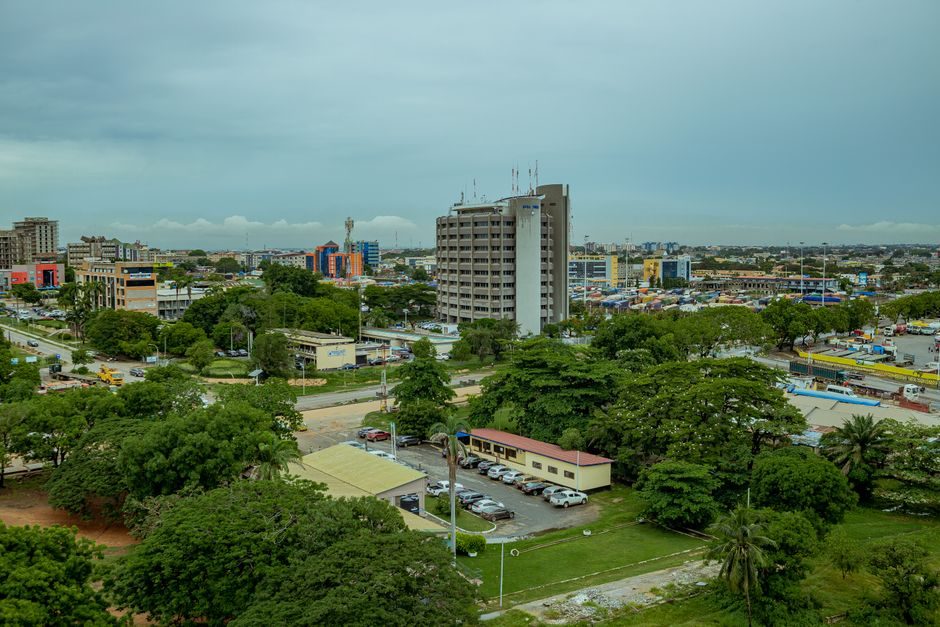
In Cape Coast and Kumasi, prices drop by a few dollars — a decent private room with a fan is $15 to $20. The Green Turtle Lodge near Busua charges around $20 for a basic room, more for the beachfront huts.
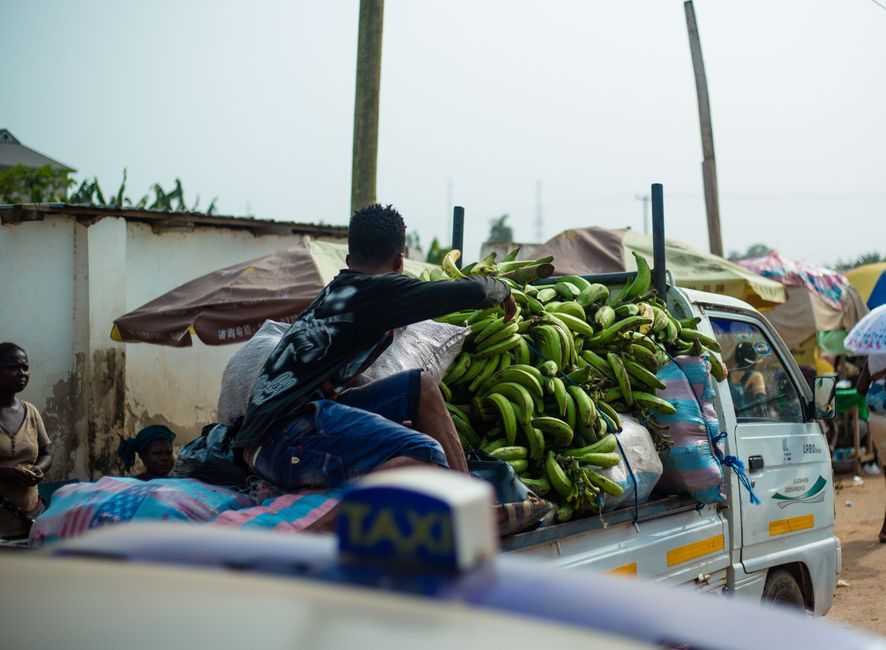
The trotro from Accra to Kumasi takes about four hours and costs around $6. That’s the whole trip. No seat reservation, no timetable you can rely on, no air conditioning. You wait at the station until the van fills, then it leaves.
Ghana is not a country where you need to plan every cedi. It’s a country where you need to know roughly what things cost, because prices swing wildly depending on whether you’re quoted the local rate or the visitor rate. The gap between those two numbers is the single most useful thing to understand before you land.
Getting In and Around
A visa on arrival costs $150 for most nationalities, and you need to arrange it before you fly — it is not simply handed to you at the desk. Apply in advance. Yellow fever vaccination is mandatory and you’ll be asked for the certificate.
From Kotoka International Airport in Accra, a taxi into the city center runs $8 to $12 depending on where you’re going and how hard you negotiate. The airport taxi rank is more expensive than walking out to the main road and hailing one, but after a long flight most people don’t bother.
Trotros are the backbone of local transport. Fares within Accra run $0.30 to $0.60. Between cities, the long-distance trotros and buses cost more: Accra to Cape Coast is about $5, Accra to Kumasi around $6, Accra to Tamale roughly $15 for the ten-to-twelve hour haul. STC buses are more comfortable and slightly more expensive, maybe $8 for the Accra–Kumasi route.
Shared taxis within towns cost $0.50 to $1 per person. A private taxi across Accra will set you back $5 to $10. Fuel prices have climbed, and drivers will tell you about it.
What You’ll Pay for a Bed
Dorm beds in Accra hostels run $10 to $15 a night. A private room with a fan and shared bathroom is $18 to $25. Add air conditioning and you’re looking at $30 to $45. In Cape Coast and Kumasi, prices drop by a few dollars — a decent private room with a fan is $15 to $20.
The Green Turtle Lodge near Busua charges around $20 for a basic room, more for the beachfront huts. Big Milly’s Backyard in Kokrobite is similar, $15 to $30 depending on the room. These are the established backpacker spots and they know it.
Hotels in Accra are a different matter. A mid-range hotel room in the city runs $60 to $100. The top-end places in Accra — the ones with pools and business centers — start at $180 and go up from there. There is very little in between the $25 guesthouse and the $80 hotel. That gap is real and worth planning around.
Food and Drink
Street food is where Ghana gets cheap and good. A bowl of waakye — rice and beans with whatever sauce and protein you point at — costs $1 to $1.50. Kenkey with fried fish is about $1.50. Jollof rice from a roadside stall is $1.50 to $2.50. A full plate of red-red with plantain is under $2.
Chop bars, the small local restaurants, serve a full meal for $2 to $4. A sit-down restaurant in Accra with table service will run $8 to $15 for a main. The nicer places in Osu and Labone charge $15 to $25. A pizza in Accra costs about the same as a pizza in a mid-sized American city — $10 to $14.
A bottle of water is $0.30 to $0.50. A beer — Star or Club — is $1 to $1.50 from a shop, $2 to $3 at a bar. A cocktail at a rooftop bar in Accra is $6 to $9. Coffee is not a big thing in Ghana, but where you find it, expect $2 to $3.
The markets are cheaper than anything. A whole pineapple at Makola Market in Accra is $0.50. A bunch of bananas is under $1. A bag of rice, if you’re self-catering, is $1.50 to $2 per kilo.
The Sights and What They Cost
Cape Coast Castle entry is $10 for non-Ghanaians, and that includes a guided tour. Elmina Castle is the same — $10. These are not optional extras; they’re the reason many people come to Ghana, and the tours run about 45 minutes to an hour.
Kakum National Park canopy walkway is $8 for foreigners. The walk itself takes two to three hours if you do the full loop. A guide is included. Mole National Park in the north charges $10 entry plus $8 for a walking safari with a ranger. The drive there from Tamale is another $10 to $15 in a shared vehicle, or considerably more if you hire a car.
The Wli waterfalls near Hohoe cost $5 to enter and another $5 for a guide, who is required. The hike up takes about 90 minutes at a reasonable pace.
Independence Arch and the Kwame Nkrumah Memorial Park in Accra are $5 and $3 respectively. The Nkrumah museum is worth the $3 — it’s a proper museum, not a plaque.
Money, Data and the Daily Reality
The currency is the Ghanaian cedi. ATMs in Accra and Kumasi dispense cedis and most accept foreign cards, though you should carry a backup because machines run out of cash. Fees are typically $3 to $5 per withdrawal on top of whatever your bank charges. Hotels and larger restaurants take cards; chop bars, trotros and markets are cash only.
A local SIM card with a data package costs $5 to $10 for a month with a few gigabytes. Coverage in Accra and Kumasi is decent. In Mole and the far north it drops to almost nothing. Buy the SIM at the airport or a proper shop, not from a guy on the street.
Budget per day: $30 to $40 if you’re staying in dorms, eating street food and taking trotros. $60 to $80 if you want a private room with a fan, a sit-down meal and occasional taxis. $120 and up if you want air conditioning, restaurants and a hired car. Those three tiers are honest, and the gap between them is mostly accommodation and transport, not food.
The thing that catches people out is not the cost of any one item — it’s the accumulation of small taxi fares and the $10 here and $8 there for castle entries and park fees. A week of sights adds up to $50 to $70 on its own. Budget for it.
Ghana is not the cheapest country in West Africa, and it’s not trying to be. But it is a place where $35 a day buys you a bed, three meals, transport across a city and a beer at the end of it. That’s a specific number, and it holds.
Leave a Reply