Some links on this page are affiliate links. If you book or buy through them, we may earn a small commission at no extra cost to you. It never changes what we recommend — every price here is one we would pay ourselves.
A Schengen visa runs €90, which is about $95 at 1.08 dollars to the euro, and that applies if you need one. If the ETIAS fee comes into force for your nationality, add around €20, or roughly $22.
A month in Varna, Bulgaria has a number attached to it. So does a month in Romania. The trouble is that almost nobody agrees on what that number is, because the number depends on how long you stay. Six months, one year, two years: the longer the trip, the higher the budget. That sentence sounds obvious written down. It stops being obvious when you are the one doing the arithmetic.
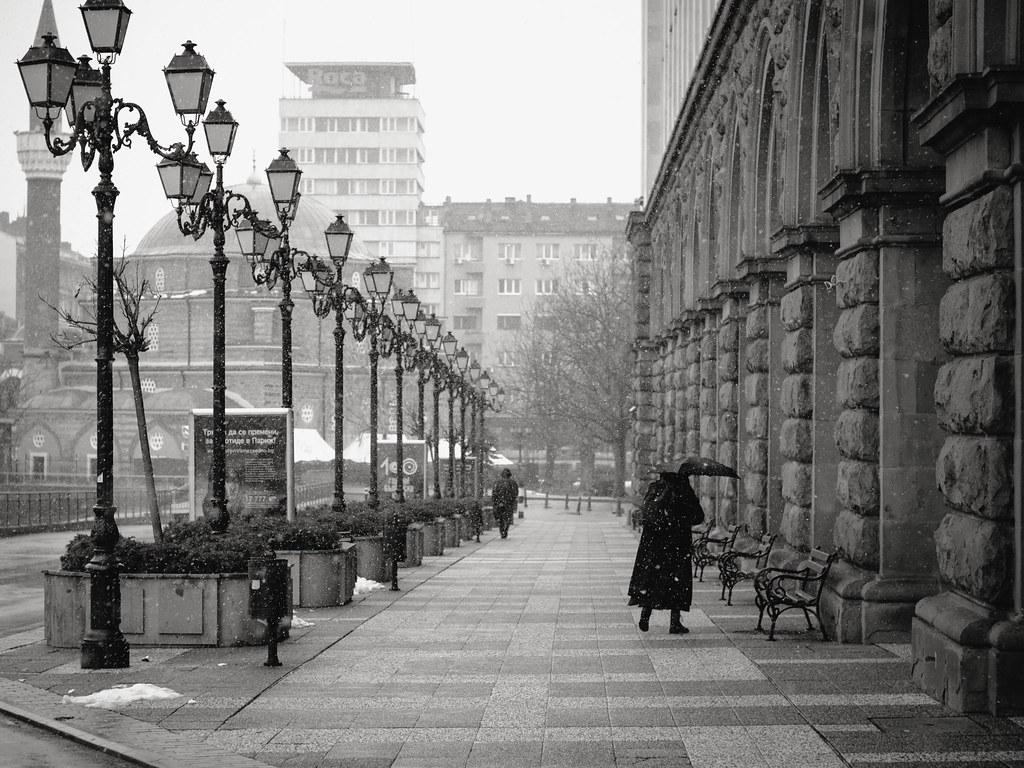
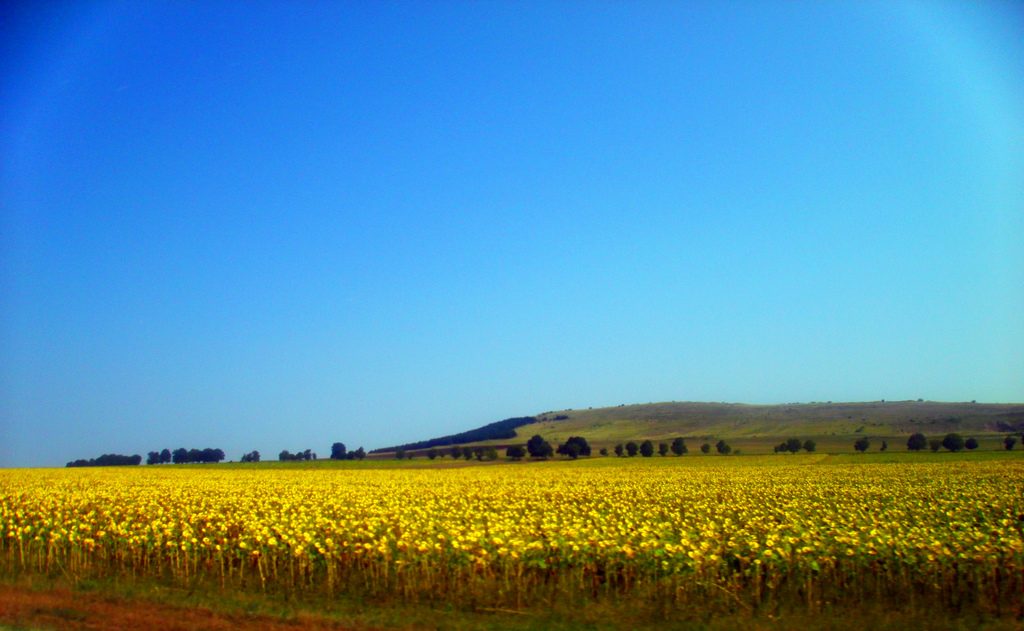
Part of the disagreement comes from what people count. Two travelers can spend the same month in the same city and report figures that differ by hundreds of dollars, simply because one of them is amortizing a flight and a visa across the whole trip and the other is quoting only what left their wallet on the ground. Varna makes this especially confusing. It is a Black Sea resort city that empties out in October and refills in June, so a month in February and a month in July are not the same purchase at all. Bucharest behaves differently again: it is a working capital, busy year-round, with rents that shift by neighborhood rather than by season.
The Long-Stay Trap
Short trips hide their costs in flights. Long trips hide them in everything else. Rent repeats. Groceries repeat. The visa question repeats, and it has a price. A Schengen visa runs €90, which is about $95 at 1.08 dollars to the euro, and that applies if you need one. If the ETIAS fee comes into force for your nationality, add around €20, or roughly $22. Passport renewal is its own line: $60 to $200, depending on the service level and the country you renew in. None of these are Romanian or Bulgarian costs specifically. They are the costs of getting to the point where Romanian and Bulgarian costs begin.
The trap is that these one-time costs feel like the whole budget while you are planning, and then vanish from your attention the moment you land. What replaces them is a slow accumulation of small recurring charges that never appear on a spreadsheet because none of them is individually alarming. A SIM top-up here, a laundry load there, a pharmacy run when the local water does not agree with you. Over a month these add up to real money, and over a year they add up to a second rent.
There is also a paperwork rhythm that catches people out. The Schengen area runs on a 90-days-in-any-180 rolling count, and Romania and Bulgaria are now inside that system, which means the old trick of hopping between them to reset a clock no longer works the way it did. Travelers who plan a long stay by stringing together short ones often discover this at a border desk rather than at a computer, and the fix is usually a visa run to a non-Schengen neighbor, which costs a bus ticket, a night of accommodation and a day of your life. None of that is expensive on its own. All of it is expensive when it happens three times in a season.
What Actually Drives the Numbers
Three things move a European budget more than destination choice does. Length of stay is the first. The second is how much of the trip is fixed before you leave. The third is how much you leave flexible.
A useful split is two pots of money: one for pre-trip spending, one for on-trip spending. For a seven-day couples trip, the flexible bucket usually lands between $1,200 and $1,800 out of a $4,500 total. That flexible money is the lever. It is what lets you have the conversation about skipping the third nice dinner because the week is running hot. Long stays in Romania or Bulgaria work the same way, just stretched over more weeks and with more chances for the flexible pot to quietly become the fixed pot.
Cash matters too. One traveller reported carrying about €500 in cash, which is $540, and pulling more from ATMs toward the end of the trip. That is not a Romania-specific fact. It is a reminder that not every cost lands on a card.
It is worth being specific about why the cash cushion exists. Rural guesthouses, small mountain pensions and village bus drivers frequently take cash only, and the nearest working ATM may be a town away. ATMs in cities are plentiful, but the ones inside convenience stores and small kiosks tend to charge a flat withdrawal fee on top of whatever the home bank adds, so a single large withdrawal usually beats four small ones. Cards are widely accepted in Bucharest, Sofia, Varna and Plovdiv, including at many market stalls, but the further into the countryside the trip goes, the more the card becomes a backup rather than the default.
Where the Money Goes
The five main categories are flight, accommodation, food, transportation and activities. Every budget you will ever read about this region is some arrangement of those five. Food and accommodation do the heavy lifting on a long stay. Flights are a one-time hit that feels enormous and then disappears from the monthly picture. Transportation is the one people underestimate, because moving between towns costs more than sitting in one.
Tipping sits inside the accommodation line and is at your discretion. If you leave one, it goes in the tipping box at the end of your stay. The guideline is $5 per adult per night, depending on the level of service. Over a month for two people, that is $300 if you follow the guideline every night. It is not compulsory. It is also not nothing.
Food deserves a closer look because it splits cleanly in two. Cooking at home in a rented flat is the single biggest lever on a long stay, and local markets make it easy: produce is sold by the kilo, cheese and cured meat by weight, and a week of groceries for two people is a modest line item compared with restaurant meals. Eating out is where budgets drift upward without anyone noticing, not because any single meal is extravagant but because a long stay turns eating out into a habit rather than an occasion. The menu del dia equivalent in this region is the daily lunch special, usually served until mid-afternoon, and it is consistently the cheapest way to eat a cooked meal in a restaurant.
Transportation rewards slowness. Buses between smaller towns are cheap and frequent but slow, the ticket desk sometimes closes mid-afternoon, and drivers occasionally sell seats directly. Trains are comfortable on the main lines and sparse on the secondary ones. Renting a car for a week costs more than several weeks of buses, and parking in the old centers of both countries is a genuine headache. Activities are the most elastic category of all: the monasteries, the old towns, the hiking trails and the Black Sea beaches are largely free, and the paid attractions tend to be modestly priced and quick to visit.
For the big names on the itinerary, tickets bought in advance are the safe choice.
What Insurance Will and Won’t Do
Cancel For Any Reason coverage reimburses up to 50% of the trip cost, and it is limited to higher-level plans. That is the whole benefit. Half. On a plan you paid more for. Anyone budgeting a long Romania or Bulgaria stay should read that number twice before treating cancellation coverage as a safety net.
What standard policies are better at is the boring middle ground: a sprained ankle on a mountain trail, a lost bag on a night bus, a stomach bug that costs a clinic visit. Those claims are the ones people actually file, and they are usually paid at a straightforward percentage after a deductible rather than at the half-rate of a cancellation clause. Read the medical evacuation limit specifically, because the remote parts of both countries are beautiful and far from a major hospital.
The Honest Summary
There is no single figure for a month in Varna or a month in Bucharest. There is a range, and the range is set by duration first and discipline second. Six months costs more than one month. Two years costs more than six months. A $95 visa, a $22 ETIAS fee if it applies, a $60 to $200 passport renewal, $540 in cash, $5 per adult per night in tips, and a flexible pot of $1,200 to $1,800 on a $4,500 week — these are the pieces. Stack them for the length of stay you are actually planning, not the length you wish you were planning.
Leave a Reply