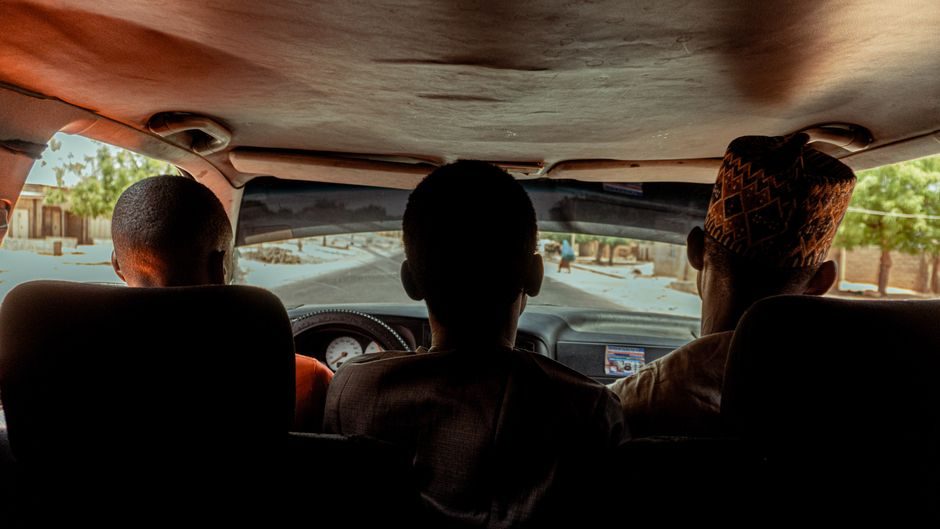
Budget buses between Lagos and Ibadan cost around $4 and take two to three hours depending on departures. Shared cars, known locally as “drop,” charge roughly $8 per seat on the same route and leave when full, not on a schedule.
\n\n
Nigeria: What Travelers Report
\n\n
Lagos traffic can turn a 12-mile airport run into a two-hour ordeal. That single fact shapes more trips than any guidebook warning. Travelers who plan around it report a country that is cheaper, calmer and more manageable than its reputation suggests. Those who don’t spend their first day exhausted and their budget leaking.
\n\n
Getting In and Moving Around
\n\n
A yellow taxi from Murtala Muhammed International Airport to Victoria Island runs about $18 if you negotiate before entering. Ride-hailing apps quote $9 to $12 for the same distance, but pickup at the airport itself is restricted, so most travelers walk to the road outside the perimeter and order from there. The difference matters. Over a two-week trip that gap compounds fast.
\n\n
\n\n\n\n
Intercity transport splits three ways. Budget buses between Lagos and Ibadan cost around $4 and take two to three hours depending on departures. Shared cars, known locally as “drop,” charge roughly $8 per seat on the same route and leave when full, not on a schedule. Flights from Lagos to Abuja run $55 to $110 one way, and the trip takes about an hour against 12 hours by road.
\n\n
Domestic flights between Lagos and Port Harcourt start near $70. Abuja to Kano sits around $60. These are not luxury fares. They are the difference between losing a day and not.
\n\n
Within cities, keke napep — three-wheeled taxis — cost between $0.30 and $0.70 for short hops. Motorcycle taxis, called okada, are cheaper still but banned on many major roads and genuinely dangerous. Most travelers who use them report doing so once and not again.
\n\n
What Things Cost
\n\n
Street food is where Nigeria gets cheap. A plate of jollof rice with chicken from a roadside vendor runs $1.50 to $2.50. Suya skewers go for about $0.60 each. A full breakfast of akara and pap costs under $1. Bottled water is $0.25 from a kiosk, $1.20 in a hotel lobby.
\n\n
Sit-down restaurants in Lagos or Abuja charge $8 to $15 per main course. A local beer is $1.20 at a bar, $4 at a hotel. A mid-range hotel room runs $35 to $60 per night in Lagos, $25 to $40 in Ibadan or Enugu. Hostels are rare outside Lagos, where dorm beds go for $12 to $18.
\n\n
A SIM card with 10GB of data costs about $5 and requires passport registration. That registration can take 20 minutes or two hours depending on the queue and the network. Travelers consistently report MTN has the widest coverage but the slowest activation.
\n\n
Museum entry at the National Museum in Lagos is $1.50 for foreigners. The Lekki Conservation Centre charges $4. A day pass to a beach resort on the Lekki peninsula runs $8 to $15, food not included.
\n\n
Safety, Honestly
\n\n
The UK and US governments both advise against travel to certain northern states, and that advice is specific, not blanket. Travelers who stick to Lagos, Abuja, Ibadan, Calabar and the southwest generally report no serious incidents. Those who venture into Borno, Yobe or Adamawa without local contacts report checkpoints, delays and, in some cases, being turned back.
\n\n
Petty theft is the more common issue. Phone snatching on Lagos roads happens, particularly at dusk and particularly from people holding phones out of car windows. Travelers report keeping a cheap second phone and leaving the good one in the room.
\n\n
Police and military checkpoints are frequent on intercity roads. Travelers report being asked for “something small” — usually $1 to $3 — at maybe one in five checkpoints. Refusing politely and asking to speak to a supervisor usually ends it. Paying ends it faster. Most people pay.
\n\n
Kidnapping for ransom does occur, mostly in the northwest and along certain highway corridors. The numbers are small relative to the population, but the cases are real. Travelers who hire a driver familiar with current conditions report fewer problems than those who take public transport on the same routes.
\n\n
Where Travelers Actually Go
\n\n
Lagos gets the most attention and deserves some of it. The Nike Art Gallery in Lekki is free to enter. Terra Kulture charges about $3 for exhibitions and hosts a weekly theater performance for $10. The Lekki Conservation Centre’s canopy walkway is 401 meters long and takes about 40 minutes to cross at a normal pace.
\n\n
Abuja is quieter. The National Mosque and National Christian Centre sit within sight of each other on Independence Avenue, both free to visit outside prayer times. Zuma Rock is 45 minutes outside the city and costs $2 to approach on foot from the roadside parking area.
\n\n
Calabar in the southeast hosts a month-long festival each December with drumming, dancing and masquerade parades. Hotel prices triple during that period. A room that costs $30 in November goes for $90 in December.
\n\n
Ibadan is the underrated one. The old city walls, Mapo Hall and the sprawling Bodija market take a full day and cost almost nothing. A guided walk through the market runs $5 to $10 and is worth arranging through a local guesthouse.
\n\n
Yankari National Park in Bauchi State has elephants, baboons and warm springs. Entry is $10, a jeep hire with driver is $60 per day and a basic lodge room is $25. Getting there requires a flight to Bauchi or a long drive from Abuja, and travelers report the drive is the harder part.
\n\n
Money, Health and Timing
\n\n
Cash is king. Cards work in some Lagos and Abuja hotels and almost nowhere else. ATMs exist but frequently run dry, and travelers report a daily withdrawal cap equivalent to about $80 at many machines. Bringing dollars to change at official bureaux de change is common practice. Rates there are usually better than the airport’s but worse than what you would get from a street changer, which is legal in some states and not in others.
\n\n
Malaria is present nationwide. Most travelers take prophylaxis, which costs $30 to $90 for a course depending on the drug. Yellow fever vaccination is required for entry and must be documented on a yellow card. Travelers arriving without one report being offered a vaccine at the airport for $20, sometimes under pressure.
\n\n
The dry season runs November to March and is the most comfortable window. The rainy season, June to October, brings daily downpours in the south and cooler temperatures in the north. Harmattan winds from December to February blow dust across the north and reduce visibility, which affects flights.
\n\n
Two weeks at a mid-range pace — guesthouses, some flights, street food and the occasional restaurant — runs $900 to $1,400 per person, excluding international airfare. Travelers who stick to buses and street food do it for $500 to $700. The $18 airport taxi and the $9 app ride are the first choices that set the tone.
\n\n
Adjacent reading
\n
\n\n
Where the numbers come from
\n
Leave a Reply