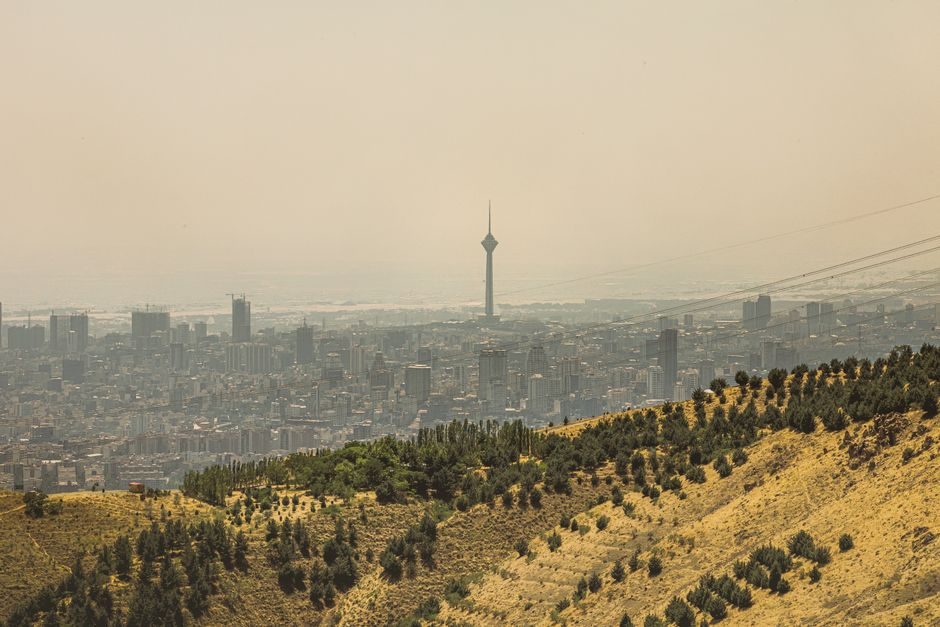
Most backpackers report spending $25 to $40 per day all in, including accommodation, food, local transport and entrance fees. Return fares from Istanbul on regional carriers are frequently in the $150 to $250 range if booked a few weeks out.
\n\n
Iran on a Shoestring
\n\n
What Things Cost
\n\n
Iran is cheap in a way that makes other budget destinations look expensive. A night in a decent budget hotel runs about $10 to $15. A dorm bed in a hostel in Tehran or Shiraz can be $5 to $8. A full meal at a local restaurant — chelow kabab, stew, rice, bread — costs $3 to $5. Street food is even less. A bottle of water is around $0.30. A taxi across Tehran might set you back $2 to $4. The metro in Tehran costs the equivalent of about $0.20 per ride.
\n\n
That pricing changes what a day costs. Most backpackers report spending $25 to $40 per day all in, including accommodation, food, local transport and entrance fees. The upper end of that range usually means a private room and a few paid attractions. The lower end means dorms, street food and walking.
\n\n
\n\n\n\n
The catch is that foreign cards do not work in Iran. This is not a minor inconvenience. No Visa, no Mastercard, no ATM withdrawal. You arrive with cash — US dollars or euros — and you exchange it. The official exchange rate and the street rate have historically diverged, sometimes significantly. Travelers report getting considerably more rials per dollar on the street than at a bank. This is the single biggest variable in your budget, and it is worth understanding before you land.
\n\n
Getting There and Around
\n\n
Flights into Tehran from Istanbul, Dubai or Doha are the common entry points. Return fares from Istanbul on regional carriers are frequently in the $150 to $250 range if booked a few weeks out. From Dubai, similar. From Western Europe, expect $300 to $500 return depending on the season and how far ahead you book.
\n\n
Once inside, long-distance buses are the workhorse. Tehran to Isfahan is about 450 km and takes six to seven hours. A VIP bus seat costs around $8 to $12. Tehran to Shiraz is roughly 900 km, overnight, and a VIP seat runs $12 to $18. Isfahan to Yazd is about 320 km and costs $6 to $9. These buses are comfortable, with reclining seats and sometimes a snack. They leave on time. They are the cheapest and often the most practical way to cover distance.
\n\n
Shared taxis fill the gaps. A shared taxi from Yazd to Kerman, about 360 km, is around $10 to $14 per seat. You wait until the car fills. This can take twenty minutes or two hours. The price is fixed and everyone pays the same.
\n\n
Domestic flights exist — Tehran to Shiraz, Tehran to Mashhad — and run $40 to $70 one way. They save a day but cost five times a bus ticket. On a shoestring, the bus wins almost every time.
\n\n
Sleeping
\n\n
Budget accommodation in Iran is functional rather than charming. In Tehran, a dorm bed near the city center is $6 to $10. A private room with a shared bathroom is $12 to $18. In Isfahan, the same $10 to $15 range gets you a private room in a traditional guesthouse, sometimes with a courtyard. Yazd has some of the cheapest options in the country — $8 to $12 for a private room in a converted old house. Shiraz sits around $10 to $16.
\n\n
The pattern is consistent: private rooms cost barely more than dorm beds in many cities, so the usual hostel logic does not always apply. If you are traveling as a pair, a private room is often cheaper than two dorm beds.
\n\n
Book ahead in spring and autumn, when domestic tourism peaks. In summer, especially in Yazd and Isfahan, the heat empties places out and you can walk in. Summer temperatures in Yazd routinely hit 40°C and above.
\n\n
Food and Water
\n\n
Food is the easiest part of the budget. Breakfast at a hotel is usually included — flatbread, cheese, jam, tea. Lunch at a local restaurant: $2 to $4. Dinner: $3 to $6. A kebab meal with rice and grilled tomato is $4 to $5. A bowl of ash reshteh, the thick herb and noodle soup, is $2 to $3. Fresh fruit from a market — figs, melons, pomegranates depending on season — is $0.50 to $1.50 per kilo.
\n\n
Tea is everywhere and cheap. A glass of chai in a traditional teahouse is $0.30 to $0.80. You will be offered it constantly, often for free.
\n\n
Do not drink tap water. Bottled water is $0.20 to $0.40 for a 1.5-liter bottle. Buy it in bulk from supermarkets rather than single bottles from kiosks. In smaller towns, refill stations are rare, so budget for bottled water throughout.
\n\n
Alcohol is not available. This is not a moral point, just a budgeting one — the money you would spend on beer in Turkey or Georgia does not exist here. That alone can cut $5 to $10 per day off your costs compared to neighboring countries.
\n\n
Tickets and Entry Fees
\n\n
Major sites cost money, and the prices for foreigners are often higher than for Iranians. This is standard and not negotiable. Expect $5 to $10 per major attraction.
\n\n
In Isfahan, the Naqsh-e Jahan Square itself is free to walk through. Entering the mosques around it — the Shah Mosque, the Sheikh Lotfollah Mosque — costs $5 to $8 each. The Ali Qapu Palace is around $5. In Persepolis, near Shiraz, entry is $10 to $15. In Yazd, the Jame Mosque and the Towers of Silence are each $3 to $5. The Tehran bazaar is free. The National Museum of Iran in Tehran is $5 to $8.
\n\n
Add it up. If you visit two paid sites per day at $6 each, that is $12 daily on top of your food and bed. This is the line item that pushes people from $25 a day to $40 a day. Choose carefully. The mosques in Isfahan are worth the money. Some smaller sites are not.
\n\n
Where the Money Goes
\n\n
A realistic daily budget for a solo backpacker: $8 for a dorm or shared room, $7 for food, $3 for local transport, $6 for one paid attraction, $2 for water and incidentals. That is $26. Add a bus ticket every few days — say $12 every three days — and you are at roughly $30 per day.
\n\n
Over two weeks, that is $420 on the ground, plus flights. If you take a domestic flight or two, add $80 to $140. If you stay in private rooms instead of dorms, add $5 to $8 per night.
\n\n
The exchange rate is the wild card. If you change money at the official rate, your dollars buy less and your daily costs effectively rise. If you change on the street, they buy more. Travelers consistently report the street rate being substantially better, sometimes by a factor of several times. That single decision can mean the difference between a $40 day and a $25 day.
\n\n
Iran is not a destination where the costs are hidden. They are low, they are predictable, and they stay low. The main risk to your budget is not the price of anything — it is arriving without enough cash in the right currency and having no way to get more. Bring more dollars than you think you need.
\n\n
Also worth a look
\n
\n\n
Where these figures come from
\n
Leave a Reply