Some links on this page are affiliate links. If you book or buy through them, we may earn a small commission at no extra cost to you. It never changes what we recommend — every price here is one we would pay ourselves.
A mid-range restaurant in a tourist area is $8 to $20 per person. The gap between those two figures over a ninety-day trip is roughly $900, which is a return flight, or three months of rent somewhere cheap.
What Things Actually Cost
A three-course meal with a glass of wine costs around $11 in the less-touristed neighbourhoods of Portugal, if you look for the signs advertising a *prato do dia*. That is the benchmark. It tells you what a full sit-down meal with alcohol should cost when you are not paying tourist prices. The tell is where the sign is written by hand and taped inside the window rather than printed on a laminated board outside; those places tend to be full of people who work nearby, and they turn the tables over quickly between about noon and two, then again after eight in the evening. Order the prato do dia and you get soup, a plate of whatever the kitchen cooked that morning, and usually a small dessert or a coffee, with the wine poured from a jug rather than a bottle. Ask for the couvert and it arrives unbidden — bread, olives, sometimes a small dish of cheese — and it is charged separately, a couple of dollars, so wave it away if you do not want it. Nobody minds.
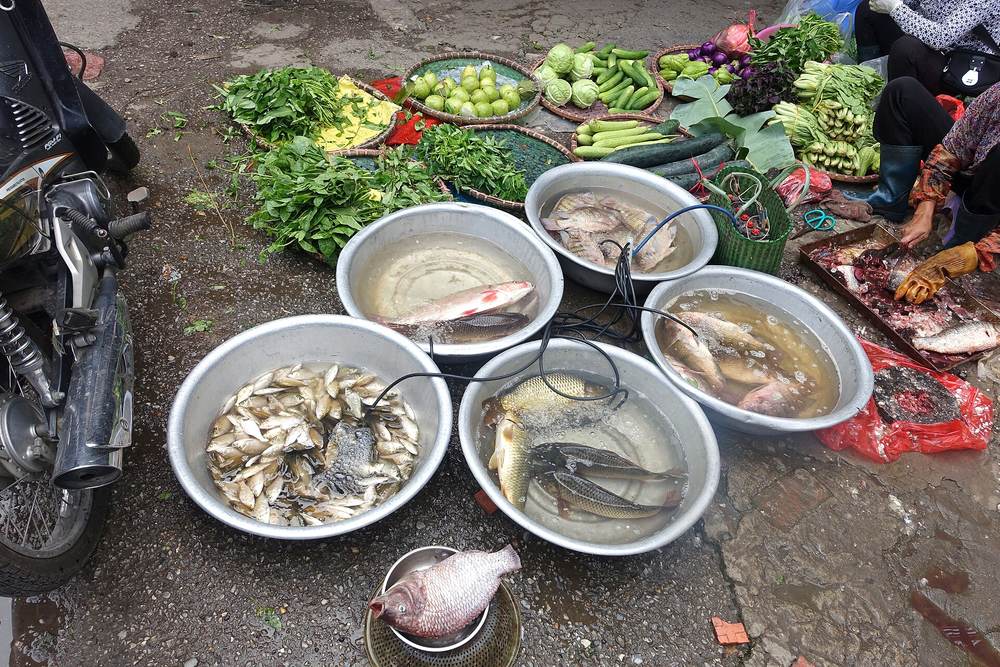
Vietnam runs a wider range. Street food or a local eatery is $1 to $5. A mid-range restaurant in a tourist area is $8 to $20 per person. Higher-end places charge more, and there is no ceiling on that. A $3 or $4 meal should be very satisfying. If your budget cannot stretch to that, the question is what you plan to eat instead. The mechanics matter here: a bowl of pho from a pavement stall arrives within about ninety seconds of sitting down, you eat it in ten minutes, and the bowl is cleared before you have finished wiping your chopsticks. There is no lingering. A sit-down restaurant in a tourist strip takes an hour and costs four times as much, and the food is frequently worse. The stalls cluster near markets and outside schools, and they sell out — a place that looks shut at seven in the evening is not closed for the day, it has simply run out of broth. Go at breakfast or lunch.
This matters because most people underestimate how much of a trip is just food, and how quickly restaurant meals at the upper end of a local range add up over weeks. Ten dollars a day on food in Vietnam is generous. Twenty is easy to spend without noticing. The gap between those two figures over a ninety-day trip is roughly $900, which is a return flight, or three months of rent somewhere cheap. Coffee is the quiet budget leak: a sit-down cafe in a tourist area charges several times what a plastic stool on the corner does for the same drink, and the corner version is usually stronger.
Six Months in Southeast Asia
A couple backpacking Southeast Asia for six months spent $13,581 in total. That works out to roughly $2,260 each per month, or about $75 per person per day. That figure buys hostel beds or basic hotel rooms, sightseeing whenever you want, sit-down restaurant meals multiple times a day, local transport, tourist shuttle services and the occasional short-distance flight.
Read that list again. Nothing on it is extravagant. No luxury hotels, no private drivers, no fine dining. It is a comfortable mid-range backpacker existence, and it costs $75 a day per person. Anyone planning on $30 a day for six months in the region is planning a different trip — one with dorm beds, cook-your-own meals and very little paid transport. The distinction is worth spelling out, because the two trips look identical in photographs. The $30 version means six-bed dorms with a fan, buying fruit and rice from markets, walking or renting a bicycle instead of paying for a minibus, and skipping the paid attractions in favour of the ones that are free. It is entirely doable, and plenty of people do it for months at a time. It is just a different trip, and the friction shows up in small ways: you spend more of each day solving logistics, you eat where you are rather than where you want to be, and a missed bus becomes a genuine problem rather than an inconvenience.
The $75 version absorbs those problems. When a bus breaks down on a mountain road at midnight, the difference between the two budgets is whether you sleep in the bus or pay for a room in the nearest town. That is what the extra money buys — not luxury, but the ability to make a bad day end. Over six months, something will go wrong. Budgeting for the recovery is as important as budgeting for the trip.
Getting Around on a Budget
A 10-day pass usable within a two-month window costs $400 to $550. It makes sense if you are covering four or more countries. For single-country travel, point-to-point tickets are usually cheaper, and often considerably so.
The pass is not a bargain by default. It is a bargain in a specific situation. Four countries in two months means a lot of long-haul legs, and a pass smooths those out. One country means short hops, and short hops bought individually cost less. The $400 to $550 is a real figure, not a marketing one, and it is worth checking against what your actual route would cost in single tickets before committing. The catch most people miss is the reservation fee. On many fast trains the pass covers the fare but not the seat, and the supplement is charged separately, per leg, and it is not small on popular routes in high season. Add those up across a dozen legs and the pass loses some of its shine. The other catch is the window: ten travel days inside two months sounds generous until you realise a long overnight leg eats one of them, and a day trip eats another. Work out how many days you will actually be on a train before you buy. If the answer is fewer than eight, single tickets are almost certainly cheaper.
On a visit timed around one sight, an advance ticket protects the whole day.
Buses are the other half of the equation and rarely get mentioned. Overnight buses cost a fraction of the train fare on the same route, they leave from city-centre stations rather than out-of-town rail terminals, and on many routes in this part of the world they are simply faster. The trade is comfort — a reclining seat rather than a berth, and a driver who takes corners with conviction. For a route of eight hours or less, most people take the bus and pocket the difference.
Accommodation, SIM Cards and the Rest
Hotel prices in some markets run $50 to $100 per night. That is not backpacker territory, but it is worth knowing where the ceiling sits so you can recognise a good deal when you see one.
Mobile data is one of the few genuinely cheap things left. Azerbaijan has three operators — Azercell, Bakcell and Nar mobile. Azercell has the largest coverage and low prices for calls and internet. For tourists, the best offer is unlimited internet for a month at 30AZN, which is $17. That is a month of data for the price of two street meals. Buying it means finding an operator shop rather than a kiosk, bringing your passport, and waiting while the clerk registers the SIM against your document — a process that takes ten or fifteen minutes and cannot be rushed, because the registration is a legal requirement and the kiosks cannot do it. Do it on your first day. Coverage is good in the cities and along the main highways, patchier in the mountains, and there is no point buying the plan on your last afternoon.
In Jordan, the Jordan Pass starts at about $99 and bundles your visa with entry to Petra and 40 other sites. Falafel dinners cost $1 to $2. Wadi Rum desert camps run $25 to $40. The pass is the priciest single entry on this list, but if Petra is on your itinerary it pays for itself almost immediately. Buy it before you arrive, not at the border — the visa fee is waived only if the pass is purchased in advance, and the confirmation has to be printed or saved offline, because the border post has no reliable wifi and the queue behind you will not wait while you find a signal. Petra itself takes a full day at minimum, and the walk from the entrance to the Treasury is a good forty minutes on its own, so start early. The desert camps are cold at night in winter and the price rarely includes the jeep tour, which is quoted separately and worth agreeing on before you arrive rather than after.
The Number That Matters
The cost of living in the cheapest South American country is $730 per month. That is a monthly figure, not a daily one, and it covers living costs rather than travel costs. It is still a useful anchor. If you can live somewhere for $730 a month, you can travel there slowly for something in that region, and that changes what a long trip looks like. Living costs mean rent on a small flat, utilities, groceries cooked at home, a local phone plan, and transport within one city. Travel costs mean all of that replaced by movement — a different bed every few nights, every meal bought, every bus paid for. The two are not the same number, and the travel version is always higher. But the gap between them tells you something useful: the slower you move, the closer the travel figure drifts toward the living figure, because the fixed costs of arriving somewhere get spread across more days.
So the honest range for a backpacker is wide. $1 to $5 for a meal in Vietnam, $11 for a three-course lunch with wine in Portugal, $17 for a month of mobile data in Azerbaijan, $400 to $550 for a multi-country rail pass, $13,581 for six months for two people in Southeast Asia. None of these numbers are guesses. They are what people actually paid.
The trick is not finding the cheapest number. It is knowing which number applies to the trip you are actually taking. A single-country trip and a four-country trip have different maths. A street-food trip and a restaurant trip have different maths. Pick the numbers that match your plan, add them up honestly, and then decide whether you can afford the plan or need a different one. The most common mistake is not overspending — it is building a budget from the cheapest figure in every category and then being surprised when the trip costs what the middle figure predicted. Budget the middle. Keep the cheapest figures as a buffer for the weeks when everything goes right, and you will come home with money left rather than a credit card balance.
Leave a Reply