Some links on this page are affiliate links. If you book or buy through them, we may earn a small commission at no extra cost to you. It never changes what we recommend — every price here is one we would pay ourselves.
A backpacker eating a mix of street food, bakeries and the occasional sit-down restaurant spends $8 to $15 a day on food. If you are spending $12 a day on restaurant meals, a kitchen can pull that toward $5 or $6.
What Things Cost
Burkina Faso does not have a Ha Long Bay problem. There is no single splurge that swallows the week. Costs arrive in small pieces, and the total depends almost entirely on where you sleep and whether you cook.
Start with the ground figure. A backpacker eating a mix of street food, bakeries and the occasional sit-down restaurant spends $8 to $15 a day on food. That range holds in Ouagadougou and it holds in Bobo-Dioulasso. Above it, the numbers climb fast and quietly.
What that money buys is worth describing, because it explains why the range is so stable. Street stalls in Ouagadougou sell grilled chicken or fish with a heap of attiéké or rice for a dollar or two, served on a plate you hand back when you are done. Bakeries turn out baguettes and croissants in the morning, and a baguette with a Laughing Cow wedge is a breakfast that costs less than a coffee in most capitals. The occasional sit-down meal — a plate of riz gras, a bowl of tô with sauce, a brochette with fries — is the top of the range, and in Bobo’s old quarter it is still a modest bill. The reason the range holds in both cities is that the cheap end is the same cheap end everywhere: the same stalls, the same bread, the same grilled meat at dusk.
The single biggest lever is a kitchen. Access to a guest kitchen in a hostel cuts food spending by 40 to 60 percent compared with eating every meal in restaurants from a hotel base. That is not a small adjustment. If you are spending $12 a day on restaurant meals, a kitchen can pull that toward $5 or $6. Over two weeks, the difference is real money.
The catch is that guest kitchens are not evenly spread. Ouagadougou and Bobo-Dioulasso have hostels where a shared kitchen is part of the deal; smaller towns often have nothing of the sort, and the guesthouse owner will look puzzled if asked. Shopping for the kitchen is its own small project. Markets sell tomatoes, onions, rice, millet, beans, eggs and whatever greens are in season, and the produce is cheap enough that a market run for two or three days of cooking often costs less than one restaurant dinner. Meat is bought from a butcher stall and cooked the same day, because refrigeration is not a given. The first shop takes an hour of wandering and pointing; after that it is routine.
Travellers argue about the ceiling. One couple who spent a year moving around Asia, including Southeast Asia, wrote that a $30 daily limit is not realistic unless you stay a long time and live more like a local, cooking instead of eating out. The same logic applies here. A $30 day in Burkina Faso is possible. It is also a day spent cooking, walking, and not moving very far.
Getting Between Towns
Long-distance transport is where budgets go sideways. Budget airlines can flash tempting prices for covering long distances, but the honest best friend of a thin wallet is overland travel. It is slower. It is also cheaper, and in this part of West Africa it is frequently the only option.
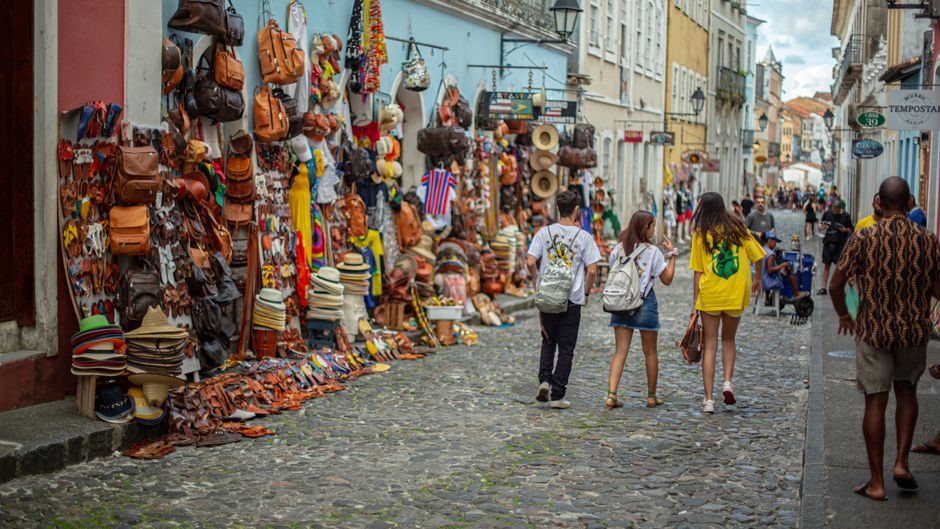
Buses and bush taxis between major towns cost a fraction of a flight, and the road itself is the experience. That is not a consolation prize. It is the trip.
The mechanics matter more than the prices. The main routes — Ouagadougou to Bobo-Dioulasso, Bobo on to Banfora, Ouaga east toward Fada N’Gourma — are served by buses that leave from a station or a roadside lot, usually early, and often not quite on the hour printed on the board. Tickets are bought at the station or from a tout who finds you before you find the counter. Bags go on the roof or in the aisle. Departure happens when the vehicle is full, which can mean twenty minutes or two hours of waiting in the heat, and there is no announcement when it finally starts moving. Bush taxis — the shared station wagons — run the same logic at a smaller scale, filling up one passenger at a time, and they are the standard way to cover the last stretch to a village.
For anything timed and popular, reserving first is simply the lower-risk option.
The trade is time. A route that takes an hour in the air can take a full day on the ground. Budget for that, not just in money but in days. A two-week trip that tries to cover five cities by road will spend most of its hours in transit.
What typically goes wrong is the connection. Two legs that look adjacent on a map may not run on the same day, and the second vehicle may leave before the first arrives. Locals solve this by leaving at dawn and by asking at the station the day before, not by trusting a schedule. Arriving somewhere after dark with no bed booked is the other common mistake; in smaller towns the guesthouse may already be locked for the night, and the search happens by torchlight.
City Versus Countryside
Daily budgets shift depending on where you are. In the cities, accommodation and restaurant meals set the floor. In smaller towns and villages, food and lodging come cheaper, but transport to reach them costs more, and the cheap beds are fewer.
The practical adjustment is to spend longer in fewer places. A week in one town with a kitchen beats four days spread across three towns paying for restaurant meals and bus tickets. The per-day number drops. The experience does not.
Village life runs on a different clock, and it is worth saying what that looks like on the ground. The market may operate on a rotating cycle rather than every day, so the town that is bustling on Tuesday can be shuttered on Wednesday. Meals are whatever is cooked that day, and asking for a menu is a category error. Tea is brewed and poured in rounds and takes as long as it takes. The money saved in a village is real, but so is the time spent waiting for the one vehicle out, and the honest accounting puts both on the same ledger.
Some travellers report spending around $40 a day, and that figure does not include airfare. Not even a disciplined budget can fold a long-haul flight into a daily rate. Treat the flight as a separate line item and the on-the-ground number as something you can actually control.
Where The Money Goes
For context on what “expensive” means elsewhere: luxury safaris booked through a local operator typically run from $600 per adult per day up to $1,500. Luxury-plus safaris start at $1,500 per person per day and can exceed $5,000. Those are different trips entirely, and they are useful only as a reminder of what Burkina Faso is not.
The same goes for ski country. Lift tickets at Crystal Mountain, Michigan, start at $19, which is a bargain in that world and irrelevant in this one. Ha Long Bay cruises in Vietnam range from $60 for a budget day trip to over $400 for a two-night luxury cruise on a private junk. Burkina Faso has no equivalent single line item. Its costs are distributed, small, and daily.
That distribution is the point. There is no one booking that ruins the budget. There is a hundred small ones, and the kitchen is what keeps them down.
The Honest Number
A realistic daily budget for a backpacker here sits somewhere between $25 and $40 once food, a bed and local transport are counted. Push it lower with a guest kitchen and overland travel. Push it higher with hotels and restaurant meals three times a day.
The $8 to $15 food range is the anchor. Everything else bends around it. Cook some of your own meals and the 40 to 60 percent saving is not a theory, it is the difference between a two-week trip and a three-week one.
Plan for the flight separately. Plan for the road generously. The country rewards people who move slowly and eat where they sleep.
Leave a Reply