Some links on this page are affiliate links. If you book or buy through them, we may earn a small commission at no extra cost to you. It never changes what we recommend — every price here is one we would pay ourselves.
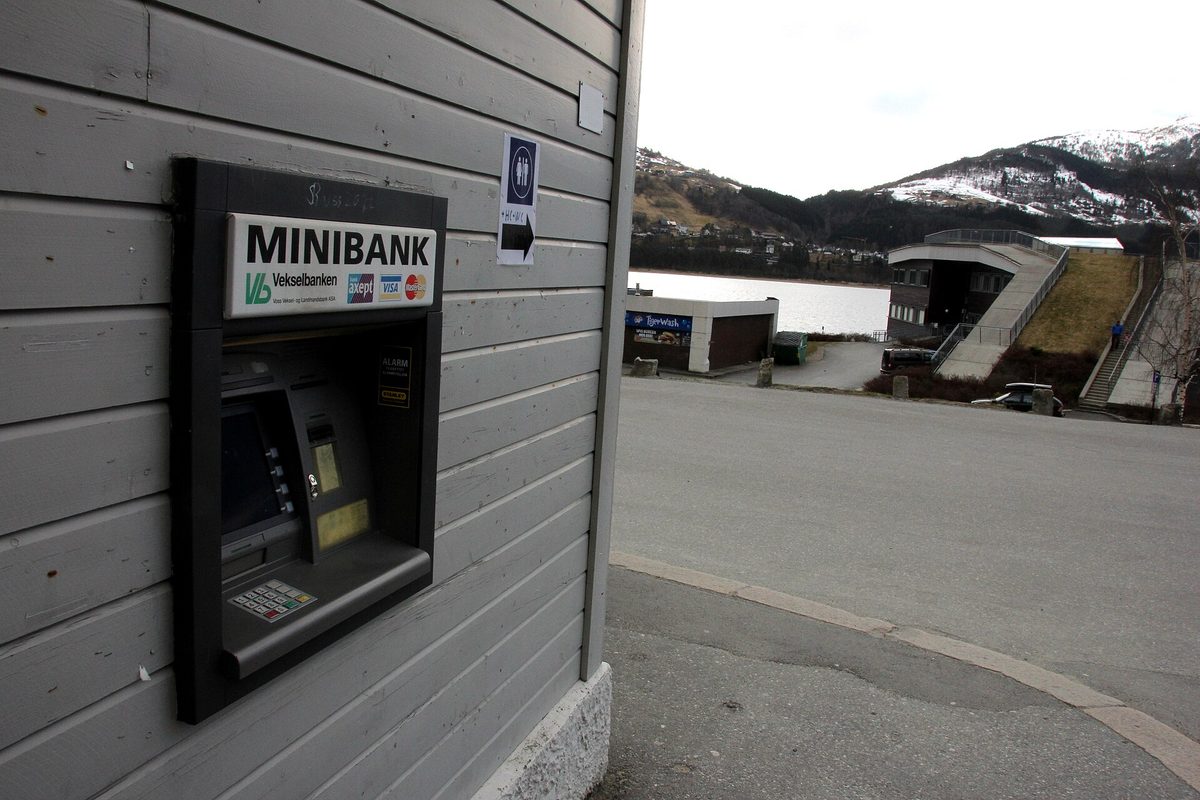
A regular bank card from home, used for a year abroad, produced £500 in fees. A single foreign ATM withdrawal can cost up to $5 if your bank is outside the Global ATM Alliance and charges for the privilege.
What the Fees Actually Cost
A regular bank card from home, used for a year abroad, produced £500 in fees. That was 2015 into 2016, before the newer card options existed. At 1.08 dollars to the pound, that is $540. The traveller’s own estimate of what it cost them: an extra month of travel, given up to bank charges.
That is the whole argument in one number. Not a coffee. Not a museum ticket. The fees. The number is also easy to reconstruct from the other direction, which is what makes it convincing. Nobody sets out to spend $540 on banking. It arrives in pieces, most of them small enough to shrug off at the time.
For the famous sites, pre-booked entry beats turning up and hoping.
A single foreign ATM withdrawal can cost up to $5 if your bank is outside the Global ATM Alliance and charges for the privilege. Five dollars per withdrawal does not sound like much until you count the withdrawals. Two a week for a year is 104 withdrawals. That is $520, which is very close to the £500 figure above. The two numbers are describing the same problem from different angles.
What gets missed in that arithmetic is the second fee sitting behind the first. The machine’s operator usually adds its own charge on top of whatever the home bank takes, and it is disclosed on the screen at the moment of withdrawal, in the local currency, in small type, after the PIN has been entered. In much of Southeast Asia that operator charge is a flat amount per transaction rather than a percentage, which means the cost of taking out a small amount is proportionally brutal. Drawing the equivalent of $40 and drawing the equivalent of $200 can carry the same fixed fee. The practical response is to withdraw less often and take more each time, which is the opposite of what feels safe when carrying cash in an unfamiliar city.
If you can find an account that does not charge for foreign ATM withdrawals, the saving is that $5, every time, for as long as you hold the account. Banks inside the Global ATM Alliance are one route to that. The other route is the newer class of app-based accounts that simply build the fee waiver into the product and make their money elsewhere. Either way, the qualifying condition is almost always the same: use the card for a deposit or a minimum monthly spend, or accept a monthly account fee that is smaller than the withdrawal fees it replaces. That trade is worth running on paper before switching, because a monthly account fee charged for twelve months is a real cost, and if the card is rarely used abroad the waiver buys nothing.
The Bill That Surprises People
Money leaves your account from random places. You call your bank. You are abroad, so you call from a Thai SIM card, and the call itself costs £50. At 1.08, that is $54, spent to report a theft, on top of whatever was taken.
This is the part that does not appear in the fee schedules. The emergency call. The replacement card couriered somewhere. The hours on hold. The £50 call is the smallest line in that column.
The process itself is worth knowing before it happens, because the sequence is not obvious. The bank freezes the card, then asks for a police report for anything disputed, and the police report is a form obtained in person at a station, in a language the traveller may not read, during hours that may not match the hours the traveller is awake. The replacement card is then either couriered to an address, which requires having an address, or collected from a branch, which requires being in a city that has one. In between, the account is frozen, which is its own problem when the account is also the source of rent, hostel deposits and onward transport. Locals generally avoid the whole situation by keeping the card that matters in a different bag from the one that gets carried around, and by keeping a second card, from a different bank, dormant but active. That second card costs nothing while unused and removes the courier problem entirely.
Card skimming at standalone machines is the other quiet risk, particularly at night, at machines bolted to the outside of a convenience store rather than set into a bank wall. The tell is usually a loose or oversized card slot, or a keypad that feels raised. Using a machine inside a bank lobby during opening hours, where there is a camera and a member of staff, is the low-effort mitigation.
What You Bring and What You Withdraw
One traveller took about 500 euros in cash and still withdrew from ATMs at the end of the trip. That is $540 in cash, carried, plus ATM withdrawals on top. Cash did not remove the need for the ATM. It just delayed it.
A SIM card plus credit cost €13.03. That is $14.07.
For daily budgeting, a rough working figure is $60 to $70 per person per day. The breakdown behind it: $20 on food, $20 on dinner, $25 on entry fees, $7 on transport. Those four items total $72, so the range is honest rather than precise. It is a starting point for deciding how much cash to carry, not a prediction.
How much cash to actually carry varies by country more than by budget. In Japan, cash still opens doors that cards do not, and the small restaurants and temples that make a trip worth taking are frequently cash-only. In much of Western Europe, the reverse is true, and carrying a large roll of notes is a liability rather than a convenience. The useful habit is to arrive with enough local currency for the first day and a half, since airport exchange counters and airport ATMs are the two most expensive places on earth to get money, and to work out the rest once the local options are visible. Airport exchange counters typically advertise a rate with no commission, which sounds better than it is; the margin is buried in the rate itself, and it is not small.
Cards, Points and When the Fee Is Worth It
If you use a credit card heavily, moving points into airline mileage programs can beat redeeming them for products. One example: Berlin for 50,000 Latam miles plus taxes, on specific dates. Whether that is a good deal depends on the taxes and the dates, but the valuation tends to come out well above what the same points buy in the rewards catalogue.
For frequent travel, a premium card can make sense. The American Express Platinum annual fee rose to $895 in 2025. For that you get Centurion lounge access, airline credits, and reimbursement for Global Entry or TSA PreCheck. If you fly five or more times a year, the lounge access and the credits can add up. If you fly twice, they will not, and the $895 is just $895. Do the arithmetic on your own trips before applying.
For everyday spending abroad, two German accounts come up repeatedly: DKB, which issues Visa, and C24-Bank, which issues Mastercard. The reason they come up is the same reason the Global ATM Alliance comes up: the withdrawal fee.
The card network matters less than people assume. What matters is the rate applied at the moment of conversion, which is set by the network and is usually close to the interbank rate, and the foreign transaction fee, which is set by the issuer and is usually a percentage of the purchase. A card with no annual fee and no foreign transaction fee beats a card with lounge access and a three percent charge on every meal, for anyone not flying often enough to use the lounge. That is the whole comparison, and it takes about ten minutes with two statements and a calculator. Reading the fee schedule before applying is the part most people skip, and it is the only part that changes the outcome.
The Small Kit
Some hostels provide a towel. Some charge extra for one. Some have no towel option at all. A small travel towel solves it either way. A lightweight one that dries quickly does the job without much weight.
An iPhone 11 case with an integrated card slot is useful for hotel room keys and a transit card, so you are not digging through a bag at the door. A screen protector is worth having if your phone has already been dropped more than once.
The bag material worth knowing: 30D nylon tarpaulin, waterproof, 120g. That is genuinely light, and it holds up.
None of this is the expensive part. The expensive part is the $5 withdrawals, the $54 phone call, and the $540 in fees that could have been another month.
Leave a Reply