
Some links on this page are affiliate links. If you book or buy through them, we may earn a small commission at no extra cost to you. It never changes what we recommend — every price here is one we would pay ourselves.
At the other end, a couple travelling in 2024 spent €27,700 across a full year — about $29,916. What makes the $600 case instructive is not the amount but the shape of the constraint.
A 19-year-old planning a trip to Japan has about $600 to spend once they land. That is the whole number. No flights, no insurance, no rail pass. Just $600 for however long they last.
That figure sits at one end of the scale. At the other end, a couple travelling in 2024 spent €27,700 across a full year — about $29,916. Two people. A completely unfrugal budget, by their own description, and by far their biggest expense category. It was also the one category that moved.
Both numbers are real. Neither is wrong. That is the problem with asking what a week of travel costs.
What makes the $600 case instructive is not the amount but the shape of the constraint. Six hundred dollars in Japan, a country where a bowl of ramen at a counter can be a full meal and a temple entry is often a coin-drop, lasts roughly a fortnight if the traveller sleeps in hostels, eats at convenience stores and does not take the bullet train. It lasts four days if they do. The budget did not change. The decisions did. Anyone building a trip around a single landing figure should work out which of those two travellers they are before booking anything, because the same $600 produces two entirely different holidays depending on whether transport is a plane or a bus, and whether dinner is a restaurant or a supermarket.
The Daily Floor
Start with the cheapest verified case. Four Indonesian islands — Java, Bali, Flores and Komodo — at roughly €6.97 per person per day on the ground. That converts to about $7.53. Over a 29-day trip, two people spent €403.99, or $436.31 total.
All other costs on that same trip came to €88.85 for two people across 29 days. Per person per day, that is €1.53 — $1.65. Visas, entry fees, the small stuff that never makes it into a headline figure.
For the big attractions, buying tickets in advance skips the worst of the queues.
Add those two together and you get roughly $9.18 per person per day. A week on that basis lands near $64. That is not a typo and it is not a national average. It is what two specific people actually spent, and it depended on where they were.

Food and drink elsewhere ran about €8 per person per day, or $8.64. Note the caveat attached to that number: they paid no attention to budget at all and ate plenty of snacks in between. Careful spending would have pulled it lower.
For a broader middle ground, one estimate puts daily costs at €20 to €30 — $21.60 to $32.40 — as a rough working range. A Thailand backpacking budget described as “luxury” runs €30 to €45 a day, or $32.40 to $48.60. Same country, same traveller type, a gap of more than $16 per day depending on how you eat and where you sleep.
The mechanics behind that gap are mundane. A dorm bed in a guesthouse with a shared bathroom and a fan costs a fraction of a private room with air conditioning, and the difference between the two is often less than the price of a single restaurant meal. Breakfast included swings a day by a couple of dollars on its own. Street food stalls that open for the dinner rush and pack up by nine are consistently the cheapest calories available, and the portions are not smaller — they are just served on plastic stools. The travellers who hit the low end of any range are almost never doing anything clever. They are walking instead of taking taxis, drinking beer from a shop rather than a bar, and staying one neighbourhood back from the beach or the old town, where the same room costs noticeably less for the same distance on foot.
Where the Money Leaks
One line item explains more variance than any other: planes.
A single leg of a flight within South America cost more than an entire trip elsewhere. That is the comparison as stated. If the goal is a low budget, the advice that follows is blunt — forget planes. Ground transport is slower and cheaper, and it is the single biggest lever on the total.
Then there are the charges that arrive whether you planned for them or not. Check-in at the airport counter on a budget airline can cost €10, which is $10.80. Do it at home instead and it is nothing. Print the boarding pass before you leave.
Ground transport has its own arithmetic. On a scooter, running costs come to €3 to €7 per day — $3.24 to $7.56, roughly 150 to 250 baht. A litre of petrol is about 30 baht, or $0.86. Cheap per litre. Not cheap if you fill up daily for a month.
Hiring a driver-guide in Bali cost €60 per day, or $64.80, for two days of excursions. That is more than a week of the Indonesian daily budget above, spent in 48 hours. It was, by the traveller’s own account, worth recommending. Some costs are worth the money and still need to be counted.
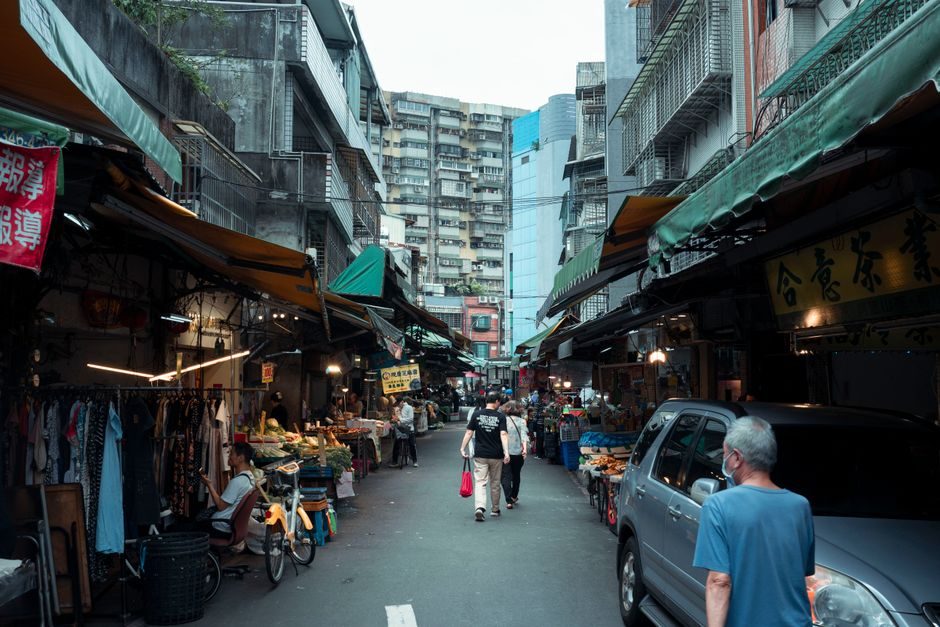
Overland travel has its own hidden costs, and they rarely appear in the quoted ticket price. Overnight buses that arrive at four in the morning leave the passenger paying for a room they will not check into until noon. A ferry crossing that looks cheap often adds a night in a port town at both ends. Tuk-tuk and motorbike-taxi drivers quote a price to foreigners that is a multiple of the local rate, and the fix is to agree the fare before getting in and to walk away once if the first number sounds wrong — there is almost always another driver. None of these are large sums individually. Together they are the difference between the $9.18 day and the $21.60 day.
Gear and Baggage
A 30-to-40-litre backpack covers weekend trips, city breaks and minimalist travel. Pack light, do laundry on the road, and the same bag handles longer trips. That is the argument, and it holds up: laundry is cheaper than checked luggage, and a smaller bag removes the temptation to overpack.
The practical version of this is that a bag that fits in an overhead locker never gets charged, never gets lost, and never forces its owner to wait at a carousel. Hand-washing in a sink and hanging clothes on a line takes an evening and costs nothing but soap, and most guesthouses have a laundry service that returns clothes the next day for a fraction of what an airline charges for a single checked bag. The one genuine upgrade worth considering is a bag with a proper hip belt, because a week of walking between bus stations with weight on the shoulders is the thing that most reliably ruins a cheap trip.
None of this is complicated. The numbers are the numbers.
Doing the Sum
A week at $9.18 a day is $64. A week at $21.60 a day is $151. A week at $48.60 a day is $340. Add a $64.80 driver day and a $10.80 airport check-in and a $600 budget starts looking different than it did on paper.
The spread between the cheapest and most expensive week in these figures is more than $275 per person. Same activity. Same general idea of a trip. The difference is planes, paid excursions, counter check-ins and snacks.
So the honest answer to what a week costs is a range, and the range is wide enough to be useless unless you know which end you are aiming at. Pick the end first. Then the daily number follows.
Leave a Reply