Some links on this page are affiliate links. If you book or buy through them, we may earn a small commission at no extra cost to you. It never changes what we recommend — every price here is one we would pay ourselves.
Budget accommodation runs about $15 to $25 per night for a hostel bed or basic room. Budget hotels sit higher, between $30 and $60.
What Malawi Actually Costs
Malawi does not have a single daily price. It has a low one and a higher one, and most travellers drift between them depending on how long they stay and whether they cook.
Start with the floor. Budget accommodation runs about $15 to $25 per night for a hostel bed or basic room. Budget hotels sit higher, between $30 and $60. That gap matters over a two-week trip. Fifteen dollars a night for fourteen nights is $210. Thirty dollars a night for the same fortnight is $420. Nothing else in your budget swings that hard except transport.
The floor is not the same everywhere, either. In Lilongwe and Blantyre the cheap beds cluster around the bus stations and the old town centres, in buildings that were once guesthouses for civil servants and now rent by the night to whoever turns up. Rooms tend to be small, clean enough, with a shared bathroom down the corridor and a bucket for when the water goes off, which it does. On the lakeshore, the same money buys a reed-walled bandas a few metres from the water, but the price creeps up the closer you get to Cape Maclear in high season, and the cheapest beds there are often full by early afternoon because everyone arrives on the same minibus from Monkey Bay.
Food is where Malawi rewards people who slow down. Local eateries and street food vendors start at $4 to $6 for a meal. A mid-range restaurant meal runs $15 to $30. Eat local twice a day and you are spending maybe $10 to $12 on food. Eat at sit-down places twice a day and you are spending $30 to $60. Over a week, that is the difference between roughly $80 and roughly $400.
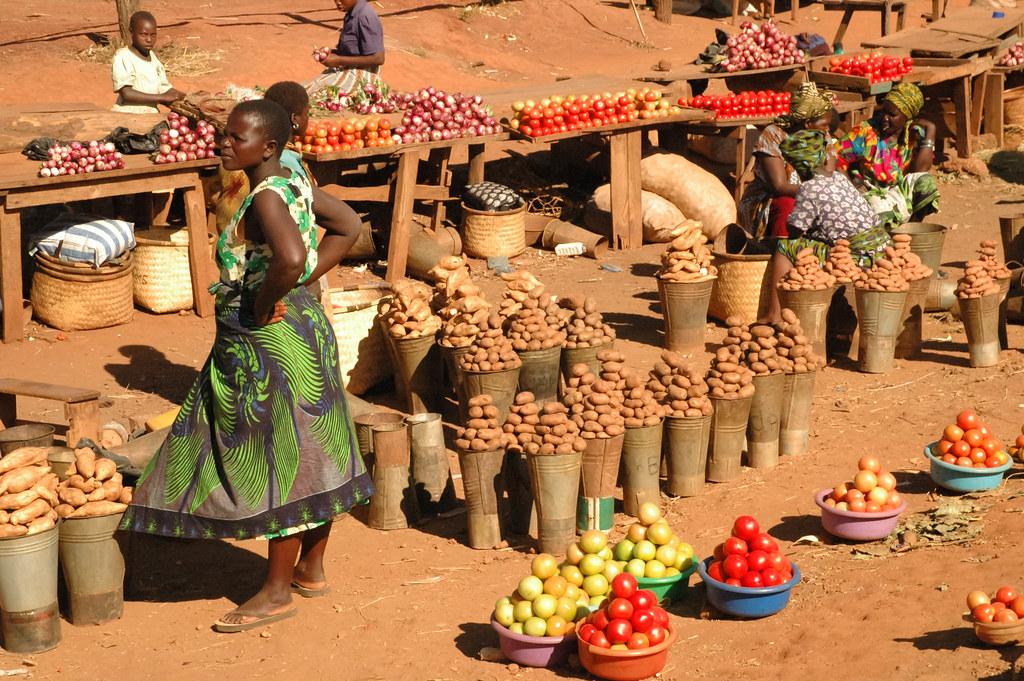
What local food actually looks like matters here. The staple is nsima, a stiff maize porridge served with a relish of beans, greens or small dried fish, eaten with the right hand and costing very little at a roadside stall. Chambo, the lake fish, is the dish Malawi is known for, and it is cheap bought grilled at a market and considerably less cheap in a hotel dining room facing the water. Supermarket prices in the cities are closer to what a European shopper would recognise, so self-catering saves money mostly on the staples — rice, maize flour, tomatoes, onions — and barely at all on imported anything.
The Trekking Comparison
It helps to hold Malawi next to places with published trekking numbers, because the shape of the costs is similar even when the country is not.
In the Himalayan regions, lodging on the more remote routes runs $10 to $12 per night at the maximum rate. Those lodges are basic. No attached washrooms on some routes. The price holds steady across every expedition in that region, which is unusual. Shorter treks of three to four days, done solo, can come in as low as $150 total.
That $150 figure is useful as a benchmark. A three-to-four day solo trek elsewhere costs $150. In Malawi, $150 covers roughly six to ten nights of budget accommodation, or about two weeks of local food. The comparison is not exact, but it tells you where Malawi sits: cheaper than a Himalayan trek on a per-day basis, once you are on the ground.
The mechanics differ, though, and that is where the comparison breaks down. Himalayan lodges are strung along a single trail with a captive market and a cartel-like fixed rate. Malawian guesthouses are scattered across a country with no such trail, so prices float with demand and with how far the nearest tarmac is. A room in a lakeshore village reached by an hour of dirt road can be half the price of one on the main road, and the owner will often knock a little off for a stay of several nights without being asked. Walking here is not a commercial trekking circuit; it is the Zomba Plateau or the slopes of Mount Mulanje, where guides are hired by the day and the huts are run by the forestry department rather than a lodge chain.
What Tour Prices Leave Out
Advertised tour prices are not the real cost. Budget an extra 25 to 30 percent on top of whatever figure you are quoted, to cover activities, meals, tips and visas. A tour advertised at $1,000 is a $1,250 to $1,300 trip. This holds whether the tour is three days or three weeks, and it catches people who budget to the sticker price and then run out of money in week two.
For a mid-range trip from the US, the total runs about $2,000 to $3,500 per person, including flights, accommodation, food, activities and insurance. Budget travellers can do $1,200 to $1,800. Luxury starts at $4,000 and climbs. Destination drives most of that spread. Thailand costs half of what Japan costs, and Malawi sits closer to the Thailand end than most people assume.
The hidden costs on a Malawian tour are usually the ones that feel rude to refuse. Park entry fees at places like Liwonde or Nyika are charged per person per day and are rarely bundled into the quoted price. Boat trips to see the fish eagles at the lake, guided walks, and the informal fee for a village visit all come out of pocket on the day. Tips are expected for guides and drivers and are calculated per day, not per trip. And the domestic flight or long bus transfer that connects the northern and southern halves of the country can quietly add a serious sum if the itinerary was priced assuming road travel that turns out to be slower than advertised.
For anything with a timed entry, booking the slot first removes the guesswork.
Visas and Small Costs
Visas are easy to forget. In Sri Lanka, over a 26-day stay, the average daily visa cost worked out to a small but real line item. Malawi’s visa cost is not given here, but the lesson from Sri Lanka applies: divide the visa fee by your number of days and put that number in your daily budget. A $50 visa over ten days is $5 a day. Over thirty days it is $1.67. Length of stay changes the maths.
Cigarettes are worth flagging because they catch smokers off guard. In Sri Lanka, local cigarettes cost around $6 and imported brands up to $9. If you smoke, that is $42 to $63 a week. In Malawi the prices differ, but the pattern of local versus imported does not. Budget accordingly or budget to quit.
The same logic applies to a handful of other small lines that are easy to leave out. A local SIM and data bundle is cheap and worth buying at the airport on arrival, because roaming charges will dwarf it within a day. Bottled water adds up faster than expected in the heat, and the alternative is a filter or purification tablets bought once. Laundry at a guesthouse is usually priced per item and is one of the few services where asking the price first genuinely changes what you spend. And cash is still king outside the cities: ATMs in Lilongwe and Blantyre work, ATMs elsewhere are unreliable, and cards are accepted at very few places once you leave the main centres, so the practical move is to draw enough local currency before heading for the lake or the parks.
Comparing Regions
Thailand is the reference point most backpackers carry in their heads. A week at backpacker level costs about $500, with on-the-ground costs running $310 to $640. The split inside Thailand is between the inland north — Chiang Mai, the rice-terrace areas, Pai — and the islands. Phi Phi, Koh Samui and parts of Phuket push mid-range daily costs to $130 to $180. That is island pricing, and it is the same pattern Phu Quoc shows in Vietnam.
Malawi does not have that island premium. It has a lake, and lake accommodation is cheaper than island accommodation almost everywhere. Use the $130 to $180 island figure as your ceiling for what a comfortable day costs, and the $15 to $25 hostel figure as your floor, and you have the range Malawi sits inside.
One more thing, from someone who travelled Asia and found costs similar across the region: it is hard to make a trip cheaper unless you stay longer and cook your own food. That is the honest answer for Malawi too. The daily rate drops when you stop moving and start living like a local.
The reason is not complicated. Transport is the fixed cost that punishes short trips, because every move between towns eats a day and a fare, and the fares do not shrink just because the stay is brief. A traveller who settles in one lakeshore village for a fortnight and walks to the market each morning will spend less per day than one who ticks off four towns in the same time, and will probably see more. That is the whole trick, and it works in Malawi the way it works anywhere.
Leave a Reply