Some links on this page are affiliate links. If you book or buy through them, we may earn a small commission at no extra cost to you. It never changes what we recommend — every price here is one we would pay ourselves.
A guesthouse in the Hunza Valley runs $5 to $15 a night. Withdrawing $175 from an ATM costs $6 in fees every single time.
The Numbers That Stop You
Pakistan costs less than you think. A guesthouse in the Hunza Valley runs $5 to $15 a night. A meal is about a dollar. That is not a typo or a rare deal found after hours of searching. That is the going rate in a region with some of the best mountain scenery on earth.
It helps to picture what that $5 to $15 actually buys, because the range is wide and the difference matters. At the bottom end, in villages like Gulmit or Passu, a room is often a spare bedroom in a family house: a mattress on a wooden platform, a quilt, a shared squat toilet in the yard, and a door that locks. Hot water arrives in a bucket, heated on a wood stove, and if the power is out — which it often is in the evening — the bucket is what you get. At the top of the range, in Karimabad or Gilgit, $15 buys a proper room with an attached bathroom, a Western toilet, a solar water heater that works on sunny afternoons, and a garden with apricot trees where breakfast is served. The breakfast is usually included and usually the same everywhere: chapati, an omelette, jam, and endless tea.
The Karakoram Highway and Hunza Valley sit at the top of the value list for world-class mountains. Nowhere else delivers scenery at this level for this price. It demands more planning than Nepal, and that friction is exactly why prices have stayed frozen in time. The crowds go where the logistics are easy. The bargains stay where they aren’t.
That friction is concrete. There is no trekking permit office at the trailhead, no booking platform with reviews, no shuttle bus. To get to the trailheads above Hunza you negotiate with a jeep driver in a bazaar, agree a price, and hope the road hasn’t washed out. Sometimes it has. A landslide that closed the Karakoram Highway last week may take a day or a week to clear, and no one can tell you which. Locals treat this as weather, not crisis. They drink tea and wait. Travellers who learn to do the same enjoy the country far more than those who fight it.
What a Day Actually Costs
You can spend a day in Pakistan for $10. Not a bare-bones survival day. A day with a bed and food. India sits in the same bracket. These are the two cheapest countries in South Asia, and most travellers skip both.
The $10 day breaks down roughly like this: a bed for $5, three meals of dal, chapati and vegetables for about $3 total, and $2 for local transport — a shared van seat or a seat in the back of a pickup. Tea is thrown in free almost everywhere, and refusing it is close to impossible. What pushes the daily figure up is not food or lodging but movement. A long jeep ride into the mountains can cost more than a night’s sleep, and a domestic flight from Islamabad to Gilgit costs many times a week of guesthouses. The trick most long-stayers use is to move rarely and stay long. Pick two or three bases, settle in, and walk.
Compare that to the rest of the world and the gap is absurd. In India, a night in one of the best guesthouses costs $29. The Taj Mahal entry fee is $18. A restaurant meal runs around $3. A budget guesthouse in India averages $25 a night.
For the sights most likely to fill, booking first is the safe sequence.
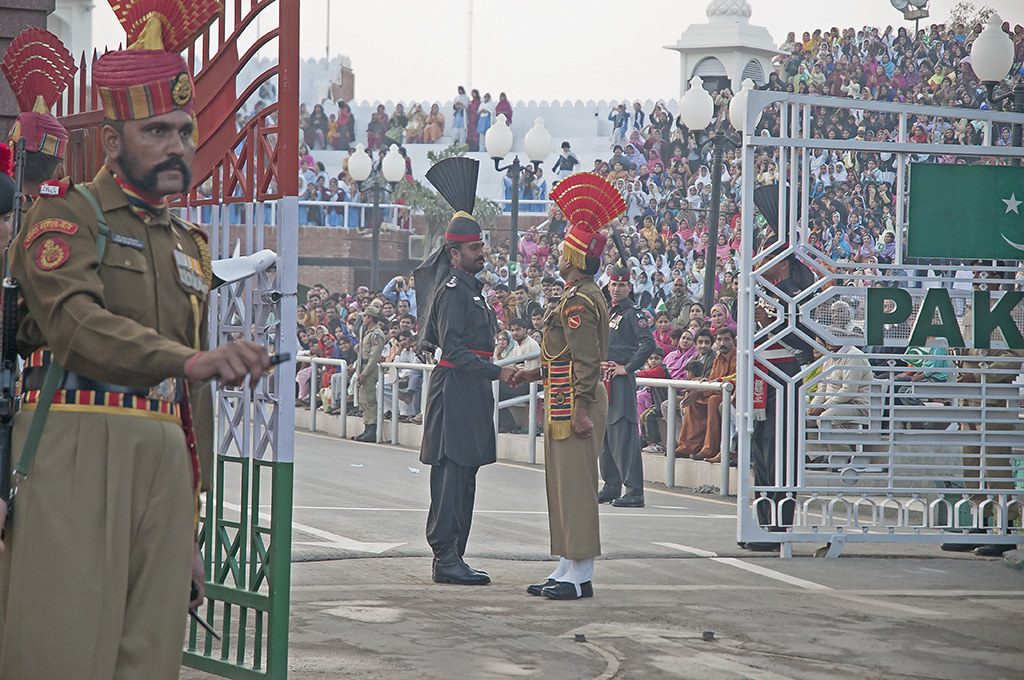
Some of these figures are India, not Pakistan. But they describe the same corner of the world, and the same logic applies on both sides of the border. The rupee’s weakness makes the value exceptional right now. That window will not stay open forever.
The ATM Tax
Getting cash is where the math turns ugly. Withdrawing $175 from an ATM costs $6 in fees every single time. That $175 is 9,000 rupees, and 9,000 rupees is the maximum the machine will dispense. So every withdrawal is capped, and every withdrawal carries the same $6 charge.
Do the arithmetic. Six dollars on $175 is roughly 3.4 percent, before any bank charges on your end. Take out smaller amounts more often and that percentage climbs fast. Take out the maximum every time and carry enough cash to avoid repeat trips to the machine. Cards are not reliable in the mountains. Cash is.
Two practical notes. First, ATMs outside the big cities are scarce and frequently empty — a machine in Gilgit or Aliabad may simply have no cash on a given day, and the queue behind you knows it before you do. Second, many ATMs decline foreign cards outright. Plan withdrawals around Islamabad or Rawalpindi, where there are several machines within walking distance of each other and one of them will usually work. Ask at your guesthouse before you set off; owners know which bank’s machine has been paying out that week.
The other habit worth forming is keeping a reserve. Tuck away enough rupees to cover a night’s lodging and a meal, in a separate place from your main cash. When the road closes and you’re stuck a day longer than planned, that reserve is what keeps the delay an inconvenience instead of a problem. Change small notes whenever you can; shopkeepers and drivers in villages rarely have change for a large note, and the awkward dance of everyone patting their pockets for smaller bills is a daily ritual.
Permits and Paperwork
National park and conservation area permits cost less if you hold a SAARC passport. Nationals of India, Bangladesh, Pakistan, Sri Lanka, Bhutan and Maldives pay roughly 30 to 50 percent of the standard rate. Everyone else pays full price. It is a real discount, and it applies across the region’s protected areas.
For US passport holders, the visa picture is straightforward: 60 days visa-free. That is enough time to move slowly, which is the only way to travel cheaply here. Slow travel means fewer transport costs, longer guesthouse stays, and the chance to eat where locals eat.
The permit process itself is unglamorous but rarely difficult. For most conservation areas in Gilgit-Baltistan, you pay at a small office, often a single room with a desk, a ledger and a hand-written receipt, and you’re on your way in fifteen minutes. The catch is knowing which office, since there’s no central booking and signage is minimal. Guesthouse owners will point you to the right place, and sometimes walk you there themselves. Carry passport photos and photocopies of your passport and visa — several copies, because the request for “one more copy” comes up more often than seems possible. Some areas near the Afghan and Chinese borders require a licensed guide or a permit arranged in advance through a tour operator in Gilgit or Islamabad, and this is the one piece of paperwork worth sorting before you arrive rather than after.
Gear for the Cold Nights
A sleeping bag rated to 1°C (30°F) is the right call. Not for hardcore Karakoram expeditions, but for the nights when plans change and you end up somewhere colder than expected. A bag with that rating gives you enough margin to get stuck somewhere chilly for a night. If it gets really cold, it will still keep you alive until sunrise.
That is the whole packing philosophy for this region. You are not equipping for an expedition. You are equipping for the gap between what you planned and what happened.
The rest of the kit follows the same logic. A headlamp matters more than it sounds, because the power goes out most evenings and a candle stub on a saucer is often the only light in the bathroom. A power bank earns its weight, since charging points are shared and sometimes solar. A light down or fleece layer handles the drop in temperature after sunset even in summer, when days are warm and nights at altitude are not. And a small supply of your own medicine — rehydration salts, something for stomach trouble — saves a trip to a pharmacy that may or may not be open. Locals are unfailingly generous about helping a sick traveller, but the nearest clinic can be hours away, which is a long way to travel for something you could have carried in a pocket.
What $30 to $40 Buys Elsewhere
For context, US passport holders can get 60 days visa-free in Kyrgyzstan, where $30 to $40 a day covers yurt stays, alpine lakes like Song-Kul, and multi-day horse treks. That is the cheapest genuine mountain adventure on the planet after Nepal and Pakistan. Three countries, one budget bracket, and Pakistan sits at the bottom of it.
The pattern holds across South Asia. The places that demand more planning stay cheap. The places that are easy to book cost more. Pakistan is not easy. That is the point.
Leave a Reply