Some links on this page are affiliate links. If you book or buy through them, we may earn a small commission at no extra cost to you. It never changes what we recommend — every price here is one we would pay ourselves.
What that $8.65 buys in practice is usually supermarket food eaten out of a pot. Food at $8.65, and that is with snacks and no discipline.
What a Day Costs
Food and drinks ran about $8.65 per person per day on a recent camping trip. That figure comes with a caveat attached by the people who spent it: they weren’t watching their budget at all, and they ate plenty of small snacks between meals. So treat $8.65 as a loose number, not a floor. Someone actually counting receipts could probably come in under it. Someone eating the same way but paying more attention would land in the same range anyway, which tells you something about how little the snacks mattered next to the big line items.
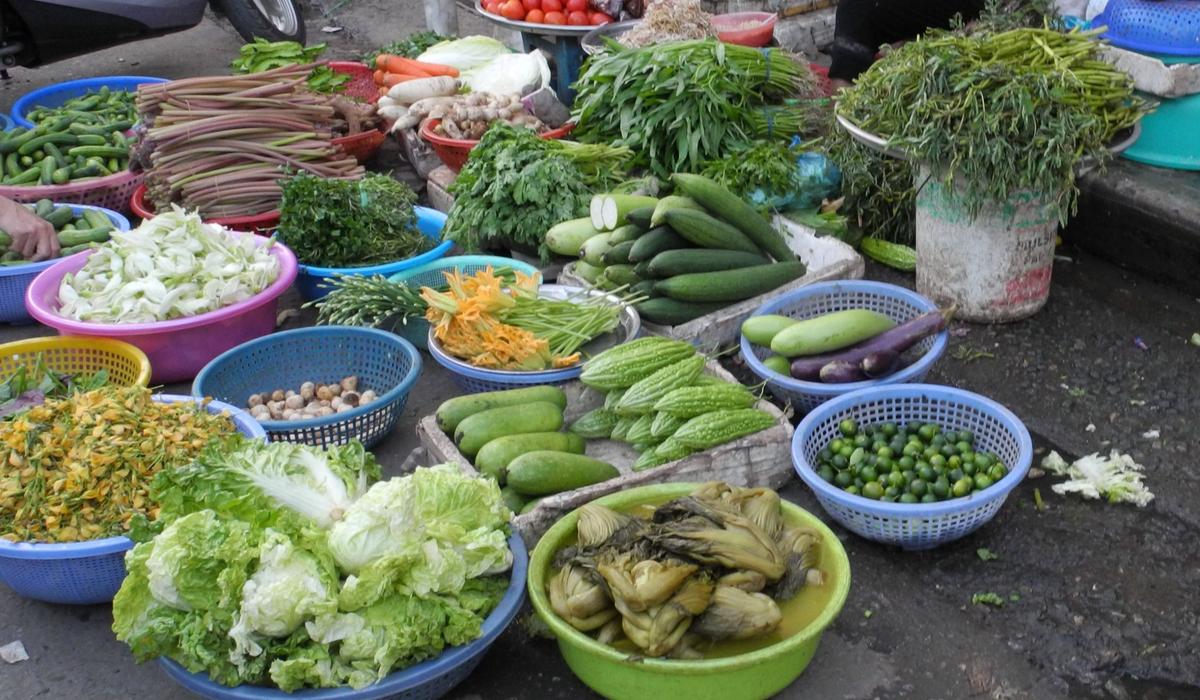
What that $8.65 buys in practice is usually supermarket food eaten out of a pot. Breakfast is oats, instant coffee, maybe a banana. Lunch is bread, cheese, tomato and something tinned, assembled on a rock. Dinner is pasta or rice with whatever vegetables were cheapest that day, cooked on a small gas stove and eaten straight from the pot to save washing up. Meat shows up rarely, because it is heavy to carry and does not keep. Alcohol is the line item that quietly wrecks the average if there is any of it, which is why the no-discipline caveat matters more than it sounds.
The big line items are shelter and transport. Those are where camping starts to separate itself from every other way of sleeping somewhere.
Tents Beat Beds
At one hostel in South Africa, bringing your own tent dropped the cost to 95 ZAR per person. That is about $5.35. Not a room. Not a dorm bed. A patch of ground and access to the facilities, for roughly the price of a coffee in most American cities. Hostels that allow this exist in more places than people assume, and the gap between a dorm bed and a tent pitch is usually wide enough to matter over a week.

The pitch is normally a strip of lawn behind the building, sometimes a gravel terrace on the roof, occasionally a corner of the car park marked off with a rope. Facilities are shared with everyone else in the hostel, which in practice means the same bathroom queue at 7am and the same kitchen scramble at 8pm. What tends to go wrong is drainage. A pitch that looks fine in the afternoon turns into a puddle by midnight if the ground slopes the wrong way, so it pays to look at where the water would run before pitching. The other common surprise is that tent spaces are rarely bookable online, so the arrangement gets made at the desk on arrival, and the desk may not be staffed when the bus gets in.
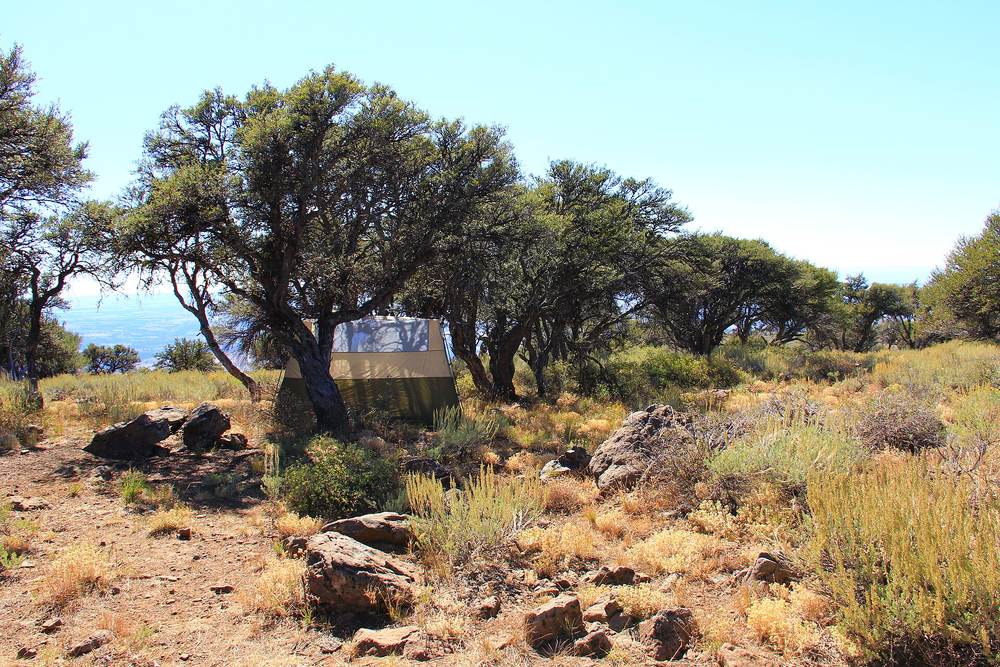
The tent itself matters less than the weight. The one used at Eliminando Fronteras is a Ferrino, 1.7 kg. Small. Light. The people carrying it admit a bigger tent would have been more comfortable. They chose lightness anyway. That is the trade almost everyone makes eventually, and it is usually the right one. You carry the tent far more hours than you sit inside it.
A 1.7 kg tent generally means a two-person, single-wall or lightly built double-wall design with a low profile, pitched with a handful of pegs and two poles. It goes up in a few minutes once the routine is learned, and comes down wet more often than anyone would like, which is the real argument for a slightly heavier tent with a proper fly. The difference in packed size is what decides whether the thing fits in a pack at all.
A 50-liter pack is one of the most common sizes for this kind of travel. It holds clothes, toiletries, shoes and smaller camping gear, and it stays compact enough to carry for hours without wrecking your back. After eight years of full-time travel, one camper reports an average pack weight of around 15 kg. That is the number to aim for. Not aspirational. Just what it settles at when you stop overpacking.
Getting to 15 kg takes a few trips to learn. The pattern is almost always the same: the first packing leaves half the clothes untouched, the second leaves a book unread, and by the third the bag holds roughly what gets used daily plus a layer for cold and rain. Anything that has not been worn by the end of a two-week trip gets left behind at the next hostel, which is why so many of them have a free box by reception full of abandoned fleeces and half-used toiletries.
Two Countries, Two Problems
In California, you will be fairly lost without a car. That is not a small detail. It changes the entire math of a trip. A car means gas, insurance if you own it, parking, and the cost of getting the vehicle there in the first place. Camping saves you on accommodation but the car eats the savings back. New York is the opposite. You can visit without a car, easily, but you are not camping in Manhattan. The cheap sleep and the cheap transport rarely show up in the same place.
The California version of this plays out in small ways that add up. Campsites in the popular parks fill months ahead in summer and are released on a rolling booking window, so the trip gets planned around a reservation date rather than around cheap flights. Gas stations near park entrances charge noticeably more than the ones a town back, and the nearest supermarket is often an hour’s drive from the pitch, which quietly pushes the food budget up. Driving into a park also usually means paying an entrance fee on top of the campsite fee, and those are separate charges.
When tours are the only alternative, a rental car is the cheaper comparison.
New York works the other way. Trains and buses reach the trailheads and the state parks, so a tent is genuinely usable without a vehicle, but the last few miles are often on foot or on a shuttle that stops running in the early evening. Miss it and the walk back is long. The campsites within reach of the city are also the ones that book out first, and the ones further out need a full day of travel each way, which eats the time a short trip was supposed to save.
That is the real problem with the $90-for-food-and-hotel figure people throw around. It doesn’t describe a place. It describes an assumption. Camping and cooking for yourself can work, but only where the geography cooperates. California punishes you for not having a car. New York punishes you for having one. Neither is a budget destination in the way a tent pitch in South Africa is.

What the Numbers Actually Say
Add it up honestly. A tent pitch at $5.35. Food at $8.65, and that is with snacks and no discipline. Call it $14 for the day before transport. That is the floor, and it is low.
But the floor only exists if you own the gear, carry the gear, and are somewhere the gear is useful. A 1.7 kg tent and a 50-liter pack weighing 15 kg are not free. They are the entry price, paid once, then amortized across every night you sleep on the ground instead of in a bed.
The other number worth holding onto is the flight. If you book on a credit card and your billing cycle turns over on the 28th, booking after that day gives you close to two months before the bill comes due through American Express. That is not a discount. It is time. For a trip where the daily costs are this low, time is most of what you need.
Camping is not cheaper because the gear is cheap. It is cheaper because the nights are cheap and the food is cheap and you stop paying for a roof. The catch is that you have to carry the roof.
Leave a Reply