Some links on this page are affiliate links. If you book or buy through them, we may earn a small commission at no extra cost to you. It never changes what we recommend — every price here is one we would pay ourselves.
In Turkey, you can spend almost nothing on activities and still fill your days, then blow $210 on one morning and feel like you did the country properly. A twelve-day run through Turkey came to $2,368, or $197 a day.
The Istanbul Two-City Problem
Istanbul is not one budget. It is two, and they sit about forty minutes apart on the ferry.
The tourist triangle, meaning Sultanahmet and Beyoglu, runs 40-50% more than neighborhoods like Kadikoy or Besiktas. Same city, same water, different price. A dorm bed on the backpacker side of things starts at around $12-20 per night in Istanbul, which is what makes the city workable on a thin wallet. Cross to the Asian side or settle into Besiktas and the same money stretches further, because you are no longer paying the markup for being within walking distance of the big sights. The ferry itself is the tell: the ride from Eminonu to Kadikoy takes about twenty minutes and costs less than a city bus ticket back home, and the people on it are commuting, not sightseeing. Sultanahmet empties out after dark, when the tour groups go back to their hotels and the restaurant touts start calling after anyone who makes eye contact. Kadikoy fills up after dark. The fish market off the main square turns into a wall of noise and grilled smells, and the tables along the side streets are full of locals who have no interest in the Blue Mosque.
The lira’s weakness does the rest. A full kebab meal with salad and a drink runs $3-5. Not a snack. A meal, with a drink, for the price of a coffee in most European capitals. Budget $25-35 a day as a backpacker, or $45-60 if you want a private room and sit-down dinners. That range holds up. The thing that catches people out is the bread. It arrives unasked, it is not free, and the cover charge on a sit-down meal is a real line on the bill in tourist districts. Ask before sitting down in Sultanahmet; in Kadikoy nobody bothers with the trick.
For rough mental math, the lira sits around 43-45 to the dollar, or 50-52 to the euro. Divide a lira price by 50 and you have a rough euro figure. Divide by 44 and you have dollars. Either way, the numbers come out small.
What the Activities Cost
Here is where Turkey splits from the rest of Europe.
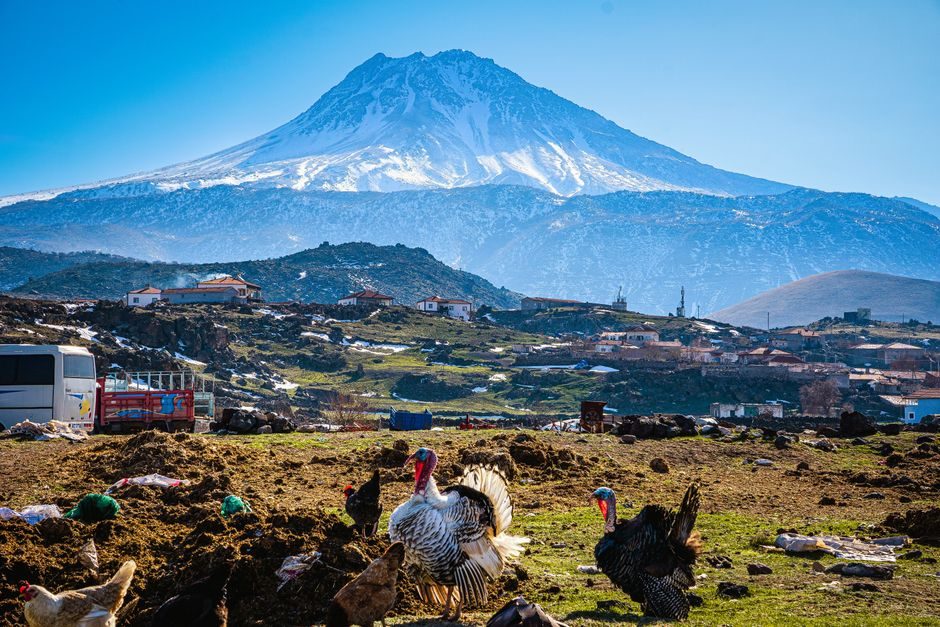
A hot air balloon ride in Cappadocia is $210 per person. That is the number. It is not cheap, and it is the single line item most people remember from the trip. In Europe generally, activities made up 15% of total spend. In Southeast Asia, the same category made up 35%. Turkey sits somewhere between those poles, because the balloon is a real expense but almost everything around it is not. Free walking tours are everywhere. The expensive part is optional. The balloon itself is a pre-dawn operation: pickup from the hotel in the dark, a van to a field outside Goreme, tea and a biscuit while the crews inflate the envelope by the light of the burners, then an hour in the air and a champagne toast that is mostly for the photo. Flights get cancelled for wind more often than the booking sites admit, and the operators roll you to the next morning, which is fine unless it was your last morning. Book it early in a stay, not on the final night.
That distinction matters when you are building a budget. In Turkey, you can spend almost nothing on activities and still fill your days, then blow $210 on one morning and feel like you did the country properly. In Thailand, the activities themselves are the trip. Waterfalls and rafting in the north, snorkeling off Koh Tao, and a pile of free walking tours added up to $2,117 across a longer stretch of travel. That is a different kind of spending. There, the experiences are the budget. In Turkey, they are a line item you choose. The free version of a Turkish day is a long walk, a ferry, a glass of tea for pocket change, and a museum pass only if the math works out. The Istanbul museum pass pays for itself if you plan on seeing three or more of the big sites, and loses money if you are the kind of traveler who looks at buildings from the outside.
On a short trip, pre-bought tickets buy back the hours you would spend queueing.
Twelve Days, By The Numbers
A twelve-day run through Turkey came to $2,368, or $197 a day.
That is not a backpacker figure. At $197 a day you are staying somewhere with a door, eating well, and paying for the balloon. Split the same twelve days across dorm beds at $12-20 and street kebabs at $3-5 and the total collapses. The gap between those two trips is not the country. It is the choices. Turkey rewards the second kind of traveler more than most places, because the cheap version is genuinely good rather than a compromise. The cheap version is also slower. Buses between cities are comfortable and cheap, but an overnight run from Istanbul toward Cappadocia eats a night and arrives at an hour when nothing is open. Domestic flights on the low-cost carriers are often barely more than the bus once you count the meal and the lost sleep, and the airports outside the city centers are the trade you make for it.
Compare that to a 2.5-week trip through the Caucasus and Istanbul, which is a common routing for people who want mountains and city in one go. The Istanbul leg is the soft landing. The Caucasus is the expensive part, mostly because getting between places costs more than being in them. Border crossings there can eat half a day, and the minibuses that link the mountain towns leave when they are full rather than when the schedule says, which is a detail worth building slack around.
The Stopover Trick
Several airlines run stopover programs of around 48 hours, and a few of them put you in a hotel for free while you explore the city. The catch is that most of these are tied to business or first class. Emirates through Dubai, Qatar Airways through Doha, Turkish Airlines through Istanbul, Icelandair through Reykjavik, Singapore Airlines through Singapore. Pick a hub, break the flight, and the city costs you nothing but the time.
It works best if you were already flying that direction. As a standalone reason to book, it usually is not, because the fare difference eats the hotel. As a way to turn a layover into two days somewhere new, it is hard to argue with. The mechanics are dull but worth knowing: the stopover has to be booked as part of the ticket, not added after, and the free hotel is usually confirmed by email a few days before departure rather than at the gate. Immigration in Istanbul is quick for most nationalities, but the e-visa has to be sorted before flying, and the queue at the visa desk for people who did not is the longest one in the terminal. Forty-eight hours is enough for the old city and one ferry ride, and not enough for anything on the Asian side plus the sights, so pick one and let the rest go.
Where Turkey Sits
Among the cheapest places to travel, Turkey keeps company with Thailand, Cambodia, Albania, China, Vietnam, Sri Lanka, the Philippines, Slovenia and Croatia. That is a subjective list, and everyone’s version differs. But Turkey belongs on it for a specific reason: the food is cheap, the beds are cheap, and the one big splurge is optional. The tea is the giveaway. Anywhere a glass of tea costs less than a bottle of water, and someone is refilling it without being asked, the country is priced for living rather than for visiting.
Twelve dollars to twenty for a dorm. Three to five for a kebab with a drink. Two hundred and ten if you want to go up in a balloon. Everything else is a decision.
Leave a Reply