Cuba starts at about $20 a night for a room in a family house. Another traveller budgets $1,000 for ground expenses and puts flights, visas and expensive activities like scuba on top.
What Cuba Actually Costs
Cuba starts at about $20 a night for a room in a family house. That is the floor, not the average. One traveller who spent a month on the island put it plainly: the lodging was not cheap once you weighed what you got for it, compared with somewhere like Vietnam, where half that money buys a better room. For the Caribbean, $20 is not bad. For a backpacker coming from Southeast Asia, it is a shock.
What that $20 buys is a room in a casa particular, a private home licensed to rent to foreigners. The room is usually clean, the bed is usually firm, and the bathroom is usually en suite, but the standard varies wildly from house to house even on the same street. The reliable ones are the ones with a blue and white sign or an anchor painted by the door, and the ones that have been written up enough to have steady bookings. A host who speaks some English will save hours of confusion, especially if you arrive after dark. The trade-off is that the same room might cost noticeably more in Havana or Trinidad than in a smaller town, and prices climb during the high season from roughly November to April. Breakfast is often quoted separately, and it is worth asking before you agree, because a casa breakfast of eggs, fruit and coffee is not always included in what you were told at the door.
The comparison is the useful part. Cuba runs roughly three times more expensive than Trinidad and Tobago, which is the cheapest country in the Caribbean. Panama comes in cheaper. So do Bulgaria and Lithuania, and the Philippines is cheaper again. None of those places are what anyone would call a stretch. Cuba is the outlier here, and the room rate is only the first place it shows.
The Cheap Parts
Transport inside a city is where Cuba and Mexico both let you off lightly. A metro ride costs 5 pesos, which is about $0.30, and the network covers the city extensively. The Metrobús, the bus rapid transit system, runs 7 pesos, or $0.40, a ride. Those are among the cheapest urban transit fares anywhere. The peso converts at roughly 18.7 to the dollar, so the arithmetic is easy to do in your head.
Uber sits above that. A short ride inside a city typically lands between 40 and 80 pesos, which is $2.15 to $4.30. For the same distance, a traditional taxi will ask more. If you are moving around with a bag or two, that gap matters over a week.
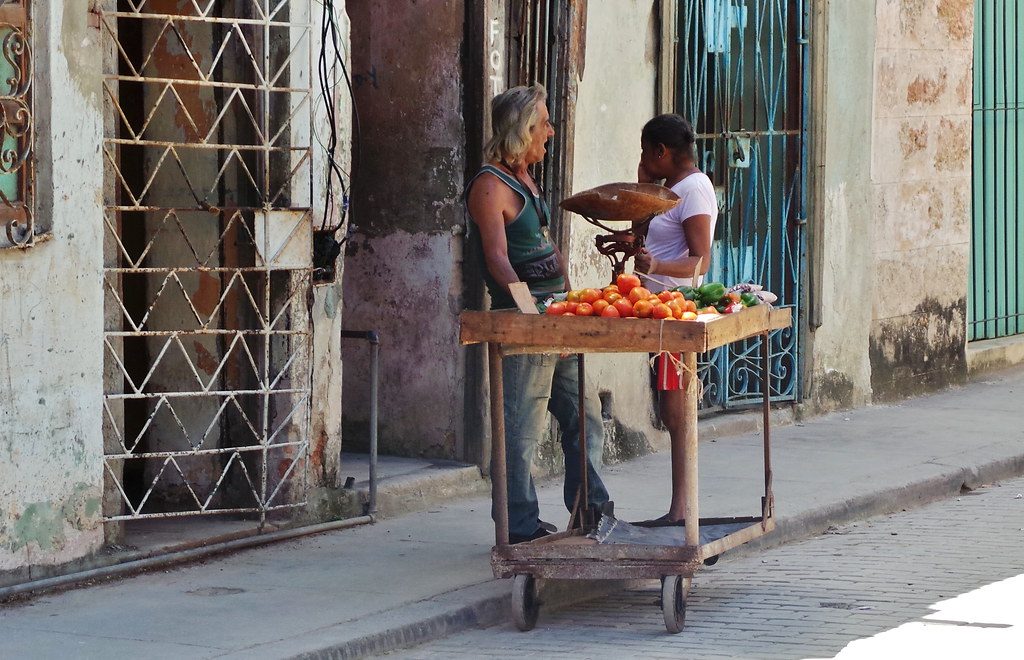
The catch with the cheap transit is that it is built for people who already know where they are going. The metro and the Metrobús stop running relatively early, and stations are not always well marked from the street. Locals flag down shared taxis and colectivos, which run fixed routes along main roads and cost a fraction of a private cab; the trick is that you need to know the route, or ask, and the driver expects exact change. A ride that a visitor pays a private fare for is often the same trip a local makes for pocket change, so it pays to watch what everyone else is doing at the corner before committing to a car.
Food has a similar shape. A comida corrida, the set lunch, comes with soup, a main course, a drink and sometimes dessert for 80 to 120 pesos. That is $4.50 to $6.50 for a full midday meal. Order the same dishes individually at dinner and you pay 40 to 60 percent more. The set lunch is not a compromise. It is the same kitchen at a different hour.
The set lunch is served in the middle of the day, usually between noon and about three, and it runs out. Walk into a small paladar or a state-run cafeteria at two in the afternoon and the soup may already be gone. Locals eat the big meal at midday and something lighter at night, which is why the dinner menu is both pricier and thinner. Street food fills the gap: a peso pizza, a fried dough, a paper cone of peanuts. None of it is fancy and none of it will impress anyone at home, but it keeps the daily food number down without much effort.
The Scuba Problem
Scuba is the line item that breaks budgets, and it breaks them everywhere. Utila and Roatan in the Bay Islands run the cheapest open-water certification on the planet, somewhere around $300 to $350 with a dorm bed included. Most budget travellers fly or take the ferry straight there and bolt on the Mayan ruins at Copan while they are in the region. That is a hard number to beat.
Cuba does not compete on that front. Anyone carrying a diving habit into the Caribbean should keep the certification cost separate from the living cost, because the two have nothing to do with each other. One traveller on a six-month Southeast Asia trip spent $7,958 across a month each in Cambodia, Laos, northern Thailand, southern Thailand, Malaysia and Indonesia. Strip out the diving and the figure drops to $6,095. With flights and pre-trip expenses it reached $11,000, and adjusted for inflation today that is about $15,000.
The pattern repeats at smaller scale. A trip that would have landed exactly on a $30.45 daily budget came in over it purely because of diving. Another traveller budgets $1,000 for ground expenses and puts flights, visas and expensive activities like scuba on top. That method keeps the daily number honest.
The reason diving distorts a budget so badly is that it is lumpy. A single certification course is a week of accommodation and food compressed into a few days of spending, and once it is paid the daily rate looks fine again. The people who keep their numbers straight tend to decide before the trip whether they are diving or not, and to log the course as a one-off rather than letting it smear across every day of the month. The same logic applies to any big-ticket activity booked on the road.
Insurance And The Real Total
Adventure sports coverage is where the cheap policies fall apart. Bungee jumping, skydiving and scuba diving to 40 meters are excluded by most insurers. One option covers all three, allows purchase mid-trip, and does not base premiums on trip cost, which matters if your itinerary is expensive on paper. Read the exclusions before you assume you are covered at depth.
The exclusions are usually buried in the small print rather than the headline, and the depth limit catches people out. A policy that covers diving up to eighteen meters will not pay out on a forty-meter wreck dive, and the fine print is where that distinction lives. Buying cover mid-trip is possible with some providers, which helps anyone who decided to certify after they had already left home, but the cover still needs to be in place before the dive, not after. A quick read of the exclusions list takes ten minutes and is cheaper than a chamber ride.
Then add it up the way it actually lands. Cuba is not a budget destination in the sense that Vietnam or the Philippines is. Rooms begin near $20. Transit is nearly free by any standard. Set lunches cost $4.50 to $6.50 and dinner costs more. A certification course costs $300 to $350 somewhere else entirely. Keep the real cost and the expensive-habit cost in separate columns, and the total stops being a surprise.
Leave a Reply