
Some links on this page are affiliate links. If you book or buy through them, we may earn a small commission at no extra cost to you. It never changes what we recommend — every price here is one we would pay ourselves.
A Kenya safari runs $1,800 to $6,220 per person in 2026. Mid-range Kenya costs about $350 to $600 per day.
What Kenya Actually Costs
A Kenya safari runs $1,800 to $6,220 per person in 2026. That is the full range, from the cheapest group trip someone actually booked to the top-end private thing. Tanzania, for comparison, runs $2,080 to $7,040. Kenya is the cheaper of the two. Not by a lot at the bottom, but consistently.
The per-day numbers tell the same story. Mid-range Kenya costs about $350 to $600 per day. Mid-range Tanzania costs about $450 to $800 per day. Same animals, broadly. Same grass. Different price.
What that range buys at the bottom is a seat in a seven-seat minivan with six strangers, a fixed departure date, and a guide who has done the route so many times he can name the lions. At the top it buys a private 4×4, a tented camp with a proper bed and a bucket of hot water on request, and the freedom to sit with a cheetah for two hours because there is nobody else in the vehicle to outvote you. The middle is where most independent travellers land, and the middle is where the budgeting gets interesting, because it is the only band where your choices actually move the number.
Two things reliably blow a budget that looked fine on paper. The first is single supplement: a solo traveller pays for a whole vehicle and often a whole tent, so the per-person figure can jump by half again. The second is booking late. Lodge beds in the Mara during migration season sell out months ahead, and the only rooms left in July are the expensive ones. Booking four to six months out is the single cheapest decision available, and it costs nothing but patience.
Where The Money Goes
Park fees are the big fixed cost, and they are not negotiable. Prices are quoted per adult per day for a single entry, for non-East African citizens, rounded to the nearest dollar, and they already include 18% Kenyan tax. A separate vehicle fee of around $12 sits outside that. Children aged 3 to 17 pay roughly 20 to 25% of the adult fee, which matters if you are pricing a family rather than a solo trip.
The fees are collected at the gate, and the gate is a real bottleneck. At the main Mara entrances the queue of vehicles can take the better part of an hour in high season, and that hour comes out of your game-drive time, not the operator’s. Most guides carry the paperwork pre-paid for exactly this reason. If you are on a self-drive or a budget group trip where the guide pays cash at the barrier, expect the morning to start slower than the itinerary claims.
Then there is the vehicle. A mandatory 4×4 with a guide is not optional on a safari, and that cost does not shrink if you are travelling alone. It gets split, or it does not. Premium wildlife areas push the total up further, and the Serengeti is the clearest example of that on the Tanzanian side.
Kenya comes out cheaper on two specific line items: estimated five-day park fees, and private guide costs. That is where the gap between the two countries is actually built. Not in the flight, not in the tent.
The tent, in fact, is roughly the same product in both countries, often run by the same companies. What differs is the paperwork that gets you to the tent. Kenyan park fees have risen steadily over the past decade and are reviewed annually, usually with an announcement a few months before the new rates bite, so a quote pulled in January and a quote pulled in June for the same dates can differ. Any operator quoting a firm price more than a year out is either absorbing that risk or has not thought about it. Ask which.
A Two-Week Route That Works
Start in Nairobi with overnight accommodation. Give the Masai Mara three to four days. Fly to Arusha, then spend four to five days across the Serengeti and Ngorongoro Crater. Two days in Tarangire National Park for elephant viewing. End with beach time in Zanzibar if you want it.
That structure crosses a border mid-trip, which is why the cost comparison matters more here than on a single-country safari. You are paying Kenyan park fees and Tanzanian park fees in the same fortnight. The Tanzanian half will cost more per day.
The Nairobi night is not filler. Wilson Airport, which handles the light aircraft into the Mara, sits on the south side of the city, and the main international terminal sits on the east. A flight that lands in the evening and a bush plane that leaves at seven the next morning do not mix well with Nairobi traffic, which is genuinely among the worst anywhere. One night near the domestic airport is the difference between a relaxed departure and a sprint.
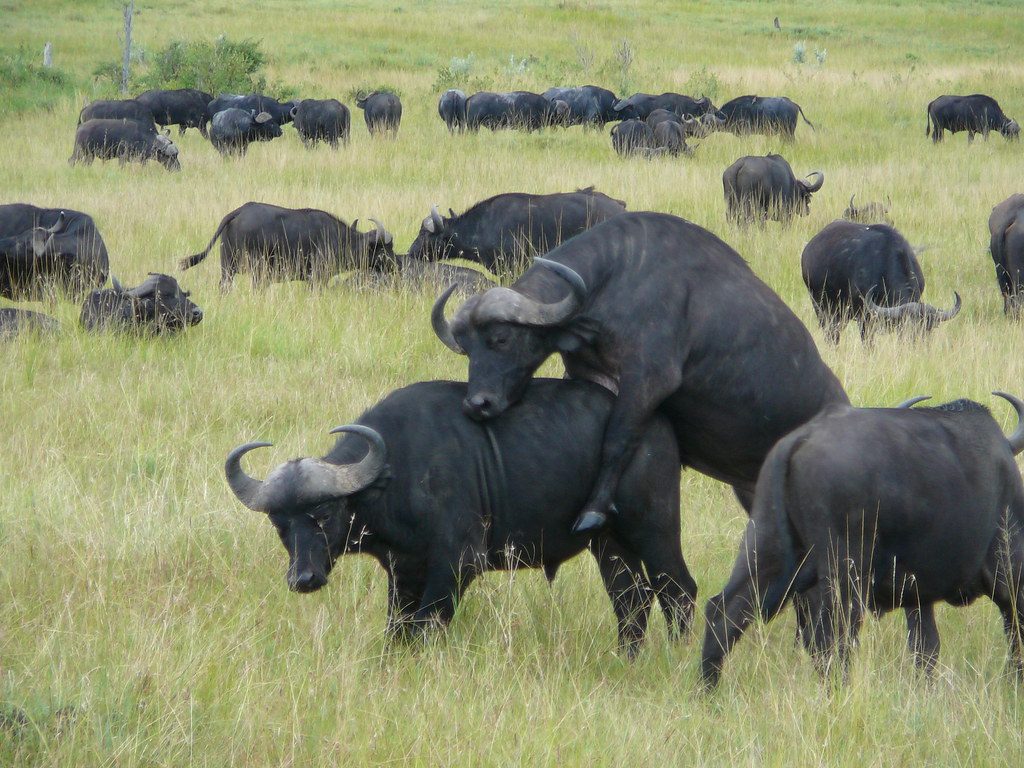
On the border, the overland crossing between the Mara and the Serengeti is a full day of driving and formalities even when everything works, which is why most people on this route fly instead. The flight is short. The immigration formalities at the airstrip are not, and the small aircraft has a hard luggage limit that gets weighed at check-in, so soft bags rather than wheeled suitcases are the practical choice. Tarangire in the dry season is where the elephants concentrate along the river, and it is the quietest of the parks on this list, which is its own argument for keeping the two days.
On a route with three stops, renting for the whole stretch is often cheaper than legs.
The Numbers Side By Side
Kenya: $1,800 to $6,220 per person. Tanzania: $2,080 to $7,040. Mid-range daily: $350 to $600 in Kenya, $450 to $800 in Tanzania.
Read those two daily ranges against each other. A fourteen-day mid-range trip in Kenya lands somewhere around $4,900 to $8,400 at the daily rate. The same fourteen days in Tanzania lands around $6,300 to $11,200. The itinerary above splits the difference, and the Kenyan days are the ones dragging the average down.
High national park fees, mandatory 4×4 vehicles and premium areas like the Serengeti are what drive the Kenya-Tanzania cost up. Kenya is generally cheaper than Tanzania in 2026, and the reason is not mysterious. It is park fees and guide costs, and it shows up on every day of the trip.
The range at the top, $6,220 and $7,040, is not a different animal. It is the same animal with a better tent and a private vehicle. The range at the bottom is a group safari, seven days, Masai Mara, Amboseli, Lake Nakuru, Lake Naivasha. Both are Kenya. Both are real prices.
Pick your number first. Then pick your route.
Leave a Reply